Male Scammer Morgan Fugitt
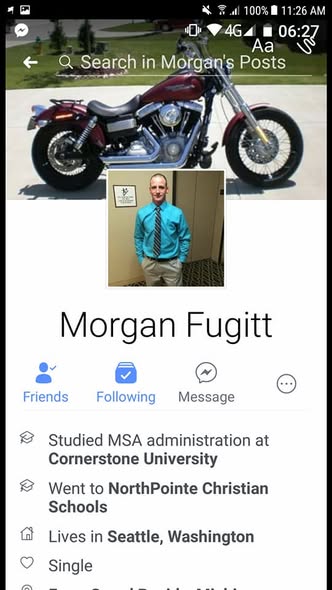
Scammer Morgan Fugitt
E-mail:
☆☆☆☆☆ 0 ratings
Scam Danger:
 |
Details |
|
| First Name: | Morgan |
| Location [Address]: | |
| Age: | |
| Aka: | |
| Aliases: | |
| Phone: | |
Reports :
I never imagined I would find myself in a situation like this, but looking back now, I realize how easily trust can be misplaced when someone knows exactly how to manipulate emotions.
It all started with what seemed like a normal interaction on Facebook. The profile looked genuine at first—complete with photos, educational background, and personal details that made it appear like a real person living an ordinary life. There was nothing immediately alarming, and that’s what made it so convincing.
The conversation began casually. There was a friendly tone, polite messages, and a gradual effort to build a connection. Over time, the interaction became more personal. The person behind the account knew how to say the right things, showing care, attention, and understanding. It felt like they were genuinely interested in building something meaningful.
As days passed, the communication grew deeper. There were long conversations, emotional exchanges, and a sense of trust that developed naturally—or at least that’s how it felt. Looking back, I now see that it was all carefully planned. The goal was to create emotional dependency and make me feel comfortable enough to believe everything being said.
At some point, the tone of the conversation shifted. The person began sharing a story about a difficult situation involving a family matter. It was presented in a way that was meant to evoke sympathy—talk of loss, urgency, and the need for support during a tough time. The explanation seemed detailed and emotional, and it felt wrong to question it in the moment.
I was asked for help. Not in a demanding way, but in a manner that made it feel like a genuine request from someone in distress. The story was convincing enough that I didn’t immediately suspect anything malicious. I wanted to help, believing that I was supporting someone who truly needed it.
After sending the money, everything changed.
The communication that once felt constant and caring suddenly disappeared. Messages went unanswered. Attempts to reach out were ignored. Then, without warning, I was blocked. Just like that, the connection was gone.
It was confusing at first. I tried to make sense of what had happened, thinking maybe there was some misunderstanding or technical issue. But as I started looking deeper into the situation, the truth became clear.
The profile I had been interacting with was not real.
Further investigation revealed that the photos used on the account were stolen. The identity was fabricated. In fact, there were multiple accounts being used—different profiles presenting similar identities, all connected to the same scheme. It became obvious that this was not a single mistake or misunderstanding, but a well-planned scam.
What made it even more painful was learning that the money I had sent was not going to the person I believed I was helping. It had been received elsewhere, by someone entirely unrelated to the story I was told. The entire situation had been orchestrated to gain my trust, exploit my emotions, and take advantage of my willingness to help.
Looking back, there were signs I didn’t fully recognize at the time. The profile, while convincing, lacked genuine depth. There were limited interactions with other people, no consistent history, and subtle inconsistencies in the information provided. The emotional intensity of the conversations also escalated quickly, which now feels like a deliberate tactic.
This experience has been difficult to process, but it has also been a strong lesson. Scammers are becoming more sophisticated. They know how to present themselves, how to build trust, and how to manipulate emotions in ways that feel real.
What I’ve learned is that it’s important to slow down and question things, especially when emotions are involved. Genuine people don’t rush connections, and they don’t create urgent situations that require money from someone they barely know. Verifying identities, being cautious with personal interactions, and recognizing emotional manipulation are all crucial.
I’m sharing this not just as a warning, but as a reminder that anyone can be targeted. It’s not about being careless—it’s about being human. These situations are designed to take advantage of trust and kindness.
If something feels too fast, too emotional, or too urgent, it’s worth stepping back and taking a closer look. Staying aware and cautious can make all the difference.
Related Male Scammers:





Rate this Profile
Romance Scams Must read
- Dating Scams Are BIG Business
- Why scammers use fake docs?
- How to Recognize Scammer
- Asian And Chinese Online Dating Scam
- How to Recognize a Female Dating Scammer
- 10 Practical Steps to Stay Safe From Online Romance Scams
- Prevent Internet Dating Scams Using These 4 Tips
- How Romance Fraudsters Use Photoshop
- Avoid Internet Dating Scams With These 4 Practical Tips
- Gold & Romance Fraud Scenarios Led by Female Scammers
- Meeting a Model and Birthday Scam Scenarios
- Ukraine Online Dating Scams
- A Typical Translation Scam Scenario
- Online Dating Scams: The Costly Travel Scenario
- 10 Ways to Check Who You Are Chatting With
Popular Links

SWINDLERS LIST
-
Top 10 Scammers !!!
Beware of these scammers...Keep them out of your mail-box...

SCAM TOOLS
-
Block Scam Mails???
Cleaning your scam filled inbox can be effected by these tools
HELP DESK
-
Waiting to help You!!!
Every problem has a solution when discussed. Discuss with us to get a clear idea to keep your information unscathed from hypocrites