Male Scammer Michael Anderson
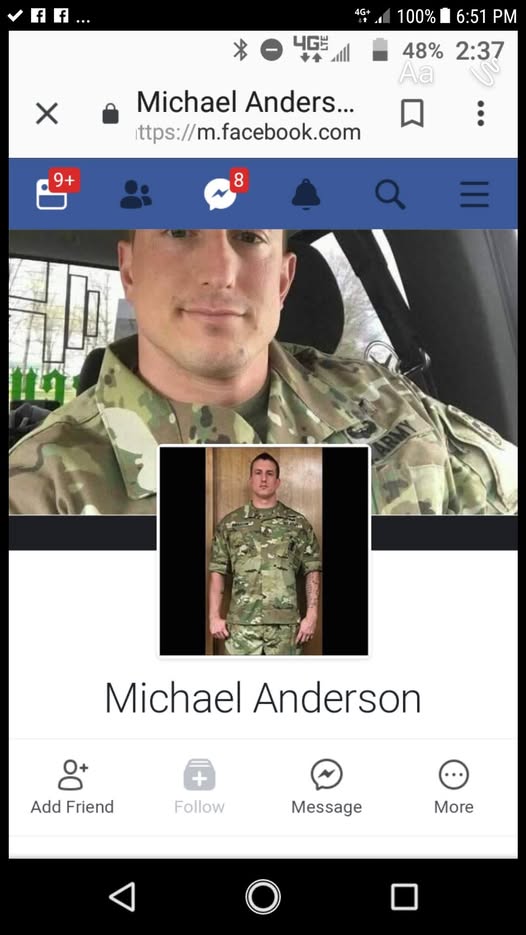
Scammer Michael Anderson
E-mail:
☆☆☆☆☆ 0 ratings
Scam Danger:
 |
Details |
|
| First Name: | Michael |
| Location [Address]: | |
| Age: | |
| Aka: | |
| Aliases: | |
| Phone: | |
Reports :
I want to share my experience this report to raise awareness about a scam attempt I personally experienced involving a fake Facebook account operating under the name Michael Anderson. This profile appears to be fraudulent and was created with the intent to deceive and potentially exploit unsuspecting individuals.
The interaction began when I received a random friend request from this account. At first glance, the profile seemed somewhat legitimate. It displayed photos of a man dressed in a U.S. Army uniform, which gave the impression that the individual was a military serviceman. The account also included what appeared to be normal profile elements, such as a profile picture, cover photo, and basic personal details. However, upon closer inspection and after some interaction, several red flags became apparent.
After accepting the friend request, the individual quickly initiated conversation. The tone was overly friendly and somewhat rehearsed, as if following a script. Within a short period, the conversation shifted toward personal topics, attempting to build trust rapidly. The person claimed to be serving in the Army and suggested they were stationed overseas. This claim seemed suspicious, especially given how quickly it was introduced into the conversation.
As the communication continued, inconsistencies began to surface. The responses often felt generic and did not always align with previous statements. At times, questions were avoided or answered vaguely. It became increasingly clear that the person behind the account was not genuinely engaging but rather attempting to manipulate the interaction.
One of the most concerning aspects was the use of images. The profile photos appeared professional and convincing, showing a man in military attire. However, these images felt out of place when compared to the rest of the account activity. There was little to no authentic engagement on the profile—no meaningful comments, tagged photos, or interactions with friends that would typically validate a real account. This strongly suggested that the images had been stolen and reused to create a false identity.
The account also lacked a credible history. The timeline was sparse, and most posts (if any) seemed recent or artificially generated. This is a common tactic used by scammers to quickly assemble a profile that looks real enough to deceive others without investing the time to build genuine online activity.
At a certain point, the individual began steering the conversation in a direction that raised further suspicion. There were subtle attempts to gain sympathy and establish emotional trust. This is often a strategy used in scams to lower a victim’s guard before making requests, which could include money, personal information, or other forms of assistance.
Recognizing these warning signs, I decided to stop engaging and conduct my own verification. A reverse image search and closer inspection confirmed my suspicions: the photos being used were not original to this account and were likely taken from another person’s online presence. This confirmed that the profile was indeed fake.
This experience highlights several important warning signs that others should be aware of:
Receiving unsolicited friend requests from unknown individuals, especially those claiming to be in the military or working overseas.
Profiles that appear polished but lack genuine interaction or history.
Conversations that escalate quickly into personal or emotional territory.
Inconsistent or vague responses when asked direct questions.
Use of professional-looking photos that seem disconnected from the rest of the account.
Based on these observations, it is clear that this account was created with deceptive intent. The impersonation of a military identity is particularly concerning, as it is often used to gain trust and exploit the respect people have for service members.
I strongly advise anyone who encounters this profile—or similar accounts—to avoid engaging, not to share any personal or financial information, and to report the account to Facebook immediately. Taking these steps can help prevent others from falling victim to similar scams.
This report is being shared to raise awareness and to encourage vigilance when interacting with unknown individuals online. Scammers continue to evolve their tactics, and it is important to remain cautious and verify the authenticity of online profiles before trusting them.
Related Male Scammers:




Rate this Profile
Romance Scams Must read
- Dating Scams Are BIG Business
- Why scammers use fake docs?
- How to Recognize Scammer
- Asian And Chinese Online Dating Scam
- How to Recognize a Female Dating Scammer
- 10 Practical Steps to Stay Safe From Online Romance Scams
- Prevent Internet Dating Scams Using These 4 Tips
- How Romance Fraudsters Use Photoshop
- Avoid Internet Dating Scams With These 4 Practical Tips
- Gold & Romance Fraud Scenarios Led by Female Scammers
- Meeting a Model and Birthday Scam Scenarios
- Ukraine Online Dating Scams
- A Typical Translation Scam Scenario
- Online Dating Scams: The Costly Travel Scenario
- 10 Ways to Check Who You Are Chatting With
Popular Links

SWINDLERS LIST
-
Top 10 Scammers !!!
Beware of these scammers...Keep them out of your mail-box...

SCAM TOOLS
-
Block Scam Mails???
Cleaning your scam filled inbox can be effected by these tools
HELP DESK
-
Waiting to help You!!!
Every problem has a solution when discussed. Discuss with us to get a clear idea to keep your information unscathed from hypocrites