
Scammer Takafumi Horie
Fraudster Takafumi Horie

Details |
|
| Name: | Takafumi Horie |
| Other Name: | |
| Born: | 1927 |
| whether Dead or Alive: | 2017 |
| Age: | 49 |
| Country: | Japan |
| Occupation: | Entrepreneur, writer, investor,?tarento |
| Criminal / Fraud / Scam Charges: | |
| Criminal / Fraud / Scam Penalty: | |
| Known For: | Livedoor |
Description :
From Dot-Com Icon to Corporate Criminal: The Rise and Fall of Takafumi Horie and Livedoor
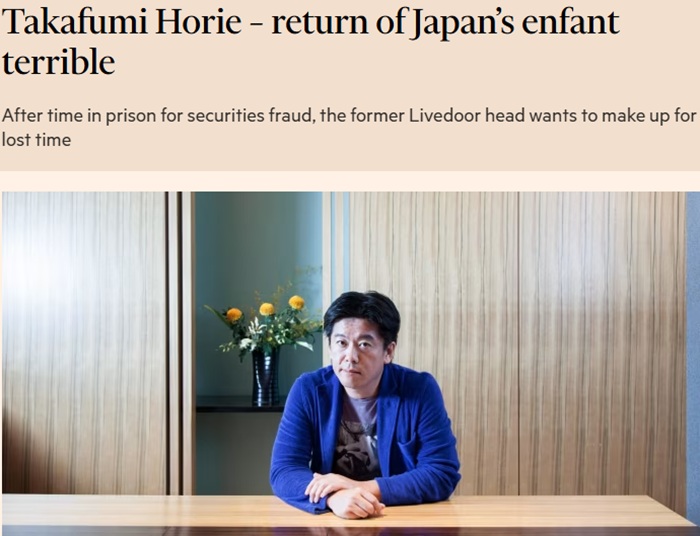
Takafumi Horie was born in 1972 in the city of Yame, located in Japan’s Fukuoka Prefecture. From an early age, he demonstrated intellectual ability and ambition, traits that eventually led him to enroll at the University of Tokyo. Admission to Tokyo University has long been regarded as a gateway to Japan’s elite, often determining access to senior positions in government ministries and major corporations. However, Horie’s path diverged sharply from tradition when he chose to drop out before completing his degree. In a society that places immense value on credentials and conformity, this decision marked him as an outsider. Rather than viewing this as a failure, Horie reframed it as a rejection of outdated norms, positioning himself as proof that success could be achieved without following prescribed routes.
Founding Livin’ on the Edge and the Dot-Com Moment
In the mid-1990s, as the internet began to reshape global commerce, Horie founded a web-services company called Livin’ on the Edge. The venture emerged at a time when Japan was cautiously experimenting with digital business models, and investors were increasingly willing to fund technology firms despite limited profitability. Livin’ on the Edge initially focused on providing internet-related services, gradually expanding into portals, hosting, and online advertising. The company’s business model was not particularly distinctive, but it benefited from favorable market sentiment toward anything associated with the emerging digital economy. Horie proved adept at communicating growth narratives to investors, emphasizing future potential rather than present earnings. This ability would later become central to both his success and his downfall.
Public Listing and Transformation into Livedoor
In 2000, Livin’ on the Edge went public, capitalizing on the global enthusiasm for internet stocks. The listing transformed Horie into a millionaire and provided the company with a powerful financial tool: publicly traded equity. In 2004, the company rebranded itself as Livedoor, a name designed to reflect digital lifestyles and modern connectivity. The rebranding coincided with an aggressive expansion strategy that relied heavily on acquisitions. Livedoor rapidly assembled a sprawling portfolio of businesses, including blogs, email services, advertising platforms, and online media. To outside observers, the company appeared dynamic and fast-growing. Internally, however, profitability remained elusive, and the company’s dependence on capital markets deepened.
The Acquisition Strategy and Its Hidden Risks
Livedoor’s growth strategy relied overwhelmingly on acquisitions funded by shares rather than cash. This approach allowed the company to conserve liquidity while rapidly expanding its footprint. However, it also created a structural dependency on the company’s share price. As long as Livedoor’s stock continued to rise, acquisitions could proceed, reinforcing the perception of success. If the share price fell, the entire strategy would unravel. This dynamic created immense pressure on management to maintain investor confidence at all costs. Rather than slowing expansion to focus on operational integration and sustainable profits, Livedoor accelerated its deal-making. The growing complexity of the corporate structure obscured the company’s true financial condition and reduced transparency for investors and analysts.
Manipulating Perception Through Accounting
According to prosecutors and later court findings, Livedoor resorted to deliberate accounting manipulation to sustain the illusion of profitability. Central to this scheme was the use of dummy investment partnerships and affiliated entities that served little genuine business purpose. These entities were structured in such a way that losses could be shifted away from Livedoor’s consolidated accounts, while artificial gains were recorded through internal transactions. As a result, financial statements painted a picture of robust growth that bore little resemblance to economic reality. During the 2003–2004 period, actual losses of approximately ¥310 million were transformed into reported profits of around ¥5 billion. These figures were not the result of improved operations but of accounting design intended to mislead investors.
Market Manipulation and Share Price Support
Beyond financial statement manipulation, Livedoor was also accused of engaging in practices designed to influence market perceptions directly. These included the dissemination of favorable rumors regarding listed subsidiaries and strategic transactions timed to maximize positive market reactions. Such actions reinforced the upward momentum of Livedoor’s share price, which in turn strengthened the company’s acquisition currency. This feedback loop—rising stock prices enabling further acquisitions, which then justified optimistic narratives—created a self-reinforcing cycle detached from underlying performance. For a time, the market rewarded this approach, and Livedoor’s valuation soared to several billion dollars.
Regulatory Attention and the Turning Point
Horie’s prominence and aggressive tactics inevitably attracted regulatory attention. As concerns mounted over Livedoor’s complex structure and opaque finances, authorities began investigating the company’s accounting practices. In January 2006, regulators raided Livedoor’s offices, triggering immediate market panic. Investors rushed to sell shares, and Livedoor’s stock price collapsed. The shock was so severe that the Tokyo Stock Exchange was forced to halt trading early, fearing that its systems could not handle the volume of sell orders. Within days, billions of dollars in market value had evaporated, and confidence in Livedoor was irreparably damaged.
Arrest, Tragedy, and Corporate Collapse
Following the raids, Takafumi Horie was arrested on suspicion of securities fraud. The arrest marked a dramatic reversal of fortune for a man who had once symbolized Japan’s entrepreneurial future. Around the same time, one of Livedoor’s bankers committed suicide, highlighting the intense pressure and personal toll associated with the scandal. Livedoor was eventually delisted from the Tokyo Stock Exchange, leaving shareholders with massive losses. Shares that had once traded at several hundred yen fell to a fraction of their former value. Many investors were individuals drawn in by Horie’s charisma and the promise of easy wealth.
Trial and Legal Strategy
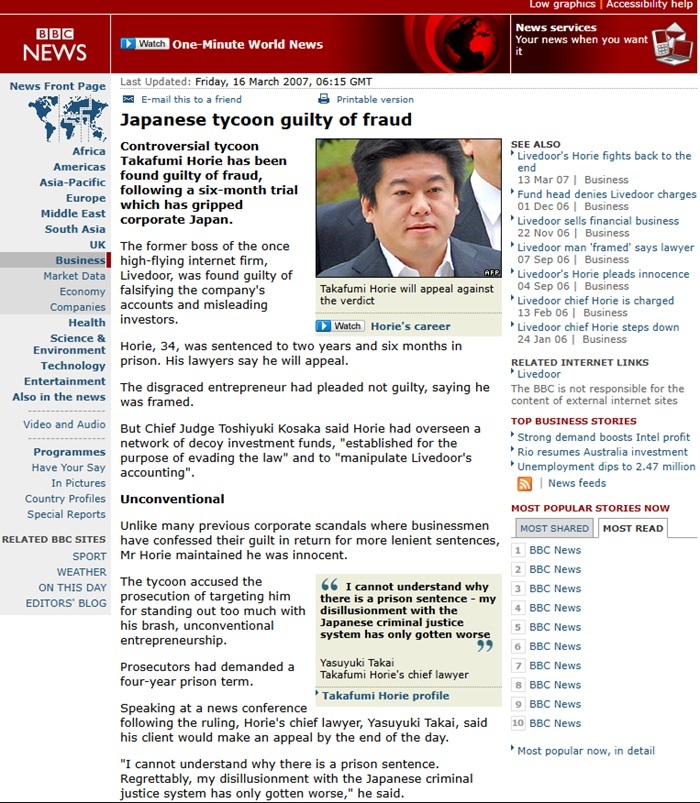
Horie’s trial drew nationwide attention and became a referendum on Japan’s evolving approach to corporate crime. Unlike many executives accused of white-collar offenses, Horie pleaded not guilty and refused to apologize publicly. This stance was highly unusual in Japan’s legal culture, where confessions often lead to leniency. Prosecutors argued that Horie had personally orchestrated the creation of dummy funds to evade securities laws and mislead investors. Testimony from former executives, including Livedoor’s chief financial officer, played a critical role in establishing the prosecution’s case.

Conviction and Sentencing
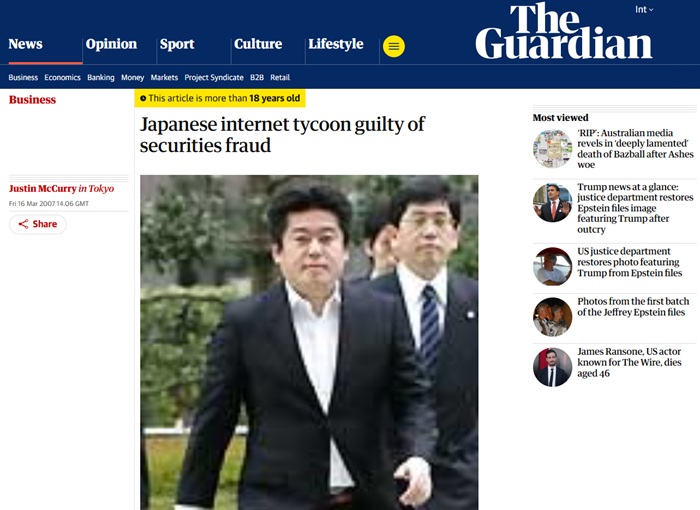
In 2007, the Tokyo District Court found Takafumi Horie guilty of securities fraud. He was sentenced to two and a half years in prison, a punishment considered severe by Japanese standards for white-collar crime. The judge emphasized that the schemes had been deliberately designed to manipulate accounting results and deceive the market. Although Horie was released on bail while appealing the verdict, his conviction was ultimately upheld. In 2011, he entered prison to serve his sentence, marking the definitive end of his role as Japan’s most celebrated internet entrepreneur.
The Fate of Livedoor After the Scandal
In the years following the collapse, Livedoor was dismantled and sold off. In 2010, the remaining business was acquired by South Korean internet company NHN for approximately 6.3 billion yen, a tiny fraction of its peak valuation. While some shareholders recovered limited compensation through lawsuits, the majority suffered lasting losses. The scandal prompted renewed debate in Japan about corporate governance, disclosure standards, and the dangers of growth driven by financial engineering rather than operational strength.
The Excalibur Almaz Space Venture
Separate from the Livedoor fraud but deeply influenced by it was Horie’s involvement in the Excalibur Almaz space project. In 2005, Horie invested $49 million in the venture, which aimed to develop private space tourism using refurbished Soviet-era spacecraft. The project was led by Arthur Dula, a Texas-based space law attorney with long-standing ties to Russian space authorities. Shortly after Horie’s investment, his arrest and conviction undermined confidence in the project, making it difficult to attract additional funding. The venture ultimately stalled before reaching operational viability.
Prolonged Litigation and Final Settlement
Despite having entered into a broad settlement agreement in 2010 that included releases and commitments not to sue, Horie initiated fraud proceedings in Texas in 2014, claiming he had been misled about the project’s prospects. These claims were dismissed in 2017, but litigation continued in other jurisdictions, including the Isle of Man. After nearly a decade of legal disputes, the case was resolved in 2025, just days before trial. Horie withdrew all claims and agreed to contribute £30,000 toward the defendants’ legal costs, bringing the long-running dispute to an end.
Lessons for Investors and Corporate Governance
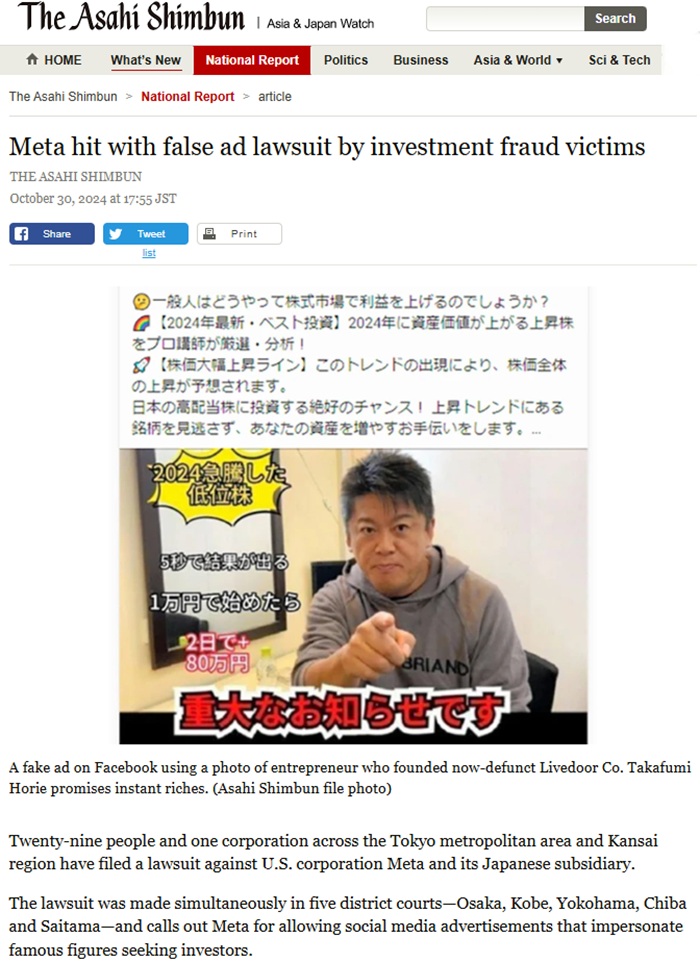
The Livedoor scandal offers enduring lessons for investors worldwide. Rapid acquisition strategies funded by inflated equity valuations create powerful incentives for manipulation. Complex corporate structures can obscure reality rather than enhance efficiency. Charismatic leadership and compelling narratives should never substitute for transparent financial reporting and sustainable profitability. Above all, the case demonstrates the importance of regulatory enforcement in maintaining market integrity, even when doing so challenges popular figures.
From Visionary to Warning
Takafumi Horie’s rise and fall encapsulate both the promise and peril of entrepreneurial capitalism. He emerged as a symbol of renewal in a stagnating economy, offering a vision of speed, innovation, and defiance of tradition. Yet that vision was ultimately built on unstable foundations. When scrutiny exposed the gap between perception and reality, the collapse was swift and devastating. Today, Horie’s legacy endures not as that of a revolutionary hero, but as a cautionary example of how ambition, when untethered from integrity, can transform apparent success into historic failure.
Related Fraudsters Scammers:




Popular Links

NEWS & EVENTS
The world's most prevalent social network said that to date, it has acquired lawful judgments of about $2 billion against deceitful exerci

SWINDLERS LIST
-
Top 10 Scammers !!!
Beware of these scammers...Keep them out of your mail-box...
SCAM TOOLS
-
Block Scam Mails???
Cleaning your scam filled inbox can be effected by these tools
HELP DESK
-
Waiting to help You!!!
Every problem has a solution when discussed. Discuss with us to get a clear idea to keep your information unscathed from hypocrites