
Scammer Trevor Milton
Fraudster Trevor Milton

Details |
|
| Name: | Trevor Milton |
| Other Name: | Milton |
| Born: | 1982 |
| whether Dead or Alive: | |
| Age: | 42 |
| Country: | Layton, Utah, U.S |
| Occupation: | Businessman |
| Criminal / Fraud / Scam Charges: | Three counts of securities fraud and wire fraud |
| Criminal / Fraud / Scam Penalty: | 4 year prison sentence, a $1 million fine |
| Known For: | Founder, former executive chairman and CEO |
Description :
Trevor Milton: The Rise, Ruin, and Resurrection of America’s Most Controversial Clean-Energy Founder
Trevor Robert Milton was born on April 6, 1982, in Layton, Utah, into a family shaped by modest means, strong work ethic, and deep religious roots. His father, William L. Milton, worked as a manager for Union Pacific Railroad, while his mother, Sallie Gwyn Hunt Milton, was a dedicated realtor. Trevor grew up alongside one brother, Travis, and three sisters, and his childhood was marked by frequent moves that reflected both economic pressures and shifting family circumstances. When he was still a toddler, the Milton family relocated to Las Vegas, where Trevor spent his earliest formative years before moving to the small town of Kanab, Utah, at age eight. This transition from a bustling city to a rural environment introduced him to a quieter lifestyle, but it would not remain peaceful for long. At just 15, Trevor experienced a devastating family tragedy: his mother died of cancer, an event that profoundly affected him, fueling both ambition and insecurity that would later manifest in his entrepreneurial drive and public persona.
Despite the challenges, Milton remained active in his religious community. He was raised in the Church of Jesus Christ of Latter-day Saints (LDS), an identity that influenced his values, social environment, and future philanthropic decisions. After graduating high school, he embarked on an LDS mission to Brazil, where he learned Portuguese and immersed himself in missionary work. His mission was cut short after 18 months due to health issues, prompting his return to the United States. Once home, he enrolled at Utah Valley University, but college life did not suit him; he dropped out after one semester and moved to St. George, Utah, seeking purpose through work instead of academia. These early departures—leaving his mission, leaving college—foreshadowed a pattern of bold risk-taking and rapid life pivots that would later define both his success and downfall.
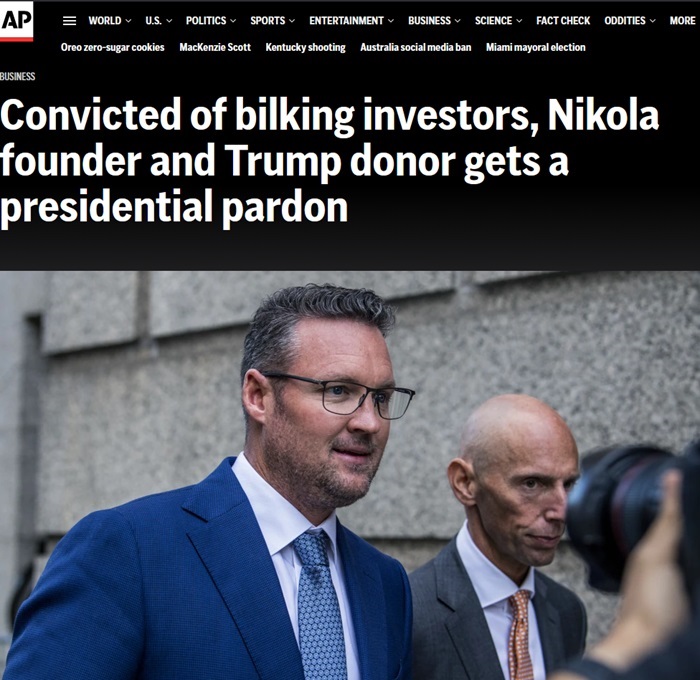
Early Entrepreneurial Ventures
After leaving college, Milton quickly gravitated toward entrepreneurship, demonstrating a willingness to take risks and a strong ambition to build something meaningful. His first business venture was St. George Security and Alarm, a small alarm sales company targeting residential customers. Although the business provided experience in sales and operations, Milton soon exited the venture and turned his attention toward the alternative-energy transportation sector—a field he believed was ripe for disruption.
His next company, dHybrid, Inc., attempted to retrofit commercial trucks with engines capable of running on natural gas rather than diesel. The idea was aligned with the growing interest in cleaner, more efficient transportation solutions, but the company faced investor disputes and technical challenges. dHybrid ultimately dissolved, marking Milton’s first major entrepreneurial setback. Yet failure did not deter him. Instead, in 2012 he launched dHybrid Systems, a business focused on natural-gas storage systems for heavy-duty trucks. This venture proved more successful and attracted the attention of Worthington Industries, which eventually acquired the company, providing Milton with capital, confidence, and credibility.
Worthington Industries would later become a foundational investor in Milton’s next—and most ambitious—project: Nikola.
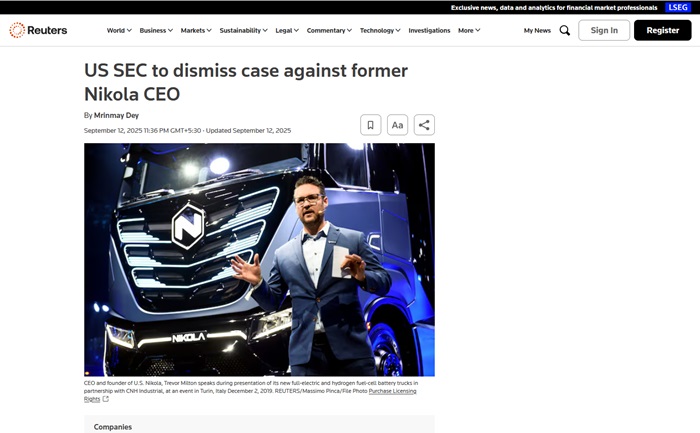
Founding of Nikola Motor Company
In 2015, Milton founded a start-up initially known as Bluegentech, later rebranded as Nikola Motor Company, named after inventor Nikola Tesla. Backed by $2 million from Worthington Industries, Milton envisioned a revolutionary transformation of the trucking industry. His goal was bold: create hydrogen-electric and battery-electric semi-trucks capable of delivering zero-emission, high-performance alternatives to traditional diesel engines. The company's early prototypes—especially the Nikola One—were promoted as groundbreaking innovations capable of reshaping long-haul transportation. Milton’s charismatic communication style, relentless optimism, and dramatic vision attracted investors and media attention, propelling Nikola into the spotlight.
Under Milton’s leadership, Nikola introduced additional models such as the Nikola Two, designed for regional trucking, and the Nikola Tre, created in collaboration with European manufacturer Iveco. The company marketed not only futuristic vehicles but also an entire ecosystem of hydrogen fuel stations, claiming it would build a coast-to-coast hydrogen network in partnership with Nel Hydrogen. The vision was sweeping, ambitious, and inspiring—fueling the image of Nikola as a future titan of clean energy transportation.
Nikola’s Meteoric Rise and Public Offering
In 2020, Nikola went public through a reverse merger with VectoIQ, a special-purpose acquisition company (SPAC). SPAC mergers allowed companies to bypass the stricter disclosure rules required for a traditional IPO, creating an environment where charismatic founders could heavily influence investor sentiment through public statements—even if those statements were exaggerated or inaccurate. After the merger, Nikola achieved a valuation of roughly $12 billion. Investor enthusiasm exploded, driven by comparisons to Tesla’s early days and the global appetite for green technology ventures.
By June 2020, Nikola’s stock more than doubled, reaching a peak market capitalization near $30 billion—briefly surpassing Ford. At age 38, Trevor Milton became a paper billionaire many times over. Forbes estimated his net worth at $12 billion based on his ownership stake. As Nikola soared, so did Milton’s public profile. He became a regular on television interviews, podcasts, and social media, aggressively promoting Nikola’s technological achievements, production timelines, and future capabilities. But behind the scenes, many of these claims were not grounded in reality.
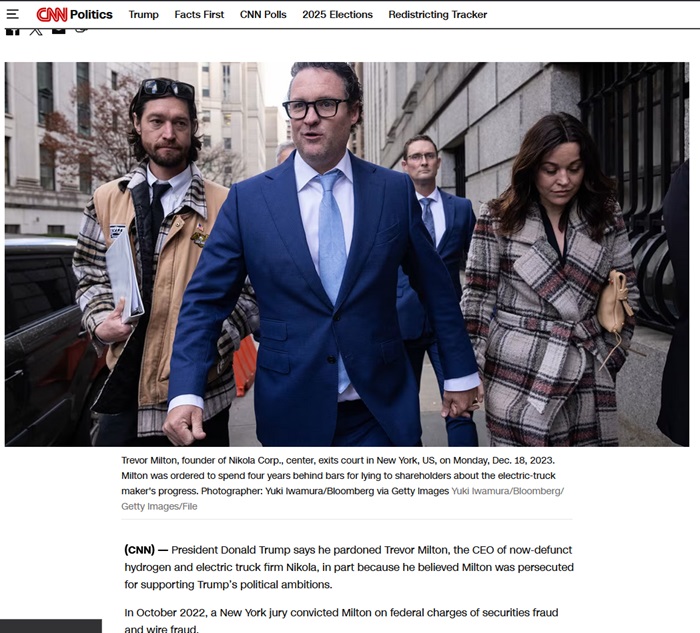
The Hindenburg Report and Collapse of Nikola’s Image
On September 10, 2020, short-selling research firm Hindenburg Research released a bombshell report accusing Milton of orchestrating an “intricate fraud.” The report alleged that Nikola had misrepresented its technology, staged misleading demonstrations, and exaggerated progress on hydrogen production. The most damaging revelation was that a promotional video showing a Nikola truck appearing to drive on a highway was actually filmed by rolling a nonfunctional prototype down a hill.
Following the report, Nikola’s stock plummeted, and regulatory scrutiny intensified. The U.S. Securities and Exchange Commission (SEC) and the U.S. Department of Justice (DOJ) launched formal investigations. Within ten days, Milton resigned as executive chairman, though he retained 91.6 million shares worth billions at the time. As part of his exit agreement, he became an unpaid consultant and was barred from publicly commenting on Nikola without company approval. Media outlets simultaneously uncovered old allegations of sexual misconduct from 1999 and 2004. Though no charges were filed due to expired statutes of limitation, the timing compounded Milton’s growing public troubles.
Federal Charges, Indictment, and Trial
In July 2021, a federal grand jury indicted Milton on three counts of securities fraud and wire fraud; an additional wire fraud charge was added in 2022. The indictment accused him of repeatedly deceiving retail investors by making false, misleading statements about Nikola’s capabilities, hydrogen production plans, vehicle prototypes, and reservations. Prosecutors argued that Milton’s deception artificially inflated Nikola’s stock price and induced investors to buy shares based on lies.
Evidence revealed that Milton had misrepresented the status of nearly every major Nikola project:
The Nikola One prototype was not functional despite Milton claiming it “fully works.”
The pickup truck “Badger” was not built from Nikola’s technology, contrary to his statements.
Nikola produced no hydrogen at all, let alone at reduced cost as Milton publicly claimed.
Truck reservations were mostly non-binding and could be canceled freely, despite Milton portraying them as billions in locked-in revenue.
Prosecutors also presented evidence that Milton used exaggerated claims to induce a landowner to accept stock options instead of cash when Milton attempted to purchase an expensive Utah ranch—while still under stock-sale restrictions.
In October 2022, after a month-long trial filled with technical evidence, investor testimony, and internal company documents, a jury convicted Milton on one count of securities fraud and two counts of wire fraud. He was later sentenced to four years in prison, a $1 million fine, the forfeiture of a Utah property, and $168 million in restitution. However, due to good-time credits under the First Step Act, he was expected to serve roughly one year behind bars. Milton remained free on $100 million bail while appealing his conviction.
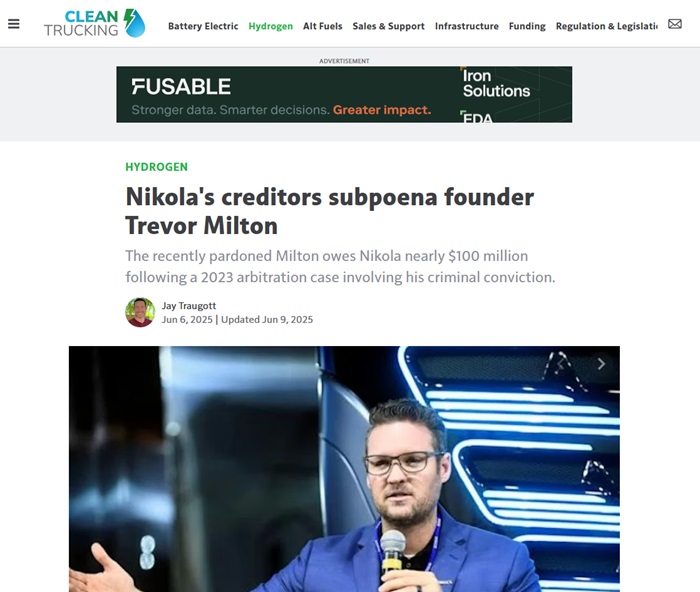
Political Donations and The Road to a Presidential Pardon
In the months leading up to the 2024 U.S. presidential election, Milton and his wife donated more than $1.8 million to a pro-Trump campaign fund. Milton’s legal defense team also included lawyers close to Donald Trump: Marc Mukasey and Brad Bondi. These connections later triggered public scrutiny after Trump returned to office in 2025.
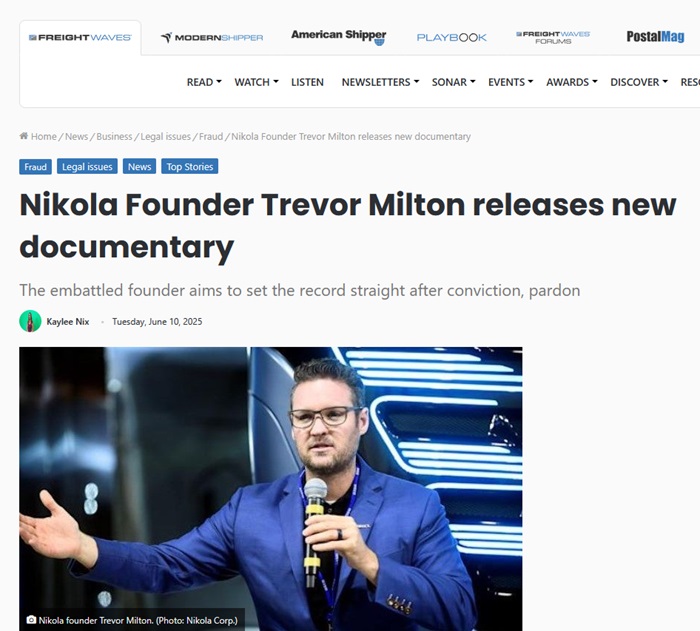
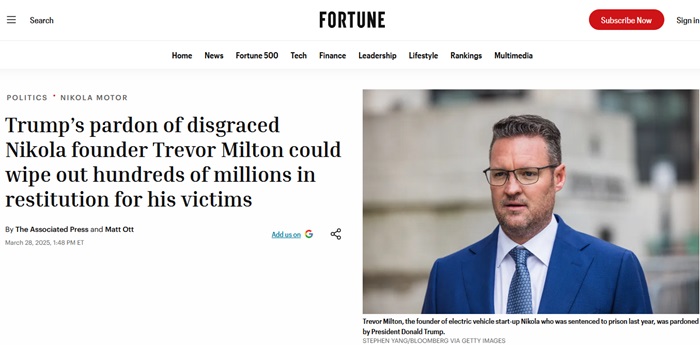
On March 27, 2025, President Donald Trump granted Trevor Milton a full and unconditional presidential pardon. This pardon erased Milton’s criminal sentence, eliminated the requirement to pay restitution to Nikola shareholders, and restored his civil rights. The decision sparked nationwide controversy, with critics arguing the pardon appeared politically motivated. Trump defended the pardon by stating Milton was prosecuted because he supported Trump’s presidency, calling the New York prosecutors “a vicious group of people.” Milton celebrated publicly, stating he was “grateful for this sacred pardon of innocence.”
SEC Case Withdrawal and Regulatory Aftermath
Following the presidential pardon, the SEC reassessed its civil case. On September 11, 2025, the agency moved to dismiss its civil enforcement action against Milton. The filing noted that Milton voluntarily waived his right to pursue legal costs or claims against the SEC. With both criminal and civil liabilities erased, Milton faced no further restrictions on his ability to work in industries involving securities or public companies. This clean slate opened the door for a new chapter in his career.
Nikola’s Bankruptcy and Industry Impact
While Milton’s personal legal troubles were resolved, Nikola Corporation continued its downward trajectory. Years of financial instability, technological delays, and declining investor confidence culminated in Nikola filing for Chapter 11 bankruptcy protection on February 19, 2025. The company announced plans to liquidate or sell most of its assets, marking the effective end of what had once been seen as a top competitor to Tesla in the zero-emission trucking world.
The fall of Nikola became one of the defining cautionary tales of the SPAC boom, signaling that loose regulatory frameworks, inflated projections, and unchecked founder claims could lead to catastrophic outcomes. Investors lost millions, and the electric-truck sector was left to grapple with heightened skepticism.
Return to Business: SyberJet Aircraft
Despite his controversies, Milton managed to reestablish himself in the business world. In late 2025, it was announced that he had acquired SyberJet Aircraft, a Utah-based aviation manufacturer known for producing the SJ30 business jet. Milton assumed the role of CEO and immediately promised aggressive expansion, including the development of a new SJ36 light jet. He also expressed intent to bring engineering talent from his previous ventures to accelerate the program. Surprisingly, the market reacted positively, signaling that investors were willing—at least cautiously—to separate Milton’s past from his future ambitions.
Personal Life, Wealth, and Philanthropy
Milton lives in Phoenix, Arizona, with his wife, Chelsey Bergmann, whom he married in 2017. The couple has remained relatively private, though their political donations gained significant media attention. In 2019, Milton purchased a 2,000-acre Utah ranch for $32.5 million, featuring a nearly 17,000-square-foot mansion—a record-setting real estate transaction at the time.
He has been known for acts of generosity intertwined with his business ventures. In 2020, he transferred over six million Nikola shares to 50 early employees as a gesture of appreciation. Later that year, he donated 1.5 million shares valued at roughly $20 million to the LDS Church. Prior to his legal issues, he was also widely connected within Utah’s business and cultural communities, maintaining friendships with public figures such as Dave “Heavy D” Sparks.
Legacy and Public Perception
Trevor Milton’s legacy is deeply complex and polarizing. To supporters, he is an ambitious innovator who pushed boundaries, inspired investment in clean-energy transportation, and suffered from overzealous prosecution. To detractors, he is a symbol of the dangers of SPAC excess, deceptive marketing, and founder glorification. His rise and fall remain one of the most dramatic business sagas of the 21st century—featuring innovation, deception, political intrigue, and a rare presidential intervention that altered the course of his fate.
With Nikola’s bankruptcy completed and legal cases closed, Milton now stands at a crossroads in his career. Whether he rebuilds his legacy in the aviation sector or remains a controversial figure overshadowed by past scandals remains to be seen. What is undeniable, however, is that his story will live on as a defining example of both the soaring potential and perilous pitfalls of modern startup culture.
Related Fraudsters Scammers:






Popular Links

SWINDLERS LIST
-
Top 10 Scammers !!!
Beware of these scammers...Keep them out of your mail-box...

SCAM TOOLS
-
Block Scam Mails???
Cleaning your scam filled inbox can be effected by these tools
HELP DESK
-
Waiting to help You!!!
Every problem has a solution when discussed. Discuss with us to get a clear idea to keep your information unscathed from hypocrites