
Scammer Michele Sindona
Fraudster Michele Sindona
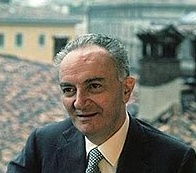
Details |
|
| Name: | Michele Sindona |
| Other Name: | |
| Born: | 1920 |
| whether Dead or Alive: | 1986 |
| Age: | 65 |
| Country: | Italy |
| Occupation: | |
| Criminal / Fraud / Scam Charges: | |
| Criminal / Fraud / Scam Penalty: | |
| Known For: | Banker, lawyer |
Description :
God’s Banker: Michele Sindona and the Architecture of Global Financial Crime
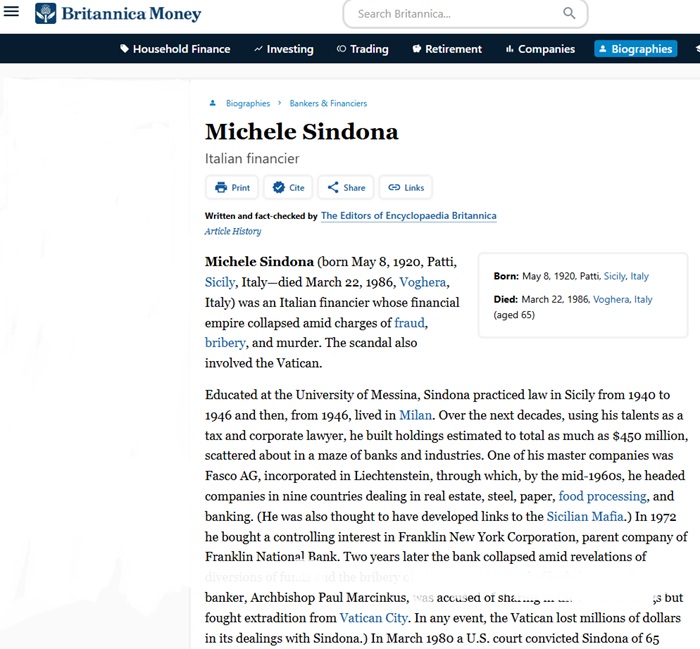
Michele Sindona was born on May 8, 1920, in Patti, a small town in Sicily, into a poor farming family. From an early age, he demonstrated an intense desire to escape the limitations of his background. Through education and ambition, Sindona sought a path toward influence and wealth, ultimately studying law at the University of Messina. His training in corporate and tax law would later become the foundation for a career that blurred the lines between legal expertise and criminal manipulation.
Move to Milan and the Birth of a Financial Strategist
After World War II, Sindona relocated to Milan, Italy’s emerging financial center. During the late 1940s and 1950s, he positioned himself as a gifted tax and financial adviser to wealthy individuals and corporations. His true strength lay not in conventional banking, but in constructing complex corporate structures that concealed ownership, shifted risk, and exploited regulatory loopholes across borders. By the early 1960s, Sindona had assembled a sprawling network of companies operating in banking, real estate, manufacturing, and finance.
The Creation of a Global Financial Empire
Through holding companies such as Fasco AG in Liechtenstein, Sindona controlled hundreds of firms across Europe and beyond. His empire relied heavily on shell companies, fiduciary accounts, and secret agreements with foreign banks. Although his wealth was estimated at hundreds of millions of dollars, much of it was illiquid and dependent on continuous refinancing and deception. Sindona’s financial success increasingly rested on concealment rather than productivity.
The Vatican Alliance and the Rise of “God’s Banker”
Sindona’s most powerful connection emerged through the Vatican. His relationship with Giovanni Montini, later Pope Paul VI, granted him access to the Vatican Bank, officially known as the Institute for the Works of Religion. The Vatican’s sovereign status allowed its financial arm to operate beyond Italian regulatory reach, making it an ideal conduit for large international money movements. Sindona became deeply involved in managing Vatican investments, earning the nickname “God’s Banker” and gaining unprecedented influence protected by secrecy and reverence.
Mafia, Intelligence Agencies, and Political Power
Beyond legitimate finance, Sindona operated within the shadow economy. He laundered money for organized crime groups, including Sicilian and American Mafia families, while also serving as a financial intermediary for covert intelligence operations. During the Cold War, he channeled funds connected to the CIA, supporting anti-communist movements and right-wing political forces in Europe. He also became a key financier for Propaganda Due (P-2), a secret Masonic lodge that penetrated Italy’s political, military, and intelligence institutions.
Expansion into the United States and Franklin National Bank
In 1972, Sindona expanded aggressively into the United States by acquiring a controlling interest in Franklin National Bank of New York. The purchase was financed through funds secretly extracted from Italian banks under his control using fiduciary deposit schemes routed through Swiss institutions. Sindona falsely represented these funds as personal assets, deceiving U.S. regulators and investors. Franklin National soon became a pillar of his fragile international structure.
The Collapse of an Empire: Il Crack Sindona
By 1974, Sindona’s empire began to collapse under the weight of hidden losses, fraudulent foreign exchange trades, and falsified financial statements. Franklin National Bank failed, becoming the largest bank collapse in U.S. history at the time. Simultaneously, Sindona-controlled banks in Italy collapsed, triggering what became known as Il Crack Sindona. Losses reached hundreds of millions of dollars, devastating depositors and shaking confidence in international banking.
The Vatican and Institutional Silence
The Vatican Bank suffered massive losses linked to Sindona’s schemes, though the full extent was never publicly disclosed. Despite mounting evidence, institutional silence and diplomatic caution slowed accountability. The scandal exposed the dangers of unchecked secrecy and the vulnerability of religious and political institutions when entangled with financial power.
Giorgio Ambrosoli and the Cost of Integrity
Italian authorities appointed lawyer Giorgio Ambrosoli to liquidate Sindona’s failed banks. Through exhaustive investigation, Ambrosoli uncovered systematic fraud, offshore diversions, and criminal conspiracies. His refusal to compromise made him a target. On July 12, 1979, Ambrosoli was murdered outside his home in Milan, a crime later traced directly to Sindona. His death became a symbol of moral courage against institutional corruption.
The Fake Kidnapping and Desperate Maneuvers
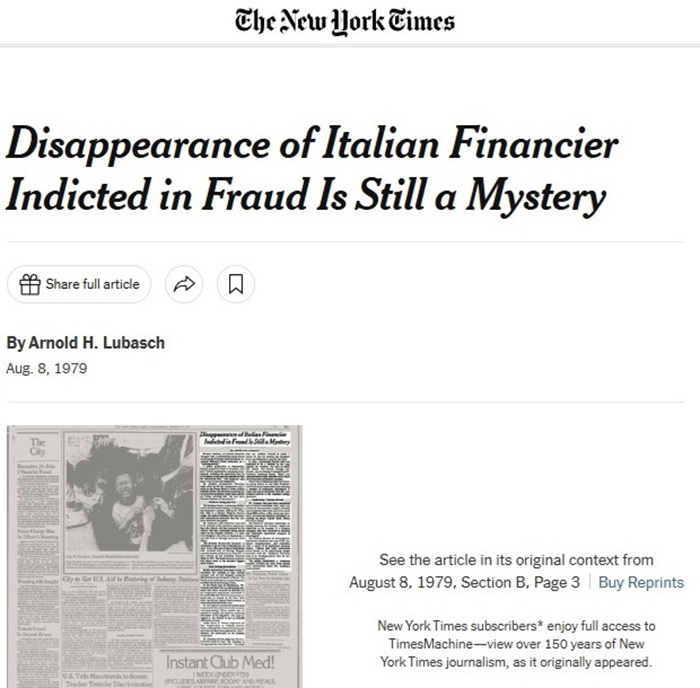
Facing prosecution, Sindona staged his own kidnapping in 1979, disappearing for weeks while secretly traveling through Europe. During this time, he gathered sensitive documents implicating politicians, bankers, Vatican officials, and intelligence agencies. His plan was to use these materials as leverage to escape prosecution. The strategy failed, and Sindona was arrested upon his return to the United States.
Trial, Conviction, and Imprisonment in America
In 1980, Sindona was convicted in U.S. federal court on dozens of counts including fraud, conspiracy, embezzlement, securities violations, and perjury. The trial exposed a sophisticated web of deception spanning continents. He was sentenced to 25 years in prison. Shortly before sentencing, he attempted suicide, highlighting the collapse of both his power and his prospects.
Extradition to Italy and Final Judgment
Following prolonged legal battles, Sindona was extradited to Italy to face charges related to fraudulent bankruptcy and the murder of Giorgio Ambrosoli. In 1985, an Italian court convicted him of ordering Ambrosoli’s assassination and sentenced him to life imprisonment. The verdict marked the legal end of one of the most complex financial criminals of the twentieth century.
Death by Cyanide and Unanswered Questions
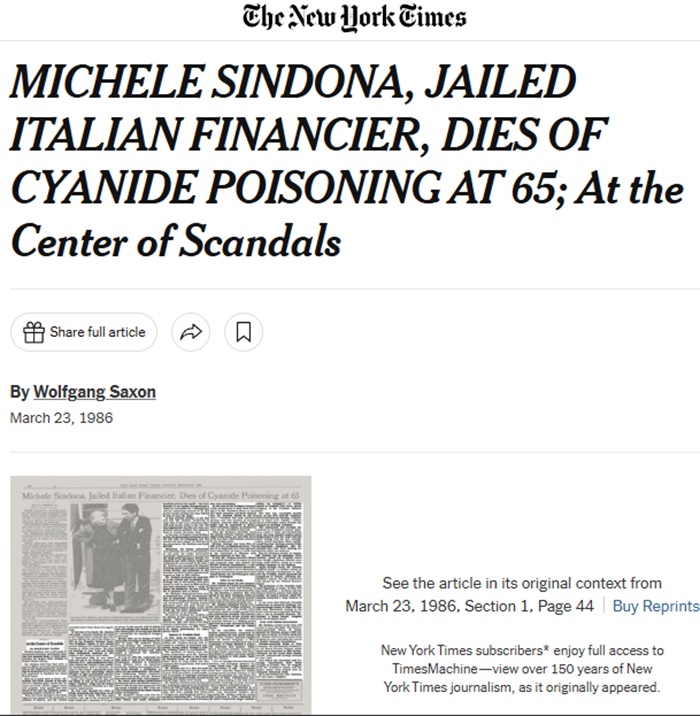
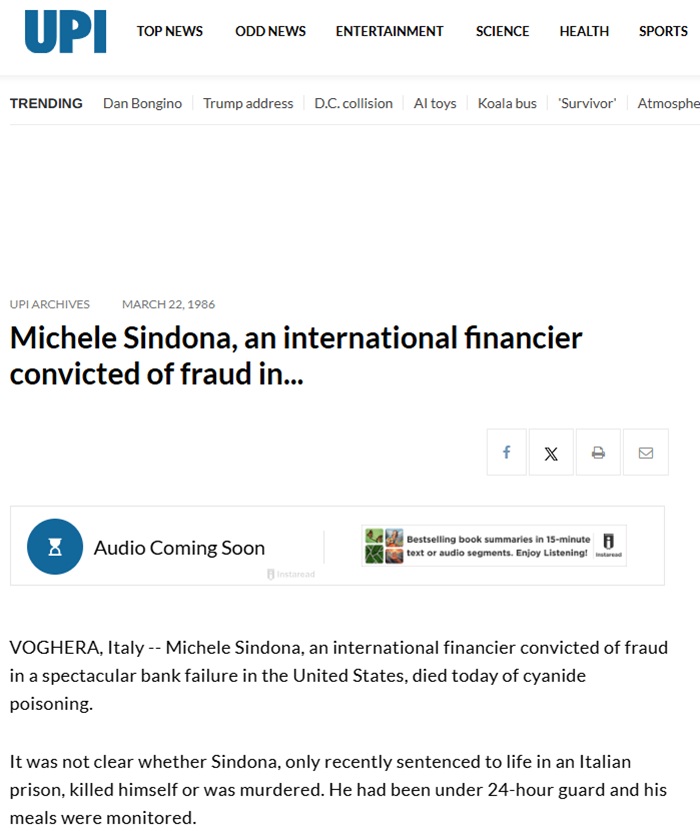
On March 22, 1986, Michele Sindona died in prison after ingesting cyanide, reportedly mixed into his coffee. Whether his death was suicide or murder has never been conclusively determined. Shortly before his death, Sindona reportedly warned that powerful forces feared what he still knew. His final moments reinforced the enduring mystery surrounding his life and crimes.
Legacy and Historical Significance
Michele Sindona’s story remains a defining case in the history of global financial crime. It revealed how unchecked power, secrecy, and institutional complicity can destabilize economies and destroy lives. His legacy reshaped banking regulation, exposed systemic vulnerabilities, and underscored the human cost of corruption. Above all, the Sindona affair stands as a warning that financial genius without accountability can become a weapon of enormous destruction.
Related Fraudsters Scammers:





Popular Links

NEWS & EVENTS
The world's most prevalent social network said that to date, it has acquired lawful judgments of about $2 billion against deceitful exerci

SWINDLERS LIST
-
Top 10 Scammers !!!
Beware of these scammers...Keep them out of your mail-box...
SCAM TOOLS
-
Block Scam Mails???
Cleaning your scam filled inbox can be effected by these tools
HELP DESK
-
Waiting to help You!!!
Every problem has a solution when discussed. Discuss with us to get a clear idea to keep your information unscathed from hypocrites