
Scammer Sam Bankman-Fried
Fraudster Sam Bankman-Fried

Details |
|
| Name: | Sam Bankman-Fried |
| Other Name: | SBF |
| Born: | 1992 |
| whether Dead or Alive: | |
| Age: | 32 |
| Country: | Stanford, California, United States |
| Occupation: | American Entrepreneur |
| Criminal / Fraud / Scam Charges: | wire fraud, money laundering |
| Criminal / Fraud / Scam Penalty: | 25 years in prison and fine $11 billion |
| Known For: | CEO of FTX, Co-founder of Alameda Research |
Description :
From Crypto Empire to Federal Prison: The Sam Bankman-Fried and FTX Fraud Case
The sentencing of Samuel Bankman-Fried represents one of the most significant moments in modern financial crime enforcement and stands as a defining case in the history of cryptocurrency regulation. Once celebrated as a visionary entrepreneur and one of the youngest billionaires in the world, Bankman-Fried’s dramatic downfall culminated in a 25-year federal prison sentence for orchestrating an unprecedented scheme that defrauded customers, investors, and lenders of billions of dollars. The collapse of his cryptocurrency exchange, FTX, not only wiped out massive sums of wealth but also shattered public trust in an already volatile and poorly understood industry. The case has become a landmark example of how traditional fraud laws apply fully to digital asset markets, regardless of technological novelty or ideological framing.
Early Life and Educational Background
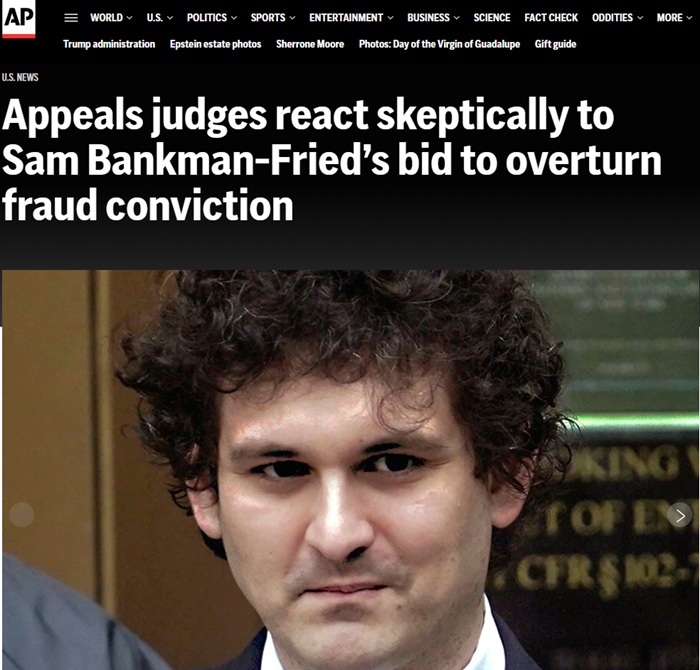
Samuel Bankman-Fried was born into an academically distinguished family, with both parents serving as professors at Stanford Law School. Raised in an environment steeped in intellectual rigor, Bankman-Fried demonstrated exceptional aptitude in mathematics and analytical reasoning from an early age. He later attended the Massachusetts Institute of Technology, where he earned a degree and became known for his sharp intellect and unconventional demeanor. These traits, combined with a strong interest in probability and risk analysis, would later define his approach to finance and trading.
Entry Into Finance and the Birth of Alameda Research
After graduating from MIT, Bankman-Fried entered the world of professional trading, where he gained exposure to arbitrage strategies and complex financial instruments. Recognizing inefficiencies in cryptocurrency markets—particularly price discrepancies between international exchanges—he founded Alameda Research in 2017. Alameda was structured as a crypto trading firm designed to exploit these inefficiencies at scale. During the rapid expansion of digital asset markets, Alameda generated substantial profits and became a major player in the crypto ecosystem. However, its success relied heavily on access to capital, aggressive leverage, and increasingly risky trading strategies.
Creation of FTX and Rapid Expansion
In 2019, Bankman-Fried launched FTX, a cryptocurrency exchange that he marketed as a safer, more sophisticated alternative to existing platforms. FTX promised advanced trading tools, innovative financial products, and robust risk management systems. Bankman-Fried served as the company’s chief executive officer and public spokesperson, frequently assuring users and investors that FTX maintained strict controls to protect customer assets. The platform experienced extraordinary growth, attracting millions of customers worldwide and securing high-profile endorsements and sponsorships. By early 2022, FTX was valued at approximately $32 billion, and Bankman-Fried’s personal net worth was estimated at $26 billion.
Public Image and Ideological Branding
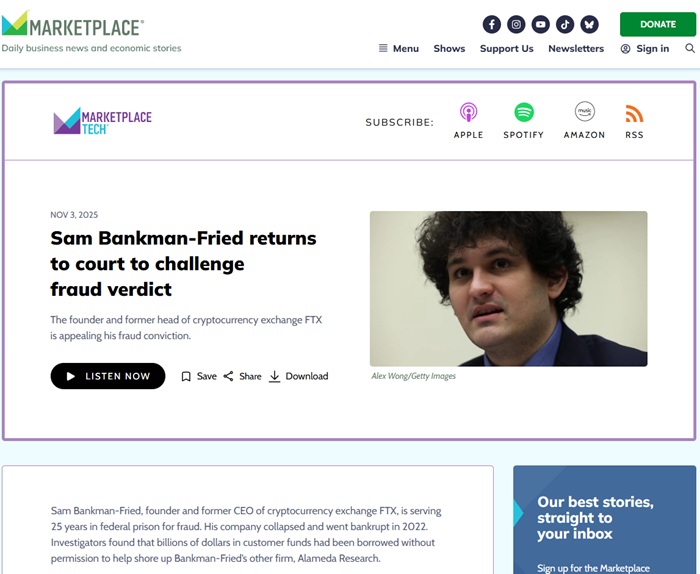
As FTX rose to prominence, Bankman-Fried carefully cultivated a public image that set him apart from traditional finance executives. He portrayed himself as an unassuming, socially awkward mathematician driven not by greed but by a philosophy known as “effective altruism,” which promotes earning wealth in order to give it away for socially beneficial causes. He became a major political donor and a frequent participant in policy discussions about cryptocurrency regulation. This carefully constructed persona helped shield him from skepticism and allowed him to gain the trust of investors, regulators, and the public.
The Hidden Relationship Between FTX and Alameda Research
Despite repeated public assurances that FTX and Alameda Research operated independently, Bankman-Fried secretly maintained extensive control over both entities. According to evidence presented at trial, he directed changes to FTX’s internal computer systems that granted Alameda extraordinary privileges unavailable to other users. These included the ability to maintain negative balances, bypass liquidation mechanisms, and access what prosecutors described as an effectively unlimited line of credit funded by customer deposits. As Alameda suffered mounting losses from failed trades, Bankman-Fried authorized the transfer of billions of dollars from FTX customer accounts to cover those losses, all without disclosure or consent.
Misuse of Customer Funds
From 2019 through 2022, Bankman-Fried systematically misappropriated customer funds deposited with FTX. While publicly claiming that customer assets were held safely and separately, he secretly used those funds for personal expenditures, venture investments, political donations, luxury real estate purchases, and the repayment of Alameda’s debts. Prosecutors demonstrated that this misuse was not accidental or the result of poor accounting but rather a deliberate strategy designed to keep both companies afloat while concealing their true financial condition.
Deception of Investors and Lenders
In parallel with defrauding customers, Bankman-Fried also misled equity investors and lenders. FTX raised more than $1.8 billion from investors, including approximately $1.1 billion from U.S.-based participants, based on representations that the company was financially sound and operated with best-in-class risk controls. Meanwhile, Alameda Research borrowed billions of dollars from lenders using financial statements that concealed its reliance on FTX customer funds. Prosecutors showed that Bankman-Fried directed the creation of false and misleading documents, inflated revenue figures, and backdated agreements to obscure the true nature of these transactions.
Collapse of FTX
In November 2022, doubts about FTX’s financial stability became public, triggering a surge in customer withdrawal requests. FTX was unable to meet these demands, revealing a massive shortfall in available assets. Within days, the exchange filed for bankruptcy, exposing a deficit of up to $9 billion in customer funds. The collapse sent shockwaves through global financial markets and devastated individuals and institutions that had entrusted their savings to the platform. Many victims lost their life savings overnight, while investors saw their equity stakes rendered worthless.
Criminal Charges and Arrest
Following the collapse, U.S. authorities launched swift and comprehensive investigations. In December 2022, the U.S. Attorney’s Office for the Southern District of New York charged Bankman-Fried with multiple counts of wire fraud, conspiracy, securities fraud, commodities fraud, and money laundering. The Securities and Exchange Commission and the Commodity Futures Trading Commission filed parallel civil actions. Bankman-Fried was arrested in The Bahamas and subsequently extradited to the United States to face trial.
Pretrial Detention and Witness Tampering
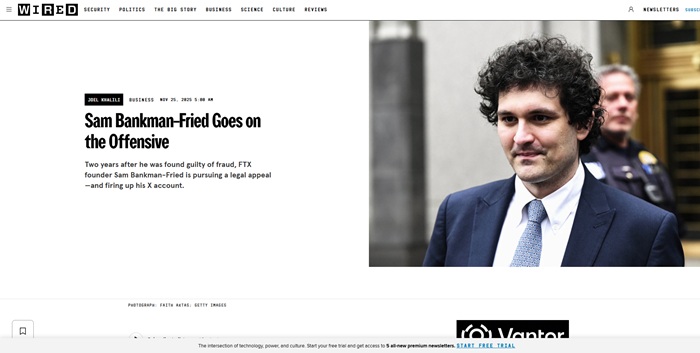
Initially released on bail, Bankman-Fried’s pretrial conduct raised serious concerns. In August 2023, Judge Lewis A. Kaplan revoked his bail after determining that he had likely attempted to influence potential witnesses. As a result, Bankman-Fried was detained at the Metropolitan Detention Center in Brooklyn pending trial. Prosecutors argued that his detention was necessary to preserve the integrity of the judicial process and prevent further obstruction.
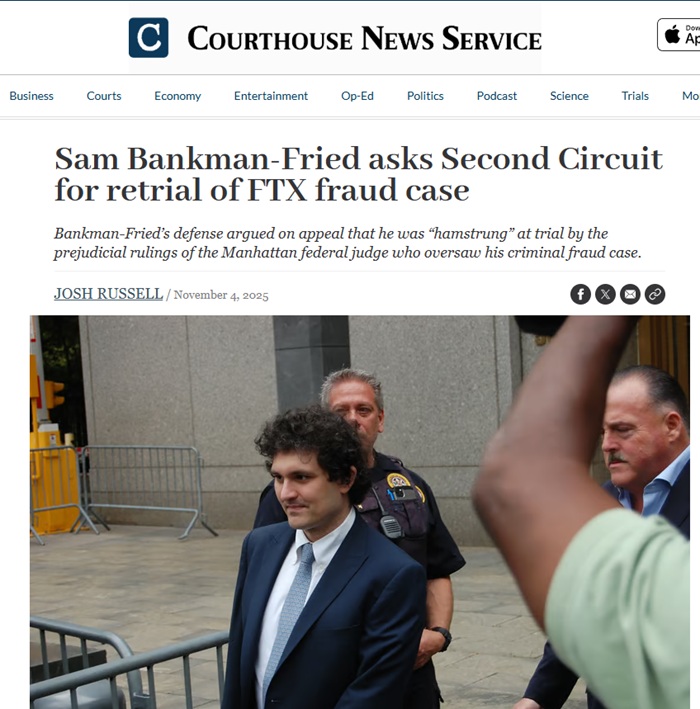
The Trial Proceedings
The trial commenced in October 2023 and lasted approximately one month. Prosecutors presented extensive evidence, including testimony from former close associates who had pleaded guilty and agreed to cooperate with the government. These witnesses testified that Bankman-Fried personally directed them to misuse customer funds and conceal the practice from the public. Bankman-Fried chose to testify in his own defense, a decision that ultimately proved damaging. Judge Kaplan later found that he had lied under oath during his testimony.
Conviction on All Counts
On November 2, 2023, a jury found Bankman-Fried guilty on all seven felony counts. The verdict confirmed that the jury accepted the prosecution’s portrayal of Bankman-Fried as the central architect of a long-running and deliberate fraud. The conviction marked one of the most consequential white-collar crime outcomes in recent U.S. history.
Sentencing Hearing
The sentencing hearing took place on March 28 in a Manhattan federal courtroom. Federal prosecutors sought a sentence of 40 to 50 years, citing the extraordinary scale of the fraud and the severe harm inflicted on victims. Defense attorneys argued for a significantly shorter sentence, portraying Bankman-Fried as a misguided entrepreneur who made poor decisions rather than a malicious criminal. Judge Kaplan rejected the defense’s arguments.
Judge Kaplan’s Findings
In delivering the sentence, Judge Kaplan stated unequivocally that Bankman-Fried knew his actions were wrong and criminal. The judge emphasized that Bankman-Fried showed little genuine remorse and continued to deny responsibility for his conduct. Kaplan found that FTX customers lost approximately $8 billion, equity investors lost $1.7 billion, and Alameda’s lenders lost $1.3 billion. He concluded that Bankman-Fried’s regret stemmed primarily from his misjudgment about being caught rather than concern for his victims.
The Sentence and Forfeiture Order
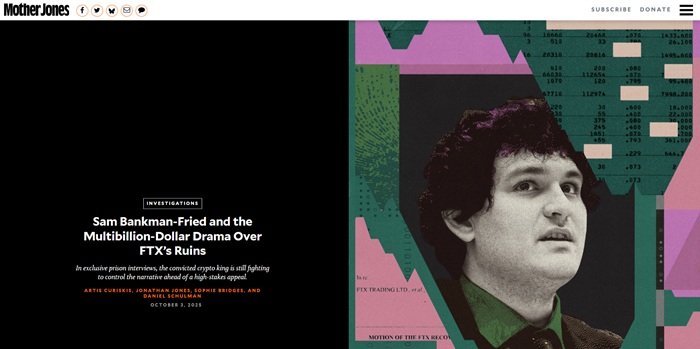
Judge Kaplan sentenced Bankman-Fried to 25 years in federal prison, followed by three years of supervised release. He also ordered the forfeiture of more than $11 billion, authorizing the government to use recovered assets to compensate victims. The judge noted that the sentence was necessary to reflect the seriousness of the crimes, deter similar conduct, and protect the public from future harm.

Statements From Government Officials
Attorney General Merrick B. Garland emphasized that financial crimes carry serious consequences and warned that wealth, influence, and technological complexity do not provide immunity from prosecution. FBI Director Christopher Wray highlighted the case as an example of aggressive enforcement against large-scale financial fraud. U.S. Attorney Damian Williams described the scheme as one of the largest financial frauds in history and underscored the profound harm suffered by victims worldwide.
Regulatory and Civil Actions
Beyond the criminal case, the SEC charged Bankman-Fried with violating federal securities laws by defrauding investors and misusing customer funds. The agency sought injunctive relief, disgorgement, civil penalties, and a permanent bar preventing him from serving as an officer or director of a public company. Regulators stressed that the case underscored the importance of transparency, proper controls, and segregation of customer assets in crypto markets.
Broader Implications for the Cryptocurrency Industry
The downfall of FTX and the sentencing of Bankman-Fried have had far-reaching consequences for the cryptocurrency industry. The case exposed fundamental weaknesses in governance, oversight, and risk management within crypto firms and reinforced the applicability of existing fraud laws to digital assets. It also accelerated calls for stronger regulation and investor protections.
The Sam Bankman-Fried case stands as a powerful reminder that innovation does not excuse deception and that fraud, regardless of its technological wrapper, will be punished under the law. His 25-year prison sentence marks the definitive end of a meteoric rise fueled by ambition, hubris, and unchecked power. As the cryptocurrency industry continues to evolve, the lessons of FTX will remain central to discussions about ethics, accountability, and the future of modern finance.
Related Fraudsters Scammers:



Popular Links

SWINDLERS LIST
-
Top 10 Scammers !!!
Beware of these scammers...Keep them out of your mail-box...

SCAM TOOLS
-
Block Scam Mails???
Cleaning your scam filled inbox can be effected by these tools
HELP DESK
-
Waiting to help You!!!
Every problem has a solution when discussed. Discuss with us to get a clear idea to keep your information unscathed from hypocrites