
Scammer Elizabeth Holmes
Fraudster Elizabeth Holmes

Details |
|
| Name: | Elizabeth Holmes |
| Other Name: | Holmes |
| Born: | 1984 |
| whether Dead or Alive: | |
| Age: | 40 |
| Country: | Washington, D.C., U.S |
| Occupation: | American Biotechnology Entrepreneur |
| Criminal / Fraud / Scam Charges: | FTX cryptocurrency exchange |
| Criminal / Fraud / Scam Penalty: | 11+1?4 years (135 months) in prison |
| Known For: | Null |
Description :
center>From Visionary to Villain: The Unraveling of Elizabeth Holmes and Theranos
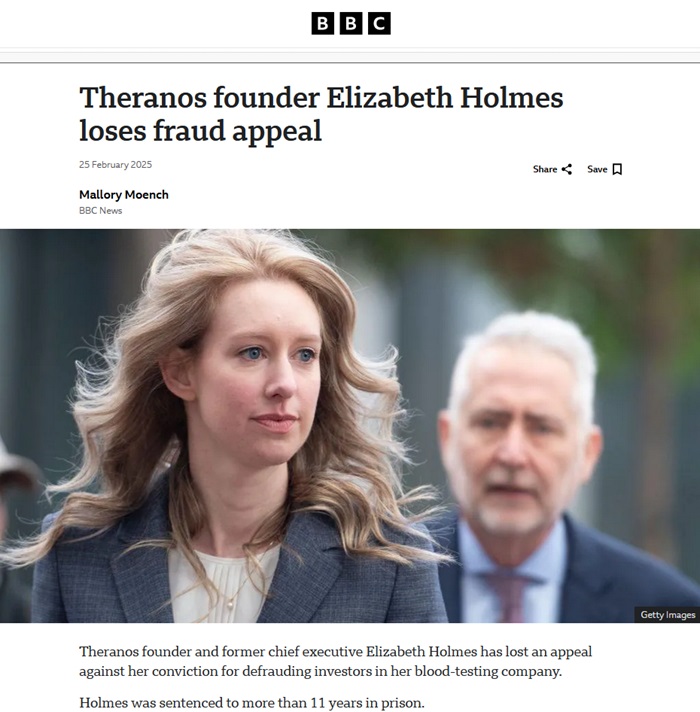
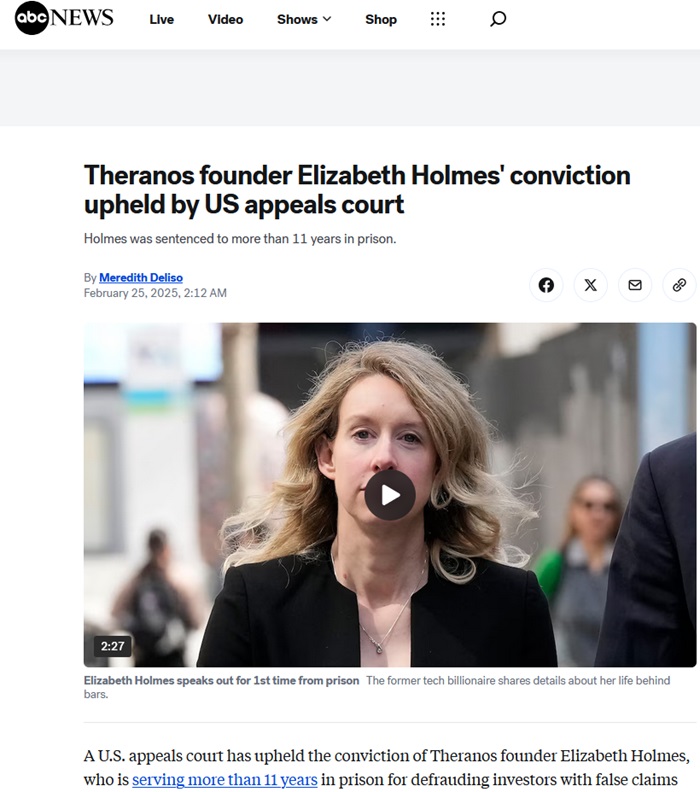
Elizabeth A. Holmes, once hailed as a revolutionary force in biotechnology, was sentenced in San Jose to 135 months (11 years and 3 months) in federal prison for defrauding investors of hundreds of millions of dollars. The ruling, delivered by U.S. District Judge Edward J. Davila, marks the culmination of years of investigations into Holmes and her company, Theranos. Once valued at billions, Theranos has become a cautionary tale of ambition, deception, and the dark side of Silicon Valley’s “fake it till you make it” culture. Federal officials from the FBI, FDA, and U.S. Postal Inspection Service emphasized that the sentence reflects the magnitude of Holmes’s deceit and the harm inflicted on both investors and patients.
The Rise of Theranos: A Promise Too Good to Be True
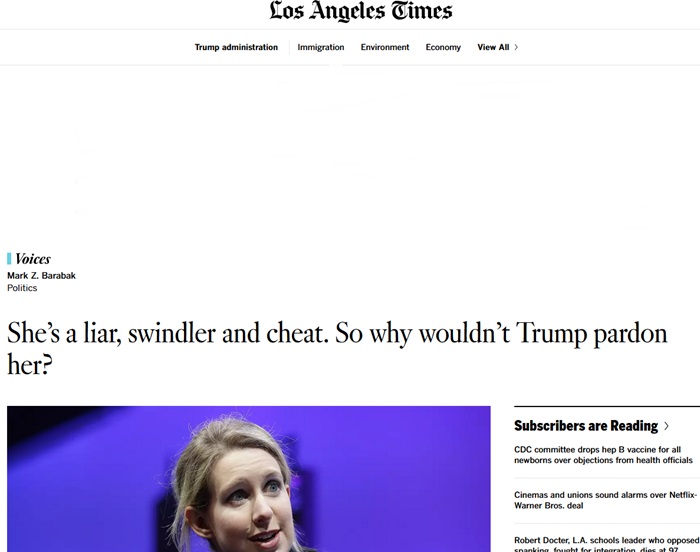
Holmes founded Theranos in 2003 when she was just 19 years old, quickly positioning herself as a visionary who would transform healthcare. She claimed that her company had created a small, portable blood-testing device—called variously the Edison, the minilab, and the TSPU—capable of performing hundreds of tests using only a few drops of blood. Holmes insisted that this technology was faster, cheaper, and more accurate than any laboratory equipment in existence. This bold promise captivated investors, journalists, and corporate partners, propelling Holmes onto the covers of major magazines and making her, briefly, the world’s youngest self-made female billionaire.
The Illusion Unravels: Technology That Never Worked
While Holmes dazzled investors and the media with her message of innovation, internal documents, whistleblower testimony, and trial evidence revealed a grim truth: Theranos’s technology never worked as claimed. Prosecutors demonstrated that Holmes knew her device was incapable of performing the vast majority of tests it advertised. In reality, the machine could complete only a few basic assays—and often produced inaccurate results. Theranos secretly relied on traditional laboratory equipment to generate patient data, all while publicly claiming that its proprietary technology was fully operational. Holmes used fabricated reports, misleading financial forecasts, and false endorsements from pharmaceutical companies to maintain the illusion of success.
Deceiving the Investors: A Multi-Million Dollar Fraud
Holmes’s deception was strategic and persistent. She targeted both seasoned investors and individuals with limited scientific knowledge, exploiting their trust through personal meetings, polished marketing materials, and falsified data. She falsely claimed that the U.S. Department of Defense had deployed Theranos devices on the battlefield and that major pharmaceutical companies had independently validated the technology. She provided investors with financial projections that bore no resemblance to Theranos’s actual performance. For example, she represented that Theranos expected $223 million in revenue for 2011, while in reality the company generated less than $600,000. These fabrications enabled her to raise more than $700 million, fueling the company’s growth and her own lavish lifestyle.
The Human Cost: Patients Misled by Faulty Tests
Although the investor fraud was staggering, the consequences extended far beyond financial loss. Theranos marketed its tests directly to the public, placing patients at significant risk. Federal prosecutors highlighted cases in which individuals received dangerously inaccurate results, including erroneous cancer screening data, false pregnancy information, and incorrect readings related to HIV precursor viruses. These failures had profound emotional and medical consequences for the affected patients. Theranos ultimately voided every test conducted on its proprietary devices, acknowledging that none could be considered reliable. Despite mounting evidence of patient harm, Holmes continued her deception in a bid to save the company.
The Federal Case: Charges, Trial, and Conviction
Federal prosecutors filed initial charges against Holmes on June 14, 2018, and a superseding indictment in 2020 expanded the allegations to include conspiracy to commit fraud against both investors and patients. After a four-month trial, a federal jury convicted Holmes on four felony counts: one count of conspiracy to defraud investors and three counts of wire fraud involving more than $140 million in investor losses. She was acquitted of charges related to patient fraud, though prosecutors emphasized that misleading patients constituted a serious breach of public trust. Three additional investor-related counts resulted in a hung jury. Throughout the trial, Holmes’s defense argued that she genuinely believed in the Theranos mission—an assertion the jury ultimately rejected.
Sentencing: A Historic Punishment for White-Collar Crime
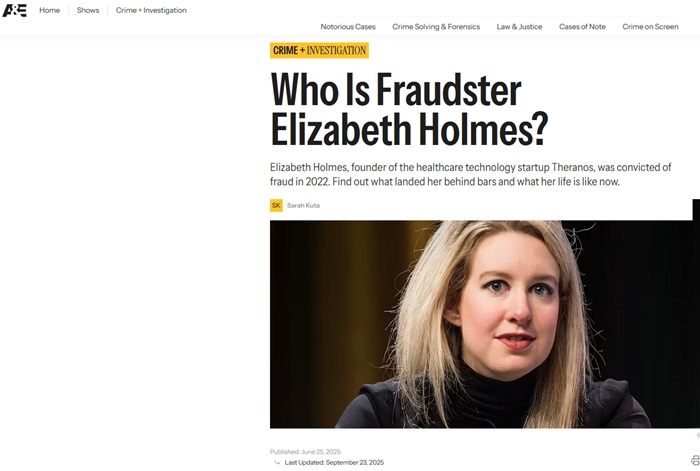
Judge Davila sentenced Holmes to 135 months in prison, followed by three years of supervised release. In determining the length of the sentence, the court cited the scale of the fraud, Holmes’s repeated dishonesty, and the severe financial and emotional harm inflicted on victims. Holmes was ordered to surrender to federal custody on April 27, 2023. Although no fine was imposed at the sentencing hearing, restitution will be addressed separately. Prosecutors argued that Holmes’s decade-long pattern of deceit, her manipulation of public perception, and her willingness to endanger patient health all justified a substantial prison term. Federal officials emphasized that the sentence serves as a warning to Silicon Valley: innovation cannot come at the expense of truth.
The Government’s Reaction: A Unified Message Against Fraud
In public statements following the sentencing, federal authorities praised the multi-agency effort that brought Holmes to justice. U.S. Attorney Stephanie Hinds stated that Holmes’s “audacious fraud” undermined confidence in legitimate scientific innovation. FBI Special Agent in Charge Robert K. Tripp highlighted the importance of protecting investor trust, noting that the case demonstrates the bureau’s commitment to combating corporate crime. FDA officials stressed that any deception involving medical technology poses a direct threat to public health, while the U.S. Postal Inspection Service underscored its role in protecting consumers from fraud. Together, these agencies emphasized that the Holmes case represents a landmark in the prosecution of white-collar criminals.
Theranos’s Collapse: A Cautionary Tale for the Tech Industry
The downfall of Theranos reverberated throughout Silicon Valley and beyond. Once valued at $9 billion, the company rapidly imploded as investigative journalists, whistleblowers, and regulators exposed the truth. Partnerships with major corporations dissolved, laboratories closed, and the company voided all test results. Holmes’s case sparked widespread debate about the dangers of Silicon Valley hype, the ethical responsibilities of founders, and the need for greater oversight in health-related technologies. Her story serves as a stark warning about the consequences of placing ambition above integrity and illustrates how charisma and storytelling can mask profound technological shortcomings.
A Legacy of Deception and a Turning Point in Accountability
Elizabeth Holmes’s fall from grace marks a pivotal moment in modern corporate history. What began as a vision to revolutionize healthcare devolved into one of the largest frauds Silicon Valley has ever seen. Holmes’s sentencing sends a clear signal that neither celebrity status nor entrepreneurial ambition can shield individuals from accountability when they knowingly deceive investors, endanger patients, and manipulate public trust. As Holmes begins her prison term, the victims of her actions—investors, patients, and the broader scientific community—continue to grapple with the consequences of her deception. The Theranos saga will likely remain a defining case study in fraud, ethics, and the high-stakes world of biotech innovation.
Related Fraudsters Scammers:






Popular Links

SWINDLERS LIST
-
Top 10 Scammers !!!
Beware of these scammers...Keep them out of your mail-box...

SCAM TOOLS
-
Block Scam Mails???
Cleaning your scam filled inbox can be effected by these tools
HELP DESK
-
Waiting to help You!!!
Every problem has a solution when discussed. Discuss with us to get a clear idea to keep your information unscathed from hypocrites