
Scammer Nate Paul
Fraudster Nate Paul

Details |
|
| Name: | Nate Paul |
| Other Name: | Natin |
| Born: | 1987 |
| whether Dead or Alive: | |
| Age: | 37 |
| Country: | Victoria, Texas, United States |
| Occupation: | Real Estate Developer |
| Criminal / Fraud / Scam Charges: | Securities fraud, Bank fraud, Conspiracy |
| Criminal / Fraud / Scam Penalty: | 20 years in prison with fines of $250,000 |
| Known For: | Real Estate Firm |
Description :
Financial Deception and Accountability: The Nate Paul Federal Fraud Case in Context
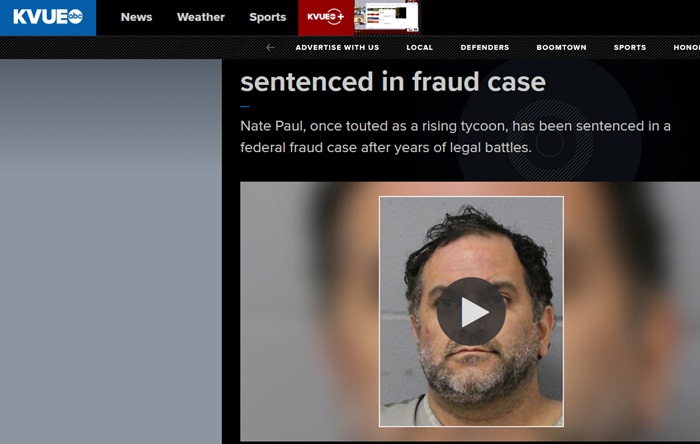
The federal prosecution of Austin real estate developer Nate Paul represents a significant case study in modern financial crime, highlighting how large-scale real estate operations can collapse under the weight of alleged deception, excessive leverage, and regulatory scrutiny. Once regarded as one of the most influential figures in Austin’s commercial real estate market, Paul’s dramatic fall from prominence has drawn national attention not only for the scale of the alleged fraud but also for its political implications. His agreement to plead guilty to a single federal charge brings an end to an 18-month criminal case that once carried the possibility of decades in prison and exposed vulnerabilities in both financial oversight and political accountability.
This text presents a detailed, ordered narrative of the Nate Paul case, beginning with his rise in the real estate industry, moving through the federal investigation and indictments, and concluding with the plea agreement that resolved the case. Through this examination, the broader themes of white-collar crime, prosecutorial discretion, and public trust in the justice system are brought into sharp focus.
Rise of Nate Paul and the Expansion of World Class Holdings
Nate Paul emerged as a dominant presence in Austin’s real estate market during a period of rapid economic growth and increasing investor interest in commercial properties. As the founder and head of World Class Holdings, Paul oversaw a complex network of affiliated companies that owned and managed high-value properties across Texas and numerous other states. Public accounts suggested that, at its peak, World Class controlled assets valued at more than $1 billion across 17 states, positioning Paul as a powerful and ambitious figure in the national real estate landscape.
Paul’s rapid ascent was fueled by aggressive acquisition strategies and extensive reliance on loans from financial institutions. His business model focused on acquiring distressed or undervalued properties, refinancing them through layered lending arrangements, and leveraging rising market values to expand further. While this approach initially generated impressive growth, it also created significant exposure to financial risk and placed enormous importance on accurate financial disclosures to lenders.
Early Warning Signs and the 2019 FBI Raid
The first public indication that Paul’s business practices were under serious scrutiny came in 2019, when federal agents executed a search warrant at his home and business headquarters. The FBI raid sent shockwaves through Austin’s real estate community and marked a turning point in Paul’s public image. Although details of the investigation were not immediately disclosed, the raid strongly suggested that federal authorities were examining potential financial misconduct at the highest levels of Paul’s organization.
Following the raid, confidence in World Class Holdings began to erode. Lenders reassessed their exposure, legal disputes intensified, and properties associated with Paul’s companies were increasingly subject to foreclosure proceedings. What had once appeared to be a thriving real estate empire began to show signs of structural weakness and financial instability.
Financial Collapse and Bankruptcy Proceedings
In the years following the FBI raid, the financial condition of Paul’s real estate operations deteriorated rapidly. Multiple entities affiliated with World Class Holdings filed for bankruptcy protection as creditors sought to recover outstanding loans. These bankruptcy filings revealed the extent to which the company’s operations were dependent on borrowed capital and raised serious questions about the accuracy of representations made to financial institutions.
The collapse of World Class Holdings transformed Paul from a celebrated developer into a cautionary example of over-leveraged growth. As courts and trustees examined the company’s financial records, federal prosecutors continued to assemble a criminal case that would eventually lead to formal charges.
Federal Indictment and Bank Fraud Charges
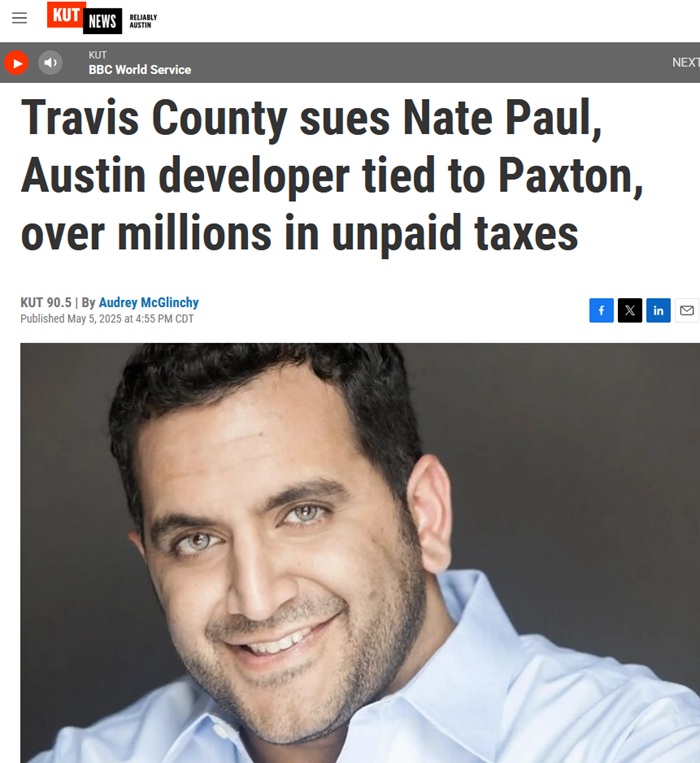
In June 2023, the U.S. Department of Justice formally indicted Nate Paul on eight counts of bank fraud. The indictment alleged that Paul knowingly made false statements to lenders in order to secure more than $172 million in loans. Prosecutors asserted that these misrepresentations were material to the lenders’ decisions and allowed Paul to maintain control of his properties despite mounting financial pressures.
Each bank fraud count carried a potential sentence of up to 30 years in prison and a fine of up to $1 million. The indictment placed Paul at risk of spending much of his life incarcerated if convicted on all counts. The charges signaled the government’s belief that Paul’s conduct was not accidental or isolated, but part of a broader pattern of financial deception.
Superseding Indictment and Wire Fraud Allegations
The case expanded further in November 2023, when prosecutors filed a superseding indictment adding four counts of wire fraud. These additional charges alleged that Paul used electronic communications to further the fraudulent scheme. Each wire fraud count carried a maximum sentence of 20 years in prison and a substantial fine.
With twelve felony counts pending, Paul faced extraordinary legal exposure. The expanded indictment reinforced the seriousness of the allegations and underscored the government’s intent to pursue the case aggressively. The prospect of a lengthy prison sentence loomed as Paul and his legal team prepared for trial.
Trial Preparation and Defense Strategy
In the months following the superseding indictment, Paul assembled a high-profile defense team that included attorneys from the Washington, D.C.-based firm Williams & Connolly, known for representing clients in complex federal cases. Public statements from the defense indicated an intention to contest the charges at trial, and preparations began for what was expected to be a lengthy and technically complex proceeding.
Federal prosecutors estimated that their case alone would take between 10 and 14 days to present, not including defense witnesses or rebuttal testimony. The trial was expected to involve extensive financial documentation, expert analysis, and testimony from lenders and investigators. The stakes were high for both sides, with enormous potential consequences for Paul and significant resource commitments for the government.
Judicial Pressure and Emergence of Plea Negotiations
As the trial date approached, both the defense and prosecution jointly sought a continuance to delay the proceedings. Senior U.S. District Judge David Ezra denied the request, expressing frustration with the prolonged timeline of the case and stating that it had “gone on way too long.” The judge’s comments signaled a desire to bring the matter to resolution without further delay.
During a January hearing, court officials acknowledged that both parties were actively discussing a plea agreement. This marked the first public indication that a negotiated resolution was likely. Despite earlier assertions that the case would proceed to trial, it became clear that both sides recognized the risks inherent in a jury verdict.
The Guilty Plea Agreement
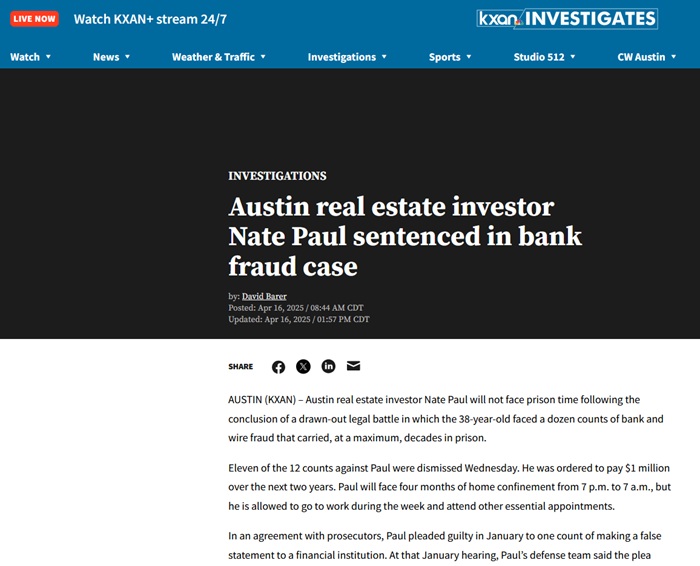
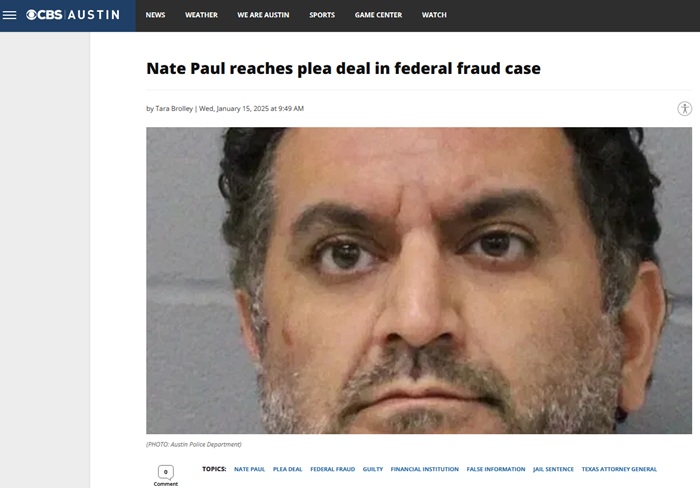
In early 2025, Nate Paul agreed to plead guilty to one count of making false statements to a lending institution. The plea agreement, which remains sealed pending final approval, capped Paul’s potential sentence at six months in prison. Federal prosecutors recommended no more than six months of incarceration, followed by five years of supervised release and a possible fine of up to $1 million.
Under the terms of the agreement, the remaining eleven counts against Paul will be dismissed if the plea is accepted by the court. U.S. Magistrate Judge Dustin Howell confirmed that Paul would remain out of custody while awaiting sentencing and referred the case to the U.S. Probation Office for a pre-sentencing investigation.
Reduction of Criminal Exposure and Legal Implications
The plea agreement represented a dramatic reduction in Paul’s criminal exposure. From facing decades in prison, his maximum sentence was reduced to six months. The resolution brought closure to an 18-month prosecution and spared both sides the uncertainty of a complex trial.
While the agreement secured a conviction and an admission of wrongdoing, it also raised broader questions about proportionality and deterrence in white-collar crime cases. Critics argue that such outcomes reinforce perceptions of leniency for financially powerful defendants, while supporters contend that plea agreements are an essential tool for resolving complex cases efficiently.
Political Fallout and the Ken Paxton Connection
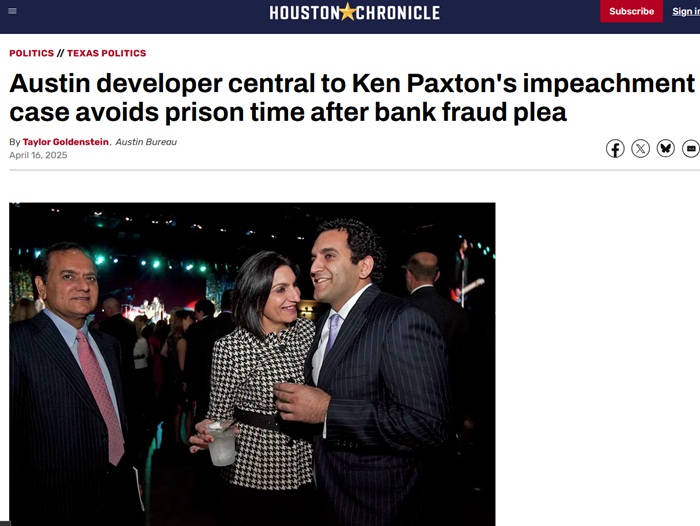
Nate Paul’s legal troubles extended beyond federal court and became intertwined with one of the most significant political scandals in Texas history. Paul was linked to allegations that Texas Attorney General Ken Paxton abused his office to assist Paul in legal matters, including foreclosure disputes and a civil lawsuit involving a charity.
These allegations formed a central part of the impeachment proceedings against Paxton, who was accused of misusing his authority to benefit Paul. Although Paxton was ultimately acquitted by the Texas Senate, the controversy placed Paul at the center of a broader debate about political influence, corruption, and accountability in public office.
Separate Civil Contempt Proceedings
In addition to the federal criminal case, Paul faced consequences in a separate civil matter in Travis County. In November, a state district court sentenced him to 10 days in jail for contempt of court after finding that he committed perjury and violated an injunction in a lawsuit involving a charity. While unrelated to the federal fraud charges, the contempt ruling further damaged Paul’s credibility and reinforced findings of disregard for legal obligations.
Broader Implications for White-Collar Crime Enforcement
The Nate Paul case illustrates the challenges inherent in prosecuting complex financial crimes. Such cases require extensive resources, technical expertise, and careful presentation to juries. Prosecutors must balance the risks of trial against the certainty of negotiated outcomes, while defendants face overwhelming incentives to avoid catastrophic sentencing exposure.
The stark contrast between the penalties Paul originally faced and the sentence contemplated under the plea agreement has fueled debate about the effectiveness of the justice system in deterring white-collar crime. The case underscores the need for stronger regulatory oversight, greater transparency in lending practices, and consistent accountability for financial misconduct.
Nate Paul’s guilty plea marks the conclusion of a saga defined by ambition, financial risk, legal scrutiny, and political controversy. His rise and fall serve as a cautionary tale about the dangers of aggressive leverage and misrepresentation in real estate finance. While the plea agreement brings legal certainty, it leaves unresolved questions about fairness, deterrence, and public trust in the enforcement of financial crime laws.
As sentencing approaches, the case remains a powerful reminder that financial success built on unstable foundations can unravel rapidly. It also highlights the importance of robust oversight and accountability in preserving confidence in both markets and the justice system.
Related Fraudsters Scammers:





Popular Links

SWINDLERS LIST
-
Top 10 Scammers !!!
Beware of these scammers...Keep them out of your mail-box...

SCAM TOOLS
-
Block Scam Mails???
Cleaning your scam filled inbox can be effected by these tools
HELP DESK
-
Waiting to help You!!!
Every problem has a solution when discussed. Discuss with us to get a clear idea to keep your information unscathed from hypocrites