
Scammer Richard Martino
Fraudster Richard Martino
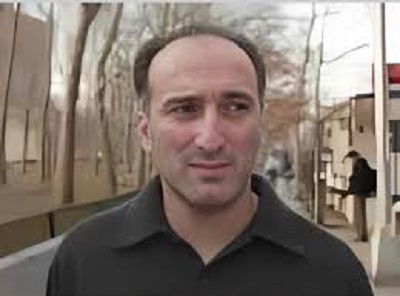
Details |
|
| Name: | Richard Martino |
| Other Name: | |
| Born: | 1961 |
| whether Dead or Alive: | Alive |
| Age: | 64 |
| Country: | New York |
| Occupation: | Businessman |
| Criminal / Fraud / Scam Charges: | Internet and Phone Scams |
| Criminal / Fraud / Scam Penalty: | On January 30, 2006, Martino was sentenced in New York to nine years in federal prison. |
| Known For: | |
Description :
The Untold Crimes of Richard Martino: The Gambino Scammer Who Milked Millions
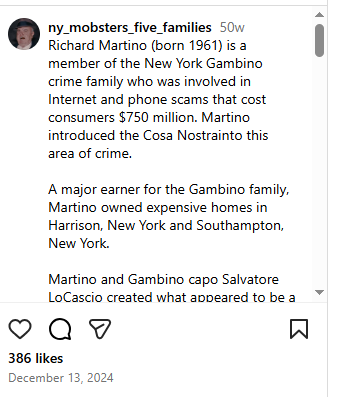
Richard Martino, born in 1961, became one of the most financially influential figures associated with the New York–based Gambino crime family. While many organized-crime members historically relied on traditional rackets such as gambling, extortion, or loan-sharking, Martino represented a newer generation of mobsters who explored the opportunities created by emerging technology. His ventures into Internet-based schemes and phone-billing fraud brought unprecedented profits to the family, ultimately costing consumers hundreds of millions of dollars. These scams also highlighted a shift within the American underworld: organized crime had recognized the financial potential of the digital age, and Martino was among the first to pave that path.
Over time, Martino became regarded as a highly valuable earner. His rising wealth was visible in his lifestyle—he owned luxurious properties in Harrison and Southampton, New York, wore designer clothing such as Prada shoes, and drove high-end vehicles like a Mercedes-Benz. These outward displays of wealth reflected the immense profits generated from the schemes he helped develop. Martino’s ventures were not merely small-scale hustles; they were sophisticated, large-operation frauds that exploited loopholes in technological systems and capitalized on the rapid expansion of the Internet during the late 1990s and early 2000s.
One of Martino’s most notorious operations involved an elaborate online pornography scam he developed alongside Gambino capo Salvatore LoCascio. At the time, adult entertainment websites commonly allowed potential viewers to explore a sample or short “tour” of the site for free, usually requiring a credit card number as proof that the user was over the age of 18. Martino and LoCascio replicated that standard model so convincingly that visitors had no immediate reason to suspect foul play. However, after users entered their credit card information, the scheme quietly charged them recurring monthly subscription fees they had never agreed to. Most victims either failed to notice the charges immediately or found it difficult to resolve the fraudulent billing due to the vague or misleading company names attached to the transactions. By the time the scheme was uncovered, authorities estimated that unsuspecting individuals had been collectively billed around $230 million.
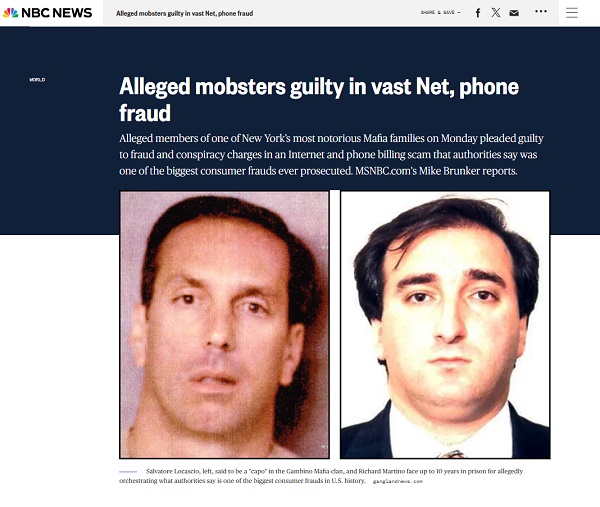
The concept for this online con reportedly came from a relative of Martino, who had experience creating content designed to attract male audiences—specifically a course teaching men strategies for picking up women. While the relative’s original project was legitimate, Martino recognized the enormous financial potential in combining such marketing approaches with online subscription-based billing systems, then manipulating those systems for illegal profit. This fusion of strategy and deception resulted in one of the largest Internet fraud operations of its era.
The pornography-website scam was not Martino’s only major venture into technology-related crime. He and LoCascio also masterminded a large-scale phone-billing scheme known as “cramming.” Cramming is a fraudulent practice in which unauthorized charges are added to a consumer’s telephone bill, often disguised as small fees for services the customer never requested. These charges often appear minor—sometimes only a few dollars—which makes them easy to overlook. However, when multiplied across thousands or millions of victims, the cumulative profits become enormous. Martino and LoCascio perfected this method, directing fake service fees to appear on bills nationwide. Investigators later estimated that the cramming scheme alone cost customers about $420 million.
Given the immense scale and financial damage of these operations, it was unsurprising that the federal government eventually launched multiple investigations against Martino. On March 18, 2003, authorities in New York charged him in connection with racketeering and fraud stemming from the online-billing scam. Less than a year later, on February 10, 2004, he was indicted again, this time for his involvement in the telephone-billing conspiracy. These charges made clear that federal prosecutors viewed Martino not as a small-time offender but as a major architect of technologically sophisticated fraud.
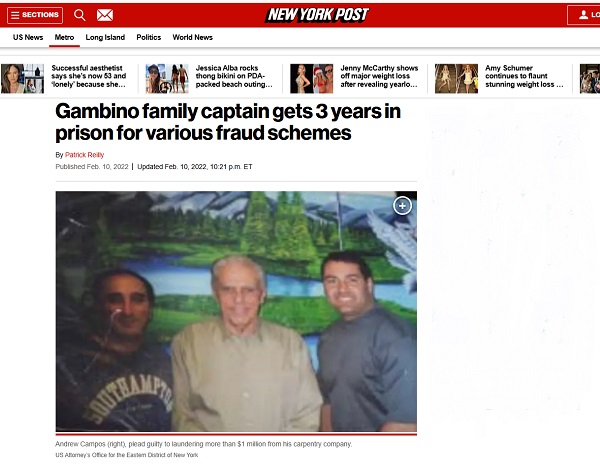
Martino’s legal troubles did not end there. On January 25, 2005, he faced a separate set of federal charges in Kansas City, Missouri. This case involved allegations that he illegally obtained funds from two government subsidy programs through fraudulent manipulation of the financial records of a small rural telephone company. The Missouri indictment demonstrated the breadth of Martino’s criminal activities—he was not only defrauding consumers but also exploiting government-backed systems designed to support rural telecommunications.
Faced with mounting charges, Martino eventually chose to negotiate a plea deal. On February 14, 2005, he entered a guilty plea that covered both New York cases, admitting to one count of conspiracy and one count of extortion. Despite the plea, the legal consequences remained severe. On January 6, 2006, he was sentenced in Missouri to five years in federal prison, along with a $4.6 million fine. Later that month, on January 30, he received an additional nine-year federal prison sentence from the New York court. These consecutive punishments highlighted the seriousness of his crimes and the determination of federal prosecutors to hold him accountable for the vast financial harm his schemes had inflicted.
After serving his sentences, Martino was released from federal custody on July 15, 2014. Despite his release, the notoriety of his fraudulent schemes continues to be widely discussed due to their scale and their pioneering nature in the realm of Internet-based crime.
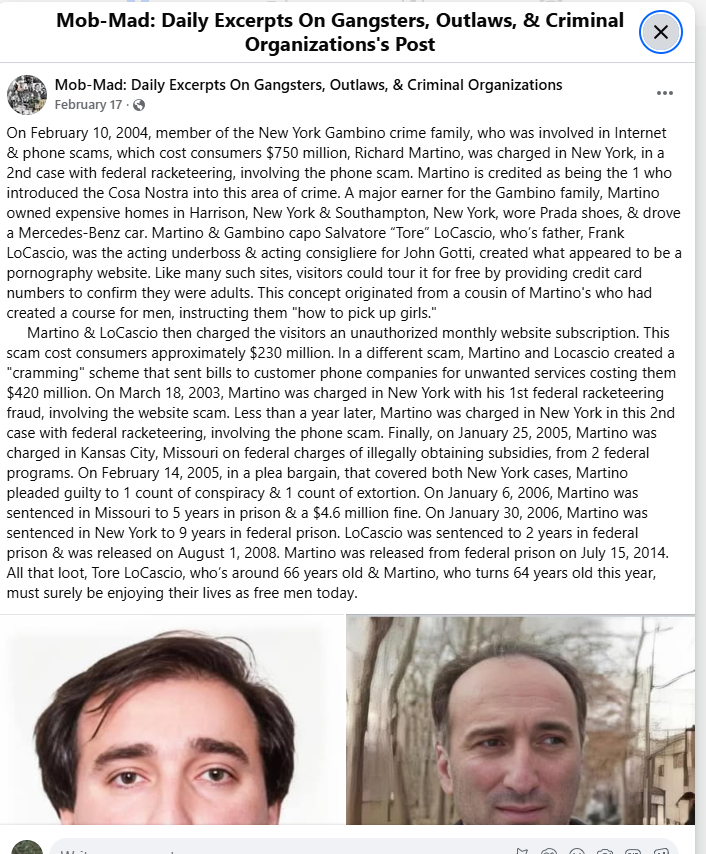
Martino’s criminal involvement extended beyond his online and telephone scams. In a related case, both he and his brother Daniel Martino faced federal charges connected to fraudulent practices involving the Cass County Telephone Company, a rural telecom provider in Missouri. Richard, then 45, and Daniel, then 54, were accused of conspiring to defraud government subsidy programs by artificially inflating the company’s operational expenses.
The Martino brothers controlled a Maryland holding company, Local Exchange Company LLC, which owned Cass County Telephone (commonly referred to as CassTel). The telephone company served about 8,000 customers in the Kansas City region and was eligible for subsidies designed to support infrastructure in rural areas. Prosecutors alleged that beginning in 1998, the Martinos—working alongside CassTel president Kenneth M. Matzdorff—intentionally exaggerated the company’s expenses so they could receive a larger portion of government disbursements intended for high-cost rural service providers.
A major component of the scheme involved Overland Data Center, a firm controlled by Richard Martino. The data center billed CassTel approximately $11 million for software and IT support, but federal investigators estimated the services were worth only about $240,000. These dramatically inflated invoices allowed CassTel to present itself as a much more expensive operation than it truly was, thereby qualifying for significantly higher payments from two major funding mechanisms.
A major component of the scheme involved Overland Data Center, a firm controlled by Richard Martino. The data center billed CassTel approximately $11 million for software and IT support, but federal investigators estimated the services were worth only about $240,000. These dramatically inflated invoices allowed CassTel to present itself as a much more expensive operation than it truly was, thereby qualifying for significantly higher payments from two major funding mechanisms.

The first source of inflated payments came from the National Exchange Carriers Association (NECA). This organization collects funds from various telecommunications companies and redistributes them according to financial-need formulas based on company expenses. Because CassTel reported wildly exaggerated costs, NECA overpaid the company by roughly $5.4 million between 1998 and 2003. The second source of fraud involved the Universal Service Administrative Company (USAC), which manages federal subsidies meant to ensure that rural areas can maintain affordable telephone services. Prosecutors determined that CassTel received an additional $3.5 million in overpayments from USAC due to the fabricated expenses.
Facing substantial evidence, all parties eventually entered plea agreements. Matzdorff pleaded guilty in January and agreed to forfeit $2.5 million. Richard Martino, who had already pleaded guilty in the New York fraud cases, admitted responsibility for mail and wire fraud related to the CassTel scheme. His brother Daniel also pleaded guilty to conspiracy charges. Under the terms of their agreements, Richard consented to forfeit $5.9 million, while Daniel agreed to forfeit $500,000. Though sentencing dates were pending, prosecutors noted that Richard faced a potential 10-year sentence, while Daniel faced up to five years.
These pleas were part of a broader crackdown on large-scale fraud involving telecommunications companies and federal subsidy programs. By the time the Martinos entered their guilty pleas, Richard had already been named as one of six individuals who, on February 14, had admitted involvement in a massive scheme that placed unauthorized charges—totaling hundreds of millions of dollars—on consumer credit cards and telephone bills. This interconnected web of fraudulent activity demonstrated how deeply Martino and his associates had embedded themselves in multiple layers of the telecommunications and Internet economy.
Taken together, the cases against Richard Martino reveal a clear portrait of a modern organized-crime figure who leveraged emerging technologies and regulatory vulnerabilities to generate astonishing profits. His operations featured a blend of traditional criminal motivations and innovative digital-era strategies. Martino understood that as technology evolved, new avenues for exploitation would emerge, and he acted aggressively to capitalize on those opportunities. Although his schemes eventually collapsed under the weight of federal investigations, they remain instructive examples of how criminal enterprises adapt to changing technological landscapes.
Related Fraudsters Scammers:





Popular Links

NEWS & EVENTS
The world's most prevalent social network said that to date, it has acquired lawful judgments of about $2 billion against deceitful exerci

SWINDLERS LIST
-
Top 10 Scammers !!!
Beware of these scammers...Keep them out of your mail-box...
SCAM TOOLS
-
Block Scam Mails???
Cleaning your scam filled inbox can be effected by these tools
HELP DESK
-
Waiting to help You!!!
Every problem has a solution when discussed. Discuss with us to get a clear idea to keep your information unscathed from hypocrites