
Scammer Lucio Urtubia
Fraudster Lucio Urtubia
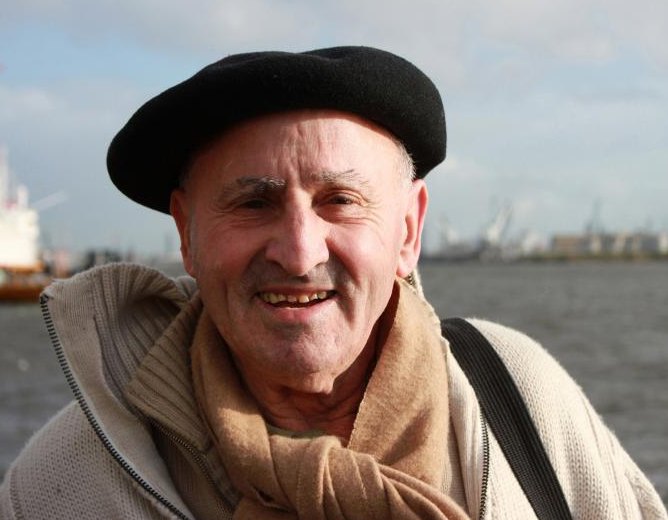
Details |
|
| Name: | Lucio Urtubia |
| Other Name: | |
| Born: | 1931 |
| whether Dead or Alive: | 2020 |
| Age: | 89 |
| Country: | Spanish |
| Occupation: | Forger, brick layer |
| Criminal / Fraud / Scam Charges: | |
| Criminal / Fraud / Scam Penalty: | |
| Known For: | |
Description :
Expropriation as Resistance: Lucio Urtubia and the Politics of Financial Disobedience
Lucio Urtubia Jiménez was neither a conventional criminal nor a traditional revolutionary. Born in 1931 and active primarily from the 1950s through the early 1980s, he became one of the most emblematic figures of expropriative anarchism, a tradition that rejects both state authority and capitalist property relations. To admirers, he was a modern Robin Hood who stole from banks to fund revolutionary movements and support those persecuted by authoritarian regimes. To financial institutions and governments, he was a dangerous forger whose actions threatened the credibility of global banking. Lucio himself rejected both labels. He saw his actions not as theft, but as restitution—taking back what banks had already taken from society through exploitation, speculation, and debt.
His life story reveals how political resistance can take unconventional forms, operating not through armies or political parties but through printing presses, forged documents, and carefully planned acts of financial sabotage. Lucio’s actions also anticipated later forms of financial disobedience, influencing activists such as Enric Durán, who adapted similar methods in the context of twenty-first-century neoliberal capitalism. Together, their stories raise enduring questions about legality, legitimacy, and the moral boundaries of rebellion.
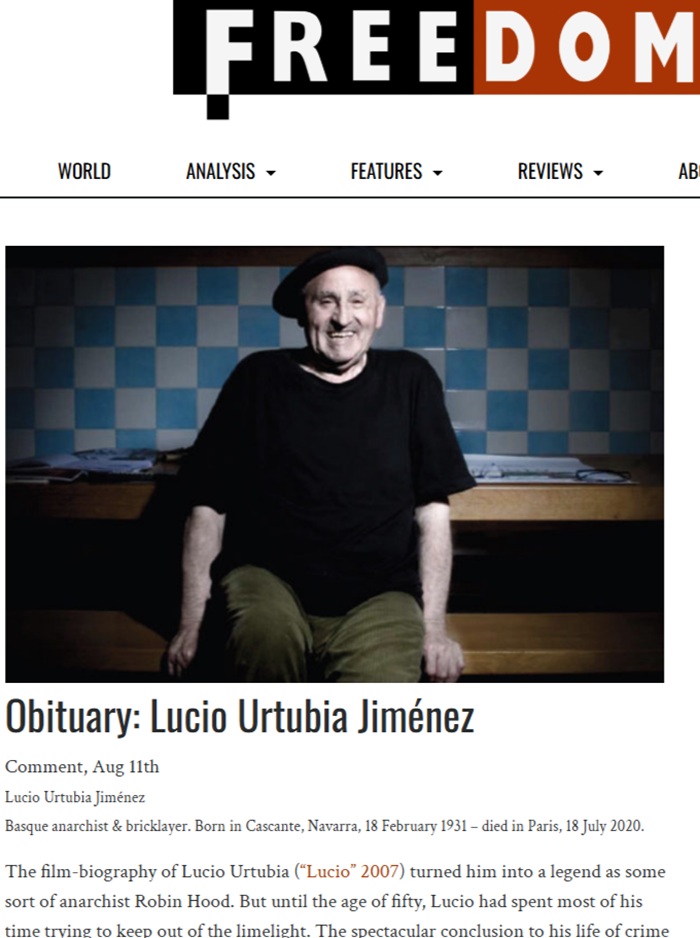
Childhood in Francoist Spain: Poverty and Early Political Consciousness
Lucio Urtubia was born in Cascante, Navarre, in 1931, a period marked by instability and impending conflict in Spain. His early childhood unfolded against the backdrop of the Spanish Civil War and the consolidation of Francisco Franco’s dictatorship. Like many working-class families under the regime, the Urtubias lived in poverty, with limited access to education, healthcare, or political freedom. These conditions were not abstract injustices to Lucio; they were lived realities that shaped his understanding of power and inequality from a young age.
A formative event occurred in 1942, when Lucio’s father lay dying. In desperation, his father approached the local bank, requesting a loan secured against the family’s future harvest so he could afford medical treatment. The bank refused outright. To Lucio, still a child, this refusal revealed something fundamental about the nature of financial power. The bank’s decision demonstrated that profit and property mattered more than human life. His father’s subsequent death cemented in Lucio’s mind the idea that banks were not neutral institutions but instruments of class domination. This experience would later serve as a moral justification for everything he did.
Military Service, Smuggling, and Desertion
After his father’s death, Lucio sought a way out of Francoist Spain. His sister Satur had already moved to Paris, where she married a Frenchman and built a new life. Lucio hoped to join her, but she insisted that he first fulfill his obligation to the Spanish military. Military service under Franco was compulsory, and for Lucio it became another lesson in authoritarian discipline and enforced obedience.
During this period, Lucio became involved in smuggling goods, an activity that offered both financial survival and a sense of autonomy. Smuggling networks operated in the shadows of the state, exploiting the very borders and controls imposed by authoritarian power. However, betrayal within the group led to arrests, and Lucio was imprisoned in a military jail. He managed to escape, but the escape came at a cost: he left behind comrades who would face punishment in his absence. This experience reinforced his distrust of hierarchical systems and his belief that survival often required defiance rather than compliance.
Lucio refused to return to military service and fled to France in 1952, effectively becoming a deserter. This decision marked his definitive break with the Francoist state and his entry into exile.
Paris: Exile, Labor, and the Discovery of Anarchism
Paris in the postwar years was a hub for political exiles, intellectuals, and underground movements. It was here that Lucio found both refuge and purpose. Through his brother-in-law Patrick, who worked at the French mint, Lucio secured employment as a bricklayer. He approached physical labor with intensity and discipline, quickly earning the respect of older workers. Yet it was during lunch breaks and informal conversations that Lucio’s political transformation accelerated.
His coworkers introduced him to anarchist ideas, recognizing in him an instinctive resistance to authority and hierarchy. They invited him to attend meetings of the Clichy Anarchist Association, where anarchism was presented not as abstract theory but as a way of life. Lucio learned that anarchists viewed money as a central mechanism of oppression and that banks were among the most powerful institutions sustaining inequality. Anarchism, as he encountered it, rejected both state socialism and capitalism, advocating instead for mutual aid, self-management, and direct action.
These meetings also introduced Lucio to the legacy of Spanish anarchism, particularly the tradition of expropriation. He learned about figures who robbed banks not for personal gain but to fund resistance, support prisoners, and sustain underground movements. Among these figures, none loomed larger than Quico Sabaté.
Quico Sabaté and the Ethics of Armed Resistance
Quico Sabaté was a legendary Spanish anarchist guerrilla who continued armed resistance against Franco long after the Civil War had ended. Operating from exile, Sabaté conducted bank robberies and sabotage operations, distributing money to anarchist networks and families of imprisoned militants. To many, he embodied the uncompromising spirit of anarchist resistance.
Lucio’s dedication impressed his comrades, and he was entrusted with sheltering Sabaté. When the two finally met, their connection was immediate. They shared a deep distrust of institutions such as banks and the Church, which they viewed as pillars of oppression. Their conversations were animated by a shared conviction that moral legitimacy did not reside in law but in justice.
Lucio’s first bank robbery had been motivated by desperation—his attempt to obtain morphine for his dying father. Under Sabaté’s influence, robbery became something else entirely: a conscious political act. Together, they carried out expropriations according to strict ethical rules. The stolen money was divided into three parts: one for anarchist organizations, one for families of prisoners, and one for those who carried out the action. Personal enrichment beyond basic needs was rejected as a betrayal of anarchist principles.
Diverging Paths: Printing Presses Versus Guns
Despite his admiration for Sabaté, Lucio began to question the effectiveness of armed struggle. He believed that lasting revolution required the support of the masses and that ideas could be as powerful as weapons. Lucio proposed creating a printing press to spread anarchist ideas, educate workers, and build consciousness. Sabaté dismissed the idea, arguing that pamphlets could not defeat fascism.
Their disagreement marked a turning point. Sabaté chose to return to Spain and continue armed resistance, a decision that would lead to his death at the hands of Francoist forces. Lucio, devastated by Sabaté’s death, sought to honor his comrade in another way. He returned to expropriation, robbing a bank to finance the purchase of a printing press.
Together with fellow anarchist Asturiano, Lucio established a small press that produced pamphlets and newspapers. This shift from guns to printing plates reflected Lucio’s evolving strategy: attacking power not only through direct confrontation but through communication and cultural resistance.
Love, Revolution, and New Ambitions
It was through the printing press that Lucio met Anne, a university student involved in student strikes and political activism. Anne believed in cultural and social revolution and spoke passionately about transforming everyday life, not just political institutions. Her confidence and intelligence impressed Lucio, and their relationship quickly became both personal and political.
Anne’s presence expanded Lucio’s understanding of struggle, emphasizing education, culture, and international solidarity. When news spread of U.S. efforts to undermine the Cuban Revolution, Lucio felt compelled to act. He wanted to support Cuba, not symbolically but materially.
Forging Currency and Meeting Che Guevara
Jeanne, another comrade, suggested using the printing press for more radical purposes. Instead of pamphlets, they could forge documents or currency. With Patrick’s technical knowledge from the mint, Lucio’s group began experimenting with forging U.S. dollars. After multiple failures, they succeeded in producing counterfeit bills convincing enough to be exchanged for francs.
Lucio took his plan to the Cuban embassy in Paris, proposing to flood the market with fake dollars to weaken the U.S. economy. This audacious idea led to a secret meeting with Che Guevara, who listened attentively but expressed skepticism about the plan’s strategic impact. Che admired Lucio’s initiative but believed that currency forgery alone could not win a war.
Lucio’s attempt to distribute the forged dollars ended dramatically. Spotted by police, he threw the bills into the air to create chaos and was arrested. He spent months in prison, during which Anne gave birth to their daughter. Upon release, Lucio resolved to abandon illegal activity, prioritizing his family’s safety.
The Long Pause and the Traveler’s Check Discovery
For eight years, Lucio worked quietly as a builder, attempting to live within the law. This period of relative calm ended when he encountered a traveler’s check. He learned that traveler’s checks could be cashed almost anywhere in the world and relied on centralized verification systems that were slow and vulnerable.
Lucio immediately recognized their potential. Forging traveler’s checks offered a way to expropriate banks on a scale far larger than traditional robberies. After numerous failed attempts, his group perfected the process. Lucio personally tested the checks, successfully cashing them at a bank.
The Citibank Operation: Precision and Scale
Lucio organized a meticulously planned operation. Anarchist pairs across Europe would cash forged traveler’s checks simultaneously at noon, ensuring that serial numbers could not be flagged in time. The operation was repeated monthly, generating millions of dollars.
The money was distributed according to anarchist principles, funding movements, supporting prisoners’ families, and covering participants’ needs. The First National City Bank in New York was shaken by the scale of the fraud and pressured French authorities to intervene. Inspector Costello, who had pursued Lucio for decades, suspected him but lacked proof.
Arrest, Betrayal, and Legal Warfare
As banks began refusing traveler’s checks, Lucio decided on one final operation: selling a large batch of forged checks to a black-market intermediary. The plan coincided with Anne’s departure to Bolivia, where she intended to work with Doctors of the World.
Despite evading surveillance, Lucio was arrested at the meeting point. Initially believing he had been betrayed by Patrick, Lucio later discovered that the intermediary was an undercover officer and that a former prison acquaintance had been coerced into cooperation.
The City Bank demanded massive compensation and a long prison sentence. However, Lucio’s lawyer uncovered procedural errors that secured his temporary release. Public opinion increasingly viewed Lucio as a Robin Hood figure, complicating the authorities’ efforts.
The Final Victory Over the Bank
Facing continued pressure, Lucio escalated the operation, distributing forged checks across Europe and Latin America. Crucially, the police never recovered the printing plates. Without them, the forgery could continue indefinitely.
Lucio offered the bank a deal: he would surrender the plates in exchange for dropped charges and financial compensation. Reluctantly, the bank accepted. The agreement marked a rare victory of an individual anarchist over a global financial institution.
Lucio joined his family in Bolivia. The vulnerability exposed by his operation contributed to changes in banking practices and the eventual rise of alternative payment systems such as cards and ATMs.
Legacy: From Lucio Urtubia to Enric Durán
Lucio’s actions inspired later activists, most notably Enric Durán, who in 2008 expropriated nearly half a million euros from Spanish banks by taking loans he never intended to repay. Like Lucio, Durán redistributed the money to social movements and framed his actions as legitimate resistance. Durán explicitly cited Lucio as an inspiration, adapting expropriative anarchism to a new era of financial abstraction.
Expropriation and the Right to Rebel
Lucio Urtubia’s life challenges conventional distinctions between crime and resistance. He believed that when institutions systematically exploit society, expropriation becomes an act of justice rather than theft. His story demonstrates that rebellion does not always take the form of violence; it can also be waged through strategy, intelligence, and courage.
Related Fraudsters Scammers:



Popular Links

SWINDLERS LIST
-
Top 10 Scammers !!!
Beware of these scammers...Keep them out of your mail-box...

SCAM TOOLS
-
Block Scam Mails???
Cleaning your scam filled inbox can be effected by these tools
HELP DESK
-
Waiting to help You!!!
Every problem has a solution when discussed. Discuss with us to get a clear idea to keep your information unscathed from hypocrites