
Scammer Johnny Bode
Fraudster Johnny Bode
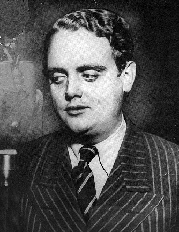
Details |
|
| Name: | Johnny Bode |
| Other Name: | |
| Born: | 1912 |
| whether Dead or Alive: | 1983 |
| Age: | 0 |
| Country: | Swedish |
| Occupation: | composer, singer |
| Criminal / Fraud / Scam Charges: | |
| Criminal / Fraud / Scam Penalty: | |
| Known For: | |
Description :
Johnny Bode: The Genius Who Never Stopped Destroying Himself
Johnny Bode was born on January 6, 1912, in the small town of Falköping in western Sweden. His childhood was unstable from the beginning, shaped by the divorce of his parents when he was still very young. Even as a boy, he showed a strange mix of charm and provocation. At around seven years old, he was already performing cheeky songs and witty verses at his grandfather’s formal dinner gatherings for business guests. Instead of being corrected, he was encouraged—sometimes even offered punch or liqueur afterward—teaching him early that boldness and mischief could win applause. By his teenage years this pattern was stronger. At fifteen he wrote a school revue so scandalous that the principal stopped it before it could be staged. Soon after, Bode left his hometown for Stockholm, convinced his future lay in the capital’s entertainment world.
A Teenage Recording Star
Bode’s rise in music came fast. At only seventeen, he made his recording debut and quickly became a remarkably productive performer. During the late 1920s and 1930s he recorded hundreds of songs on 78-rpm records, often performing his own compositions. He had a natural gift for melody and timing, and his style fit perfectly with the cabaret and revue culture of the era. One of his best-known songs, “En herre i frack” (“A Gentleman in Tailcoat”), was written together with Hasse Ekman and later performed by Gösta Ekman Sr. in the mid-1930s. For a while, Bode looked like a young star headed toward a long career. Yet even in his productive years, there were signs of instability. The last 78-rpm record featuring Bode as a singer was recorded in 1942, a surprisingly early end for someone who had once seemed unstoppable.
Living Like Money Didn’t Matter
Although Bode earned attention and opportunities, he lived far beyond his means. He became a recognizable character in Stockholm’s nightlife—often charming, sometimes generous, and frequently broke. What shocked people was not just his inability to pay, but the way he behaved as if consequences never applied to him. He developed a habit of ordering lavishly at restaurants, playing the role of the wealthy entertainer, then slipping out through a back exit before the bill arrived. He left friends, acquaintances, and sometimes near-strangers to pay. Over time, he was banned from hotels and restaurants across the city. Yet he kept returning to the same behavior, as if escaping the bill was part of the performance itself.
Mythomania, Lies, and the Collapse of Trust
Bode’s money problems were only one side of his downfall. Another was his extreme tendency toward mythomania—compulsive lying that went beyond exaggeration. He constantly invented stories about his achievements, his contacts, and his importance. At times the lies were grand and theatrical; at other times they were petty and reckless. Either way, they created chaos, destroyed relationships, and made him impossible to trust. His lies often trapped him in contradictions, forcing him into even more deception to maintain the illusion. In the end, the same imagination that could produce songs and couplets also produced self-destruction.
Friendship with the Ekmans and a Career-Ending Betrayal
Through Hasse Ekman—his schoolmate and one of Sweden’s future major figures in film and theatre—Bode gained entry into an influential circle. He became close to Gösta Ekman Sr., and for a time he was treated almost like a son in the household. This relationship could have stabilized him and protected his career. Instead, it ended in humiliation. Bode was discovered attempting to pawn the family’s silverware. The betrayal was so serious that it cut him off from one of the most important networks in Swedish entertainment. It also confirmed what many already suspected: Bode’s charm could not be separated from his dishonesty.
Petty Crime and a Pattern of Fraud
As his reputation worsened, Bode became involved in multiple crimes. His name appeared in cases involving stolen goods—such as expensive carpets—and financial fraud through forged or false checks. These were not isolated incidents but part of a pattern. He skipped hotel bills as easily as restaurant bills, leaving behind a trail of unpaid debts and angry victims. Over time, the entertainment industry began shutting him out, not because he lacked talent but because working with him became too risky. He seemed incapable of controlling impulses, and the consequences continued to grow.
Declared Incompetent and Confined to Psychiatric Care
Eventually, the authorities stepped in. After repeated fraud cases, Bode was declared legally incapable and sentenced to psychiatric care. He spent significant time at Sankt Sigfrid’s Hospital in Växjö. During this period, he was forcibly sterilized, reflecting the harsh and tragic reality of Swedish institutional policies at the time. The hospitalization did not reform him into a stable citizen. Instead, it deepened his bitterness and reinforced his self-image as a misunderstood genius punished by society.
Nazism and Permanent Cultural Exile
During World War II, Bode developed a fascination with National Socialism, a choice that would stain him for life. Whether he was ideologically committed or simply attracted to uniforms, hierarchy, and spectacle, his behavior aligned him with a cause that Swedish society increasingly rejected. In 1942, he managed to get leave from the hospital and traveled to Finland, where he enlisted. He did not fight at the front but was placed in roles involving supplies and entertainment for soldiers. Before long, his personality became unbearable even in that setting, and he was sent back to Sweden. Yet he returned wearing his Finnish uniform, decorated with Nazi symbols, seemingly proud of the outrage it caused.
Provocations in Sweden and the Move to Occupied Norway
Back home, Bode did not hide. He walked around in uniform, provoking people openly. One infamous moment involved him greeting the outspoken anti-fascist performer Karl Gerhard with a Nazi salute. Newspapers took note, and Bode’s public image worsened further. With Sweden increasingly hostile to him, he traveled to German-occupied Norway, hoping to find an audience and a new stage. There he attempted to start a cabaret linked to collaborators, performing songs and imitations—reportedly including a parody of Winston Churchill—and inserting elements critical of Sweden. The show quickly failed due to low attendance and Bode’s own familiar chaos: lying, stealing, and unpaid debts.
Grini Concentration Camp and Deportation
Eventually, even the German authorities grew tired of him. Bode was arrested and ended up at Grini concentration camp, where he was held for a period before being released and deported to Sweden. Later, he claimed—without credibility—that he had worked for the Norwegian resistance. This was classic Bode: turning disgrace into a heroic legend, even when the facts pointed in the opposite direction.
After the War: Hiding, Traveling, and Short-Lived Comebacks
After World War II, Bode was effectively blacklisted in Sweden’s entertainment world. He tried to rebuild his career under pseudonyms, sometimes managing small successes, but his personal pattern remained unchanged. He married in 1946, but the relationship ended in divorce. He traveled extensively, lived recklessly, and continued slipping away from bills and obligations. He spent time in East Germany, was later expelled, and moved through other countries, chasing opportunities that collapsed as soon as his behavior caught up with him.
The Operetta Reinvention and Another Collapse
In Austria, Bode reportedly reinvented himself under the name Juan Delgada, finding success writing operettas and benefiting from the fact that his Swedish notoriety was not widely known there. For a while, he tasted fame again. But success only fed his mythomania. He claimed titles he had not earned, invented stories about major cultural achievements, and continued behaving recklessly. Eventually, the truth caught up with him once more, and the reinvention collapsed like the others.
Pornographic Recordings and Life on the Margins
In the late 1960s and early 1970s, Bode resurfaced in a very different form: he recorded pornographic comedy albums, including titles such as “Bordellmammans visor” (“The Brothel Madam’s Songs”) and “Bordellmammans dotter” (“The Brothel Madam’s Daughter”). These recordings gave him a kind of underground notoriety but further distanced him from mainstream cultural recognition. By this stage, he was no longer a serious figure in Swedish entertainment—more a scandalous legend, the subject of stories that people repeated because they were too bizarre to ignore.
Death and an Almost Empty Funeral
Johnny Bode died on July 25, 1983, in Malmö. Only eight people attended his funeral. For a man who once recorded hundreds of songs, performed in cabaret circles, and reinvented himself across borders, the small turnout felt like the final verdict on a life spent burning bridges.
A Talent That Couldn’t Be Contained—or Saved
Johnny Bode remains a strange footnote and a haunting character in Swedish cultural history. He was clearly talented, capable of producing music that lived on beyond his own reputation. Yet he repeatedly chose lies over stability, provocation over trust, and ego over survival. His life reads like a loop: rise, scandal, collapse, escape, reinvention—then collapse again. In the end, he left behind not only songs, but a lesson about how charisma without responsibility can become a kind of personal tragedy that swallows everything around it.
Related Fraudsters Scammers:






Popular Links

SWINDLERS LIST
-
Top 10 Scammers !!!
Beware of these scammers...Keep them out of your mail-box...

SCAM TOOLS
-
Block Scam Mails???
Cleaning your scam filled inbox can be effected by these tools
HELP DESK
-
Waiting to help You!!!
Every problem has a solution when discussed. Discuss with us to get a clear idea to keep your information unscathed from hypocrites