
Scammer James Hogue
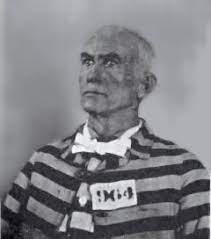
Fraudster James Hogue

Details |
|
| Name: | James Hogue |
| Other Name: | Null |
| Born: | 1959 |
| whether Dead or Alive: | |
| Age: | 64 |
| Country: | Kansas City, Kansas |
| Occupation: | Con man |
| Criminal / Fraud / Scam Charges: | Theft and Forgery |
| Criminal / Fraud / Scam Penalty: | he was sentenced to five years in prison |
| Known For: | Null |
Description :
The Three Faces of James Hogue: Deception, Legacy, and Redemption Across a Shared Name
The name James Hogue appears throughout American cultural, criminal, and human-interest stories in ways that seem almost surreal. It belongs to a man who became one of the most famous academic impostors in U.S. history. It is carried by another who is remembered lovingly in an obituary that speaks to family, loss, and the quiet dignity of a life lived honestly. And it is the name of a modern educator dedicated to reshaping the futures of teen fathers in Kansas City. These three narratives—distinct in circumstances, tone, and consequence—create a fascinating tapestry about the power and complexity of identity. In one case, identity was something stolen and performed. In another, it was something grounded in relationships and memory. And in a third, it is something being rebuilt by a man who is helping others grow into fatherhood with strength and direction. To explore the many faces of the name James Hogue is to examine deception, grief, mentorship, social responsibility, and the enduring human drive to define oneself.
The Impostor: How James Arthur Hogue Built a World of Fabrication
Early Deceptions and the Pursuit of Belonging
The story of James Arthur Hogue, the impostor, begins with an extraordinary act of reinvention. At the age of 25, a time when most people are finding their place in adult life, Hogue decided to return to adolescence—not metaphorically, but literally. By stealing the identity of a deceased infant, he enrolled in a high school in Palo Alto, California. It was an audacious decision that revealed both a strange brilliance and a reckless disregard for truth. Despite the enormous risk, he assimilated seamlessly into teenage life. He joined the cross-country team, where his athletic ability helped cement his place in the student body. Teachers admired his discipline, peers respected his endurance, and no one suspected that their fellow student was nearly a decade older.
Creating a Legendary Persona
Hogue’s next act was even more theatrical. After successfully posing as a high school student, he applied to Princeton University under the name Alexi Indris-Santana. His application told a story so dramatic, so romanticized, and so perfectly crafted that admissions officers were captivated. He wrote that he was an orphan who had lived in the Grand Canyon, surviving by herding sheep and educating himself through philosophy books. It was a narrative tailor-made for elite institutions that celebrate exceptionalism and unconventional paths. Princeton accepted him.
Life at Princeton became Hogue’s most elaborate performance. He joined the track team, where his athletic talent only strengthened his mystique. Students and faculty viewed him as a kind of frontier philosopher, a man shaped by the elements and hardened by circumstance. His charisma made the fiction believable. For a time, he lived inside a myth he had built with extraordinary precision.

Exposure and the Collapse of Illusion
The end came, not because Hogue made a critical mistake, but because of coincidence. Someone who had known him previously recognized him on Princeton’s campus. With one spark of familiarity, the elaborate world he created began to crumble. Investigations followed. Administrators uncovered inconsistencies, lies, and ultimately the truth: the desert-raised orphan was in reality a serial fabricator with a history of reinvention and flight. The public reacted with a blend of fascination, disbelief, and outrage. Hogue became a symbol of extreme imposture—a man whose intellect and creativity had been poured into constructing a false life rather than building an authentic one.
Patterns of Fraud and Continued Reinvention
In the years that followed, Hogue did not retreat from deception. Instead, he continued creating false identities and became entangled in additional criminal cases, including theft of valuable artifacts and further identity-related crimes. His life became a strange loop: a man constantly running from himself by becoming someone else. To psychologists, journalists, and students of criminal behavior, his story remains a compelling study of the human desire to escape one’s own limitations—and the consequences that follow when reinvention is driven not by growth, but by evasion.
A Life Remembered: The Passing of Jeremy Wayne Hogue
A Family’s Tribute
Where the story of the impostor James Hogue is built on deception, the life of Jeremy Wayne Hogue, who passed away on March 25, 2025, is a reminder of the quiet, personal narratives that make up the human experience. His obituary reveals a man deeply connected to his family, whose passing left a wide, tender absence. He is survived by his sister Ann Hogue of Fort Smith, Arkansas; his former wife Debbie Shaw Hogue of Beaumont, Texas; his daughter Ashley Dewees Hickman of Orange, Texas; and his granddaughters Alice and Ripley Hickman, who will grow up with stories of the grandfather who loved them. He is also remembered by family members through marriage and partnership—his stepmother Linda Walker, stepsister Darla Smith, and stepbrothers Bobby and David Walker. Those who preceded him in death include his parents James and Janice Hogue, and his grandparents Earl and Velma May, and Boyd and Delma Hogue.
A Memorial Rooted in Community and Compassion
Jeremy’s memorial service, held at Grace Assembly of God in Lubbock, Texas, reflects the community that surrounded him. Rather than flowers, he requested donations to meaningful causes such as The Haven Animal Shelter, The Life Center of Lubbock, and the American Heart Association—gestures that speak to compassion, practicality, and a life oriented toward benefiting others. While his story may not be splashed across headlines like the impostor who shares his surname, it carries the emotional truth that everyday lives shape the world in quiet, enduring ways.
The Educator and Advocate: James Hogue and the Rise of Dad Prep Academy
A Mission Born from Personal Experience
The third James Hogue—the educator and founder of Dad Prep Academy—carries the name into an entirely different sphere: one of mentorship, advocacy, and emotional guidance. This James Hogue has dedicated his life to transforming the experiences of young fathers, especially teen fathers who often find themselves overwhelmed and underprepared. His work began after his own journey into fatherhood took an unexpected turn. Two years before founding his nonprofit, Fathers Assisting Mothers Inc., he and his wife, Shunquita Hogue, planned a natural home birth—a plan disrupted when she developed preeclampsia. The couple’s doula played a crucial role in navigating the crisis, and the profound gratitude Hogue felt transformed into a calling. He trained as a doula himself, motivated by the belief that fathers should be equipped to serve as “first responders” for their partners during pregnancy, labor, and postpartum recovery.
Creating Support Where Few Systems Exist
Recognizing a lack of resources for young men—particularly teen fathers—Hogue envisioned a program that spoke directly to their needs. Teen pregnancy rates across Kansas City remain among the highest in Missouri for those aged 15 to 17. While many programs support teen mothers, young fathers often fall through the cracks. Hogue saw their potential, not their mistakes. He believed they deserved education, structure, community—and hope.
Thus, Dad Prep Academy was born.
The pilot program at DeLaSalle High School in Kansas City gathers young fathers and expectant fathers into a supportive classroom environment where they learn everything from diaper care and childhood illnesses to emotional regulation and future planning. Students bring ultrasound photos, share frustrations, celebrate gender reveals, and navigate the challenges of young parenthood together.

Teaching Responsibility Through Empathy
During sessions, Hogue leads with a blend of warmth and seriousness. “Just because an experience is difficult,” he tells them, “doesn’t mean it’s not building you into something better.”
His wife, Shunquita, a nurse, joins to answer medical questions, explain outdated advice from well-meaning relatives, and help students understand health issues like RSV, fevers, vaccinations, and postpartum care. Their teamwork sets an example of partnership—something many of the teens have never seen modeled.
Hogue’s curriculum includes emotional literacy, financial planning, early childhood development, and the grieving process many teenage fathers experience as their envisioned youth transitions into responsibility. His message is clear: their lives are not ending—they are transforming.
Conflict Resolution, Personal Growth, and Real-Life Challenges
The classroom becomes a safe space where teen fathers not only learn about childcare but also confront interpersonal conflicts. When two students argued over a female classmate, Hogue and his team guided them through a conflict-resolution session to prevent escalation.
Educators like James Smith, director of student life, believe the program can disrupt negative patterns common among teen parents—lower grades, absenteeism, and fractured relationships. By helping young fathers stabilize their lives, the academy indirectly stabilizes future households.

Impact on Students
For participants like Tyreque Carter, the program has been transformative. Before joining, Carter had no experience caring for babies. Now, each lesson helps him understand his role not just as a father, but as a partner, a provider, and a maturing young man. He says the academy taught him that confusion and fear are normal—but abandoning responsibility is not. “Here,” he explains, “it’s about stepping into a supportive role and being committed.”
A Vision for Expansion
Hogue hopes to expand Dad Prep Academy into schools across the region and eventually the state. The goal is not just to educate young fathers but to reshape generational dynamics. Supporting fathers means strengthening families, improving child outcomes, and creating healthier communities. Where the first James Hogue shattered trust through deception, this James Hogue is restoring trust through mentorship.
Identity in Its Many Forms
The stories of these three men named James Hogue demonstrate the vast spectrum of human identity. One forged false identities in pursuit of belonging, brilliance, or escape. Another left behind a legacy of family, love, and memories cherished by those who knew him. The third uses his identity to empower young fathers, build strong families, and rewrite the narratives of young men who might otherwise feel lost.
Related Fraudsters Scammers:




Popular Links

SWINDLERS LIST
-
Top 10 Scammers !!!
Beware of these scammers...Keep them out of your mail-box...

SCAM TOOLS
-
Block Scam Mails???
Cleaning your scam filled inbox can be effected by these tools
HELP DESK
-
Waiting to help You!!!
Every problem has a solution when discussed. Discuss with us to get a clear idea to keep your information unscathed from hypocrites