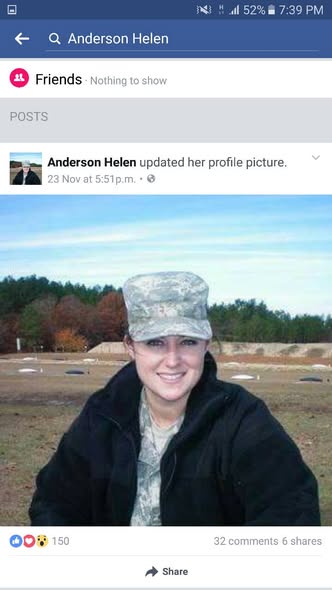
Female Scammer Anderson Helen
Female Scammer Anderson Helen
E-mail:
★★★★☆ 8 ratings
Scam Danger:
 |
Details |
|
| First Name: | Anderson |
| Location [Address]: | |
| Age: | |
| Birth Date: | |
| Aliases: | |
Reports :
I never expected that a simple friend request could turn into something so unsettling and deceptive. It started innocently enough — a profile that appeared genuine at first glance. The account belonged to someone presenting as a woman claiming to be in the U.S. Army. The profile showed a uniformed individual, smiling confidently in what looked like a military environment. There were details that made the story feel believable: mention of studying at the University of Dallas, claims of living between Virginia and Syria due to deployment, and a status that suggested she was single and open to finding companionship.
At the beginning, nothing immediately raised suspicion. The profile picture looked authentic, the timeline had posts, and the interactions seemed normal. Like many others, I assumed it was just another person looking to connect online. The conversation began casually, with polite greetings and small talk. There was a sense of friendliness that made it easy to engage. The person behind the account knew how to communicate in a way that felt personal and attentive, which made the interaction seem real.
However, as time went on, certain patterns began to emerge that didn’t sit right. The conversations quickly became more intense and emotionally driven. There was an unusual urgency in building a connection, as if the goal was to establish trust as quickly as possible. Compliments came too frequently and too soon, and there was a noticeable push toward forming a deeper emotional bond without any real foundation.
One of the first red flags was the inconsistency in the details being shared. The story about military service sounded convincing at first, but when questioned more closely, the answers became vague or contradictory. There were moments where the information didn’t align — locations changed, timelines didn’t add up, and certain basic details about military life seemed inaccurate. It felt like the person was relying on general assumptions rather than real experience.
Another concerning sign was the reluctance to verify identity. When I suggested a video call or any form of real-time communication, there was always an excuse. Technical issues, restricted access due to deployment, or strict military rules were often used as reasons to avoid it. While it’s understandable that military personnel may have limitations, the complete avoidance of any verification raised doubts.
The biggest turning point came when the conversation shifted toward financial matters. Subtle at first, the topic gradually became more direct. There were stories about needing help — situations involving emergencies, delays in accessing funds, or logistical issues due to being stationed overseas. The requests were framed in a way that appealed to empathy, making it seem like helping would be the right thing to do.
At that moment, everything started to become clear. The emotional connection that had been built was being used as a tool. The sense of urgency, the personal stories, and the consistent pressure all pointed toward a deliberate attempt to manipulate. It wasn’t about companionship or genuine connection — it was about gaining trust for financial exploitation.
Looking back, there were several warning signs that became obvious in hindsight:
* The profile relied heavily on attractive or professional-looking photos that could easily be taken from elsewhere.
* The personal story was crafted to sound impressive and trustworthy but lacked depth when examined closely.
* There was a rapid progression from casual conversation to emotional involvement.
* Attempts to verify identity were consistently avoided.
* The introduction of financial requests followed a predictable pattern.
Realizing the situation was both frustrating and alarming. It became clear that the images being used were likely stolen, and the identity being presented was completely fabricated. The person behind the account was not who they claimed to be, and their intentions were far from genuine.
This experience highlighted how sophisticated online scams have become. The individual behind the profile demonstrated a clear understanding of how to build trust and exploit emotions. It wasn’t a random attempt — it was calculated and deliberate. The use of a military persona added an extra layer of credibility, making it easier to lower suspicion.
What makes this kind of scam particularly dangerous is how easily it can affect anyone. It doesn’t rely on technical tricks or hacking — it relies on human emotion. Loneliness, trust, and the desire for connection are powerful factors that scammers take advantage of. The approach is patient, often taking time to build rapport before making any demands.
After recognizing the situation, I chose to stop all communication immediately. Blocking the account was necessary, but it didn’t feel like enough. Reporting the profile was an important step to prevent others from being targeted. It’s likely that the same person is operating multiple accounts, using different names and photos to reach more victims.
This experience serves as a reminder to be cautious when interacting with people online, especially when they present stories that seem too perfect or too quickly developed. It’s important to verify identities, question inconsistencies, and never feel pressured into sending money or personal information.
In the end, what seemed like a simple online interaction turned into a clear example of deception. The profile was not real, the story was fabricated, and the intentions were harmful. Staying aware and sharing these experiences can help others avoid falling into similar situations.
No one expects to be targeted, but awareness is the best defense.
Related Female Scammers:




Rate this Profile
Romance Scams Must read
- Dating Scams Are BIG Business
- Why scammers use fake docs?
- How to Recognize Scammer
- Asian And Chinese Online Dating Scam
- How to Recognize a Female Dating Scammer
- 10 Practical Steps to Stay Safe From Online Romance Scams
- Prevent Internet Dating Scams Using These 4 Tips
- How Romance Fraudsters Use Photoshop
- Avoid Internet Dating Scams With These 4 Practical Tips
- Gold & Romance Fraud Scenarios Led by Female Scammers
- Meeting a Model and Birthday Scam Scenarios
- Ukraine Online Dating Scams
- A Typical Translation Scam Scenario
- Online Dating Scams: The Costly Travel Scenario
- 10 Ways to Check Who You Are Chatting With
Popular Links

NEWS & EVENTS
The world's most prevalent social network said that to date, it has acquired lawful judgments of about $2 billion against deceitful exerci

SWINDLERS LIST
-
Top 10 Scammers !!!
Beware of these scammers...Keep them out of your mail-box...
SCAM TOOLS
-
Block Scam Mails???
Cleaning your scam filled inbox can be effected by these tools
HELP DESK
-
Waiting to help You!!!
Every problem has a solution when discussed. Discuss with us to get a clear idea to keep your information unscathed from hypocrites