
Scammer Zachary Joseph Horwitz
Fraudster Zachary Joseph Horwitz

Details |
|
| Name: | Zachary Joseph Horwitz |
| Other Name: | Zach Avery |
| Born: | 1986 |
| whether Dead or Alive: | |
| Age: | 37 |
| Country: | Berkeley, California, U.S. |
| Occupation: | Former actor and producer |
| Criminal / Fraud / Scam Charges: | Ponzi scheme, wire fraud |
| Criminal / Fraud / Scam Penalty: | In 2022, He was sentenced to 20 years in prison. |
| Known For: | Actor |
Description :
The Hollywood Mirage: Inside the Deception, Greed, and Collapse of Zach Avery’s Ponzi Scheme
The story of Zachary Joseph Horwitz, better known by his stage name Zach Avery, is one of the most dramatic falls from grace in modern Hollywood history. For nearly a decade, Horwitz crafted a convincing illusion of success—an image of an ambitious actor who doubled as a brilliant film distributor with exclusive connections to Netflix and HBO. To friends, investors, and business associates, he appeared to be a rising player in both entertainment and finance, someone who had cracked the secret system of international streaming deals. In reality, the glamorous persona was a carefully engineered façade hiding one of the largest Ponzi schemes the film industry had ever seen. Through forged contracts, fabricated emails, and fictional business relationships, Horwitz siphoned more than $650 million from investors, leaving over 250 victims behind. His eventual arrest and conviction exposed a truth far more shocking than any Hollywood script: the man who portrayed himself as a visionary entrepreneur was, in fact, orchestrating a massive financial fraud that spanned years, ruined lives, and betrayed even those closest to him.
Early Life and Family Background
Zachary Joseph Horwitz was born on December 5, 1986, in Berkeley, California, but his formative years were scattered across different cities. He spent childhood years in Tampa, Florida, before settling in Fort Wayne, Indiana, where he lived with his mother and stepfather. Raised in a Jewish household, his upbringing was modest and rooted in typical middle-class stability. At Carroll High School in Fort Wayne, Horwitz was viewed as sociable, athletic, and confident—traits that would later play an essential role in persuading investors and maintaining the appearance of credibility. Although his family life seemed ordinary from the outside, Horwitz’s later behavior suggested an early inclination toward reinvention, embellishment, and the crafting of narratives designed to impress others.

College Years and the Seeds of Reinvention
In 2005, Horwitz enrolled at Indiana University Bloomington, where he completed his degree in 2010. He frequently told stories during his adult life about his supposed athletic achievements, claiming he had nearly been recruited to play in the National Football League before an injury ended the dream. These claims, while dramatic and inspiring, were largely exaggerations that contributed to the persona he wanted people to believe. It was during these college years that he met Mallory Hagedorn, who later became his wife and emotional anchor. Their early relationship represented a period of stability before his ambitions, insecurities, and deceptions began shaping the course of their lives.
Early Professional Life and Failed Ventures
After college, Zach and Mallory moved to Chicago, where Horwitz briefly pursued a doctoral degree in psychology at the Chicago School of Professional Psychology. His interest in the program faded within three months, prompting him to drop out and search for a new direction. Believing entrepreneurship might offer a path to success, he invested heavily in launching a juice bar called “Fül” in 2011. The business, however, failed shortly after opening, collapsing under financial strain. During this time, Horwitz supplemented his income by selling QuickBooks software door-to-door—a stark contrast to the glamorous persona he would soon create. One of the earliest signs of his deceptive tendencies emerged when he fabricated an email from Starbucks CEO Howard Schultz, offering him a nonexistent position leading an “entrepreneur outreach program” in Los Angeles. Using this fabricated offer, he convinced his wife to close the failing juice bar and relocate to California. This manipulation marked the beginning of a pattern that would soon escalate into a multimillion-dollar fraud.
Hollywood Beginnings and the Birth of a New Identity
Upon moving to Los Angeles, Horwitz reinvented himself as an aspiring actor, adopting the stage name Zach Avery. He began taking acting classes, networking, and auditioning for independent film projects. His charm, ambition, and polished presentation earned him attention in small Hollywood circles. Publicists who worked with him later described him as someone who split his energies between acting and a mysterious “financial startup” that he never fully explained. Even during these early Hollywood years, Horwitz maintained two parallel identities: the actor chasing a dream, and the businessman claiming to have built something extraordinary behind the scenes. As his acting career progressed slowly, Horwitz began laying the foundation for the fraud that would eventually dominate his life.
Founding 1inMM Productions and Creating a Fictional Empire
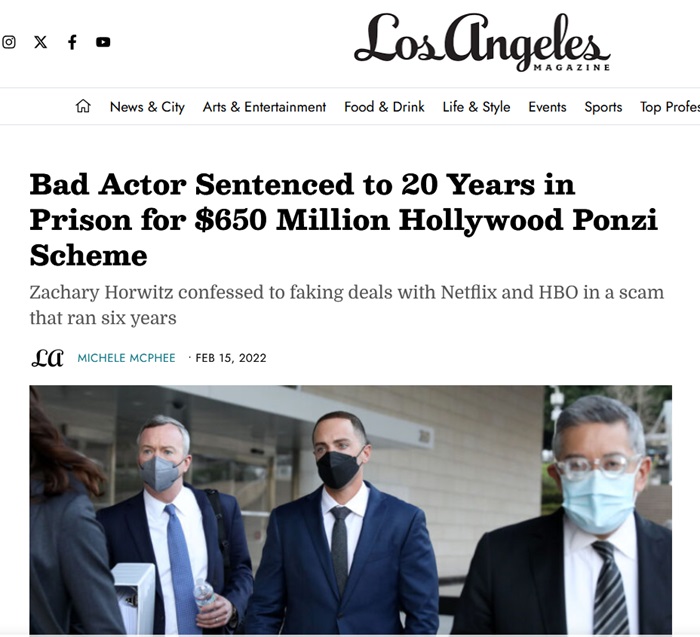
In 2013, Horwitz partnered with the Hallivis brothers—Julio and Diego—to establish 1inMM Productions, also known as “One in a Million.” The company positioned itself as a producer and distributor of low-budget genre films, targeting the international market. By 2015, 1inMM claimed to have expanded into the acquisition and distribution of international films. Glossy annual reports boasted that the company had distributed 49 films without a single financial loss. Investors were told about supposed success stories involving documentaries, international cinema selections, and critically acclaimed dramas. None of these claims were true. The exaggerated accomplishments functioned as props, reinforcing the illusion that Horwitz was an expert in global film distribution, someone capable of navigating relationships with major streaming platforms.
The Structure of the Ponzi Scheme
The heart of Horwitz’s fraud revolved around a compelling but entirely false promise: that 1inMM purchased international movie rights and resold them to streaming giants like Netflix and HBO for distribution in Latin America. Investors were shown forged contracts bearing the logos of Netflix and HBO, along with fabricated emails from executives confirming purchase agreements. To enhance the sense of legitimacy, Horwitz sent investors beautifully designed financial reports, detailed projections, and even luxury bottles of Johnnie Walker Blue Label scotch as annual gifts. The investment model itself was structured around promissory notes promising extremely high returns—usually between 25% and 45% over six to twelve months—returns allegedly guaranteed by pre-existing distribution agreements. In reality, no such deals ever existed. Every email, contract, and document used to support the scheme was forged. Horwitz was paying early investors with the money collected from newer investors, the classical mechanism of a Ponzi scheme disguised behind Hollywood glamour.
Lavish Lifestyle Fueled by Investor Funds
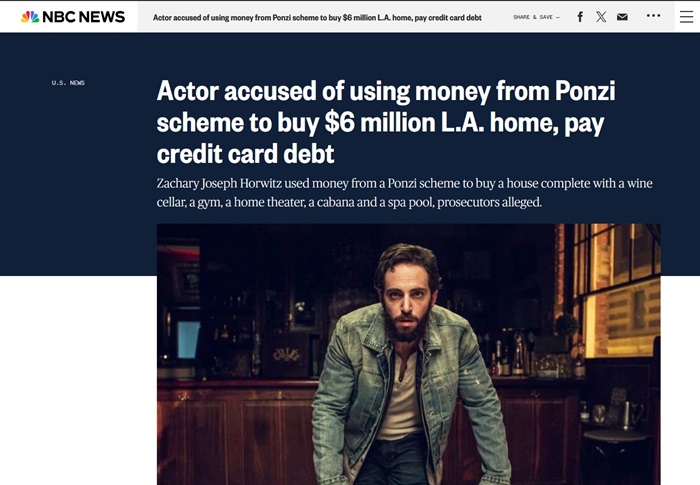
As millions of dollars flowed into the scheme, Horwitz used the money not for film acquisitions, but to fund an extravagant lifestyle far removed from his actual acting income. He purchased a $5.7 million mansion in the upscale Beverlywood neighborhood of Los Angeles. He acquired luxury vehicles such as Mercedes-Benz and Audi models, spent heavily on private jet travel, yacht rentals, personal stylists, and elite interior designers. Credit card records revealed nearly $7 million in payments to American Express alone. Trips to Las Vegas, nightclub outings, party consultants, and entertainment expenses highlighted the growing gap between the persona he presented publicly and the financial reality hiding beneath the surface. Investors believed their money was being handled responsibly; in truth, it was financing a lifestyle designed to reinforce the illusion of success.
The Collapse Begins: Defaults and Desperation
By late 2019, the Ponzi scheme reached a breaking point. The influx of new investor money slowed, and Horwitz no longer had sufficient funds to repay the massive number of promissory notes coming due. Investors began demanding explanations as repayments stopped. Horwitz responded by blaming delayed payments from Netflix and HBO, claiming that the streaming platforms were experiencing administrative backlogs. To support these lies, he sent investors fabricated email chains using the identities of actual executives at the companies. In reality, neither Netflix nor HBO had ever conducted business with him. As defaults multiplied, groups like JJMT Capital—one of the largest sources of investor funds, raising more than $216 million on his behalf—recognized that the situation was spiraling out of control. Their clients included friends, family members, professionals, and acquaintances who had invested based on trust. When Horwitz defaulted on 160 promissory notes, JJMT reported the matter to federal authorities.
Federal Investigation, Arrest, and Criminal Charges
The FBI opened an investigation in early 2021, uncovering extensive evidence of forgery, fraud, and misappropriation. Agents discovered that Horwitz had raised more than $650 million since 2014 and had used investor funds to repay earlier investors and enrich himself rather than acquire any film rights. On April 6, 2021, Horwitz was arrested at his Los Angeles home and charged with wire fraud and securities fraud. Prosecutors described him as someone who “played the role” of a successful businessman but had no legitimate operations. Court documents revealed hundreds of falsified agreements, doctored emails, and fake financial statements used to perpetuate the scam. The scale of deception stunned investigators, especially given that many victims were close friends who believed they were helping fund his entrepreneurial dreams.
Guilty Plea, Sentencing, and Restitution
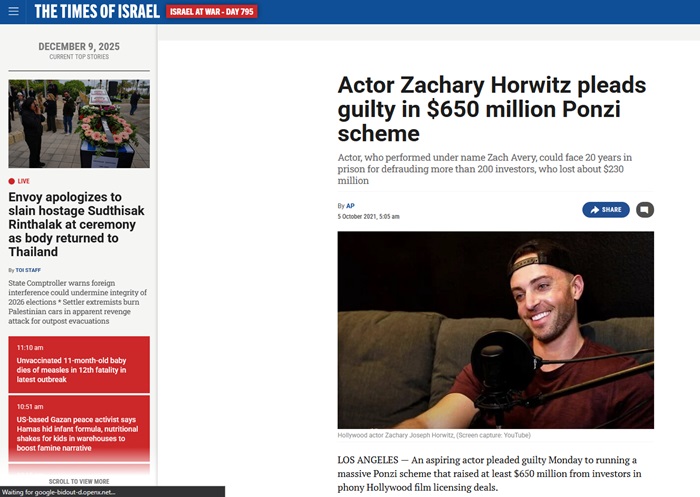
On October 4, 2021, Horwitz pleaded guilty to one count of securities fraud. In February 2022, Judge Mark C. Scarsi sentenced him to 20 years in federal prison and ordered him to pay more than $230 million in restitution. During the sentencing hearing, prosecutors emphasized the emotional devastation inflicted on victims, noting that Horwitz had exploited personal relationships, manipulated trust, and caused severe financial harm. The judge described his crimes as “staggering” in scale and condemned the calculated nature of his lies. Horwitz was assigned to serve his sentence at FCI Terminal Island, a low-security federal prison facility. Additional civil judgments, including SEC penalties, permanently barred him from engaging in securities transactions and reaffirmed the consequences of his criminal conduct.
Victims, Impact, and Long-Term Consequences
The fallout from Horwitz’s scheme extended far beyond financial losses. More than 250 investors were affected, many of whom had invested life savings, retirement funds, or family capital based on their trust in him. Some lost homes, marriages, and long-term financial security. Groups like JJMT Capital, which had unknowingly funneled millions into the scam, faced lawsuits and reputational damage. One investor, Adam Ferrari, lost nearly $100,000 and pursued legal action in an attempt to recover damages. Although court-appointed receivers have managed to recover more than $15 million, the amount represents only a fraction of what victims lost. The emotional trauma—from embarrassment to betrayal—continues to linger for many who placed their faith in Horwitz’s promises.
Media Coverage and the Emerging Legacy
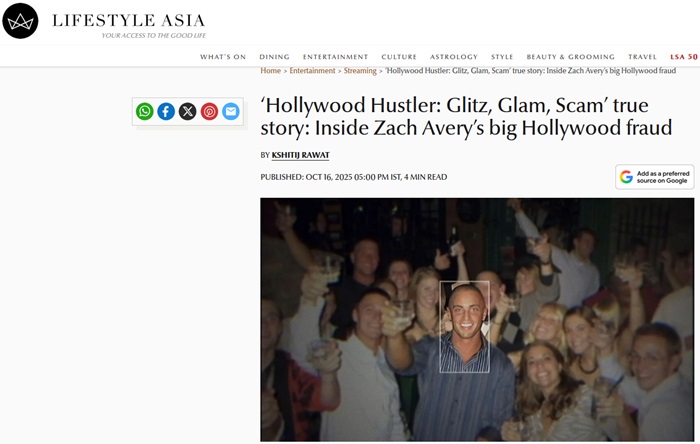
The dramatic nature of Horwitz’s crimes drew widespread media attention, culminating in a three-part Prime Video documentary titled “Hollywood Hustler: Glitz, Glam, Scam,” premiering in October 2025. The series features interviews with former friends, business partners, and his ex-wife Mallory, who recount the emotional unraveling of their lives as the truth emerged. The documentary’s portrayal highlights the dichotomy between Horwitz’s charismatic public persona and his private deception. His acting career, which included films like The Gateway and The Devil Below, has become a footnote to the larger story of fraud, manipulation, and collapse.
Related Fraudsters Scammers:


Popular Links

SWINDLERS LIST
-
Top 10 Scammers !!!
Beware of these scammers...Keep them out of your mail-box...

SCAM TOOLS
-
Block Scam Mails???
Cleaning your scam filled inbox can be effected by these tools
HELP DESK
-
Waiting to help You!!!
Every problem has a solution when discussed. Discuss with us to get a clear idea to keep your information unscathed from hypocrites