
Scammer Martin Shkreli
Fraudster Martin Shkreli
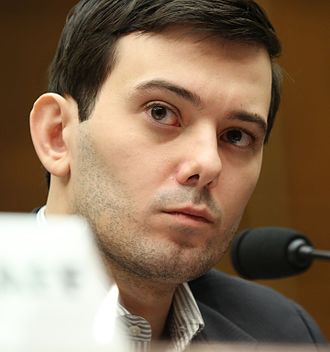
Details |
|
| Name: | Martin Shkreli |
| Other Name: | |
| Born: | 1983 |
| whether Dead or Alive: | |
| Age: | 41 |
| Country: | Brooklyn, New York, U.S. |
| Occupation: | Investor, former hedge fund manager and biotech founder |
| Criminal / Fraud / Scam Charges: | Null |
| Criminal / Fraud / Scam Penalty: | 7 years in prison (paroled after 6 years and 5 months) |
| Known For: | Turing Pharmaceuticals, Retrophin, Daraprim price hike |
Description :
From Prodigy to Pariah: The Explosive Collapse of Martin Shkreli
Martin Shkreli began his rise in the financial world as a young hedge fund manager who appeared ambitious, analytical, and unusually bold. Between 2009 and 2014, he operated two hedge funds—MSMB Capital Management and MSMB Healthcare—where he cultivated a reputation for aggressive investment strategies. Behind the scenes, however, federal investigators later revealed that Shkreli routinely misled investors about the funds’ size, performance, and financial health. He claimed large returns when the funds were actually losing money, overstated assets under management, and concealed catastrophic trading losses, including a failed short sale in Orexigen Therapeutics that cost more than $7 million. To keep these schemes afloat, he misappropriated investor money and used funds from MSMB Healthcare to cover debts from MSMB Capital, creating a web of false statements and shifting liabilities that set the stage for criminal charges.
Retrophin and the Misuse of Corporate Assets
In 2011, Shkreli founded Retrophin, a biopharmaceutical company that he publicly framed as a vehicle for innovation in rare-disease treatments. Prosecutors, however, later asserted that he used Retrophin as a financial backstop to quietly resolve disputes with hedge fund investors who had been misled by his earlier misconduct. Through fraudulent and backdated documents, sham consulting agreements, and unauthorized stock transfers, Shkreli and Retrophin’s outside counsel Evan Greebel channeled millions of dollars in corporate assets to individuals threatening legal action against him. These arrangements, entered into without board approval or legitimate business purpose, gave prosecutors strong evidence that Retrophin was used to cover Shkreli’s personal liabilities rather than serve its intended scientific mission.
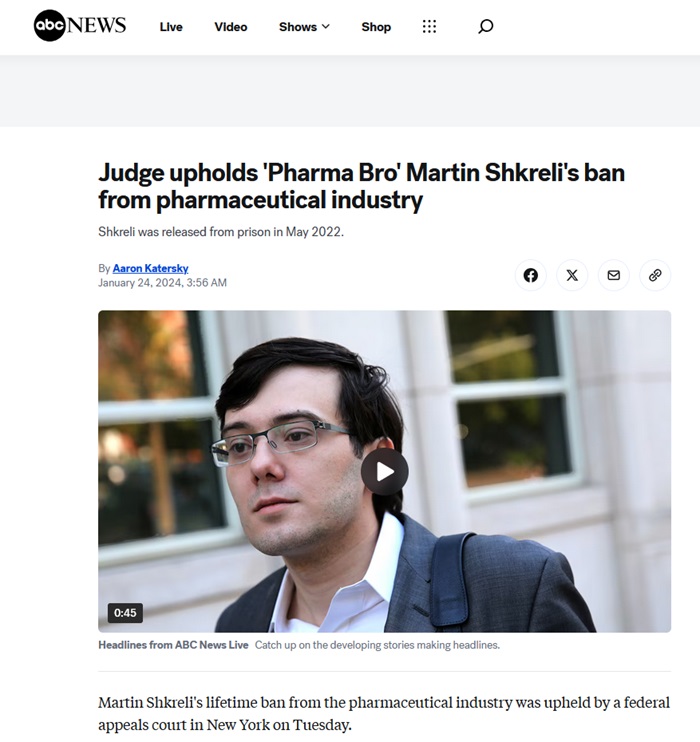
The Daraprim Controversy and the “Pharma Bro” Persona
Shkreli became a household name in 2015 when, as CEO of Turing Pharmaceuticals, he increased the price of the lifesaving drug Daraprim from $13.50 to $750 per pill. Although unrelated to his criminal charges, this action thrust him into national prominence and widespread public condemnation. Used to treat toxoplasmosis in HIV/AIDS patients, Daraprim’s dramatic price hike fueled bipartisan outrage, with figures such as Hillary Clinton and Donald Trump calling for reform and criticizing Shkreli’s ethics. Instead of adopting a defensive posture, Shkreli leaned into the public backlash. He mocked critics online, refused to answer congressional questions while calling lawmakers “imbeciles,” and cultivated an intentionally provocative, smug persona that earned him the label “the most hated man in America.” His behavior—sometimes playful, often antagonistic—solidified the “Pharma Bro” identity that overshadowed the ongoing legal troubles tied to his hedge funds.
Criminal Trial, Public Outbursts, and Loss of Bail
By 2017, Shkreli faced federal charges alleging securities fraud, conspiracy, and misappropriation of corporate assets. His courtroom demeanor and social media antics became nearly as newsworthy as the trial itself. Prosecutors requested a gag order after several inflammatory statements, and during bail he posted an online offer of $5,000 for a strand of Hillary Clinton’s hair, prompting Judge Kiyo Matsumoto to revoke his bail on the grounds that he posed a danger to the public. After a five-week trial, a New York jury convicted Shkreli on two counts of securities fraud and one count of conspiracy while acquitting him on five others. Though he proclaimed the result a partial victory and called the prosecution “a witch hunt of epic proportions,” the convictions carried serious consequences.
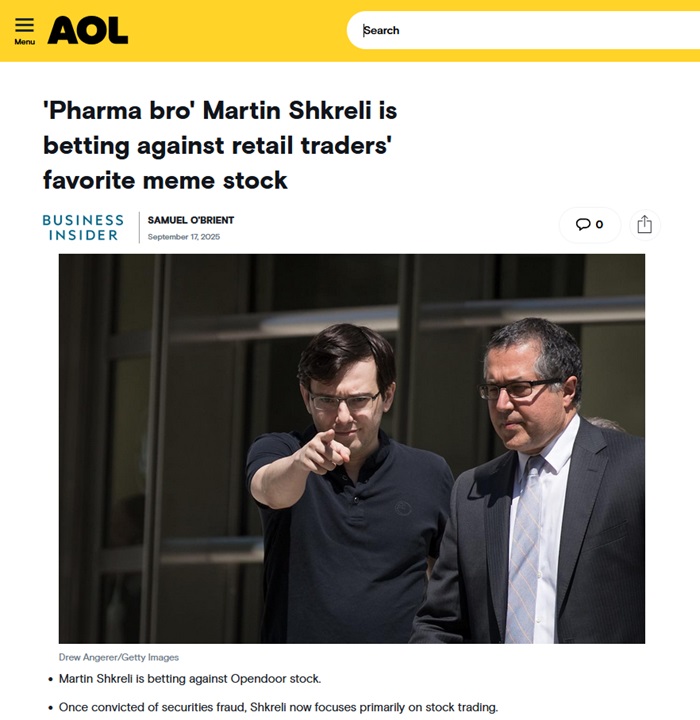
Sentencing and Courtroom Reflections
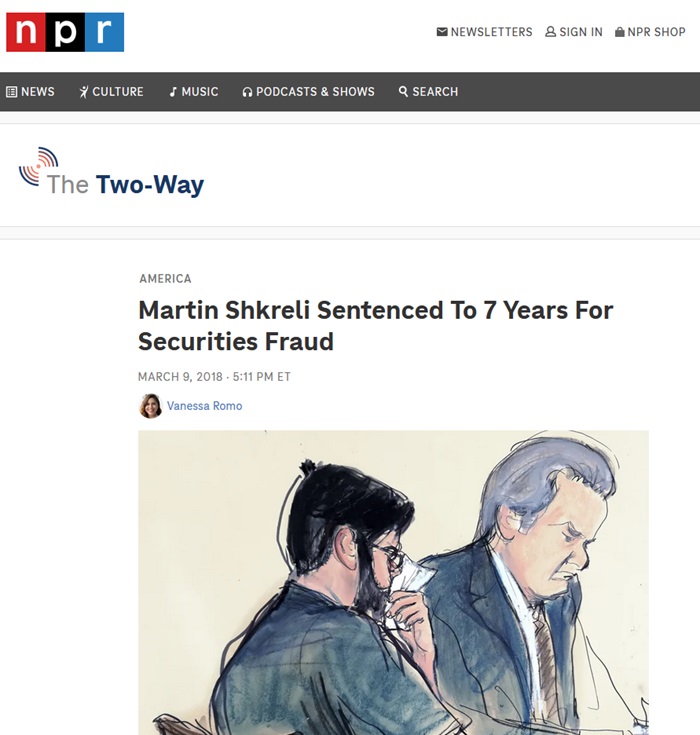
In March 2018, Martin Shkreli returned to court for sentencing a changed man—tearful, subdued, and publicly remorseful. Prosecutors requested 15 years, citing his dishonesty, manipulation, and lack of genuine accountability, while his defense sought a much lighter term. Shkreli addressed the judge directly, admitting that he alone was responsible for his downfall and expressing regret to investors he had deceived. Despite character letters and mentions of past generosity, Judge Matsumoto delivered a seven-year prison sentence, ordered Shkreli to forfeit $7.4 million, and imposed a $75,000 fine. The forfeiture included high-value personal possessions such as a unique Wu-Tang Clan album and artwork. The judge emphasized both the severity of his fraud and his troubling behavior, including emails from jail that suggested contempt for federal authorities.
Life in Prison and Continued Controversy
During his time in federal custody, Shkreli gained further attention when reports emerged that he had used a contraband phone to help run a pharmaceutical business from within prison, an action that briefly landed him in solitary confinement. Despite these setbacks, he completed programs, avoided major disciplinary issues, and was released early in 2022 after serving about four years of his sentence. But his legal challenges were far from over. Even before his release, the Federal Trade Commission and multiple states had sued him over the Daraprim pricing scandal, alleging monopolistic practices intended to block generic competition. In 2022, a federal judge ruled against him, ordering him to repay $64.6 million in profits and imposing a lifetime ban from participating in the pharmaceutical industry.
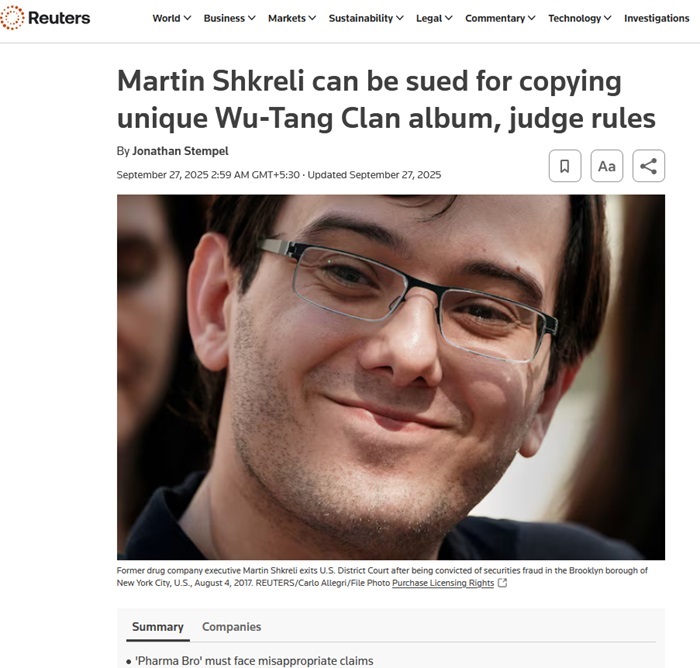
Appeals and the Upholding of the Industry Ban
Shkreli appealed the lifetime ban, arguing that it violated his First Amendment rights and that he hoped to contribute to future drug development. His lawyers contended that the restrictions went “beyond established legal limits,” pointing out that the ban even prevented him from commenting on the industry on social media. In 2024, however, a federal appeals court upheld the ruling, citing his “pattern of past misconduct” and the “life-threatening nature” of the consequences of his business practices. The court found ample evidence that Shkreli’s actions were deliberate, repetitive, and dangerous, and that strong safeguards were necessary to prevent future harm.
Legacy of a Controversial Figure
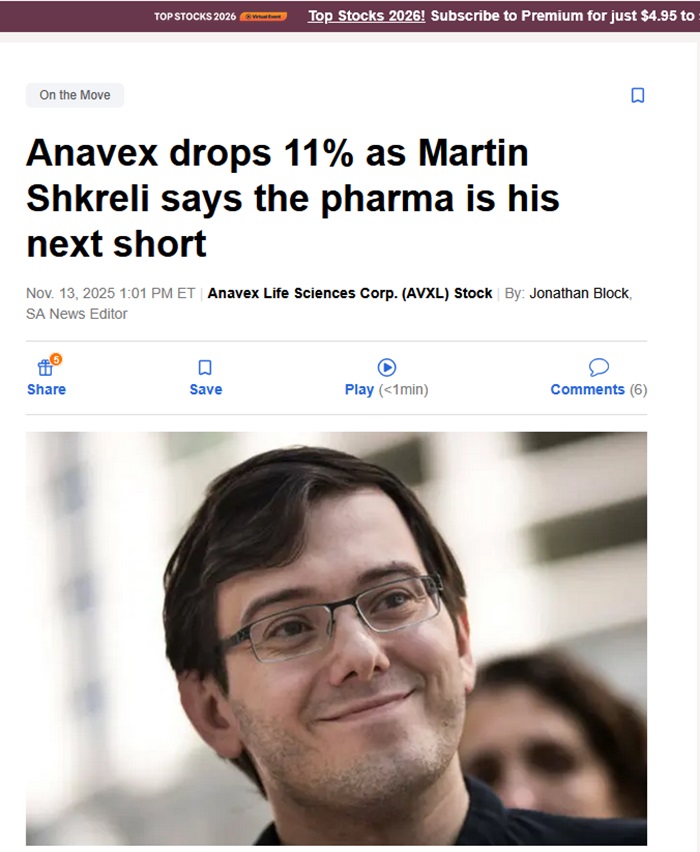
Martin Shkreli’s story epitomizes the intersection of financial deception, regulatory exploitation, and modern media notoriety. His rise and fall triggered broad conversations about drug pricing, corporate ethics, white-collar crime, and the power of public perception. While some still defend him as an unconventional genius plagued by poor judgment, legal authorities have consistently described his conduct as egregious and harmful. Today, barred from the pharmaceutical world and remembered widely for the Daraprim scandal and the “Pharma Bro” persona, Shkreli stands as one of the most polarizing figures in recent American business history—an emblem of both financial misconduct and the cultural backlash against unchecked pharmaceutical power.
Related Fraudsters Scammers:






Popular Links

SWINDLERS LIST
-
Top 10 Scammers !!!
Beware of these scammers...Keep them out of your mail-box...

SCAM TOOLS
-
Block Scam Mails???
Cleaning your scam filled inbox can be effected by these tools
HELP DESK
-
Waiting to help You!!!
Every problem has a solution when discussed. Discuss with us to get a clear idea to keep your information unscathed from hypocrites