
Scammer Samantha Azzopardi
Fraudster Samantha Azzopardi

Details |
|
| Name: | Samantha Azzopardi |
| Other Name: | |
| Born: | |
| whether Dead or Alive: | |
| Age: | 33 |
| Country: | Australian |
| Occupation: | |
| Criminal / Fraud / Scam Charges: | |
| Criminal / Fraud / Scam Penalty: | |
| Known For: | |
Description :
A Life of a Thousand Lies: The Endless Reinvention of Samantha Azzopardi
The story of Samantha Azzopardi is one of the most baffling and persistent cases of identity deception in modern true-crime history. Over more than a decade, Azzopardi has appeared in multiple countries under dozens—possibly hundreds—of false identities, repeatedly convincing authorities, families, social services, and even legal systems that she was someone else entirely. She has claimed to be a child, a trafficking victim, a pregnant teenager, a foreign national fleeing abuse, and later, a caregiver entrusted with children. Each reinvention has left behind financial loss, emotional devastation, and unanswered questions about motive, accountability, and whether the cycle can ever truly be broken.
What makes Azzopardi’s case so unusual is not merely the number of lies, but their consistency and longevity. Despite repeated arrests, convictions, court orders, and media exposure, she continues to resurface under new names, adapting her tactics while maintaining the same core pattern: vulnerability as disguise, sympathy as currency, and identity as a tool of manipulation.

Early Patterns of Reinvention in Australia
Long before international headlines would dub her “GPO Girl,” Samantha Azzopardi was already known to Australian authorities. From an early age, she demonstrated a pattern of assuming false identities, often portraying herself as a minor who had suffered sexual abuse or abandonment. These narratives allowed her to bypass scrutiny and access child protection systems, housing services, schools, and financial support designed for genuinely vulnerable youth.
Her stories were often emotionally compelling. She claimed to be underage, alone, and traumatized—exactly the kind of person professionals are trained to help without delay or suspicion. In many cases, she refused to speak or offered limited communication, further reinforcing the perception of trauma. By the time inconsistencies emerged, she had often already moved on.
The Digital Age of Deception
As social media became more pervasive, Azzopardi’s methods evolved. She demonstrated a sophisticated understanding of online identity creation, maintaining fake profiles across platforms and stealing fragments of real people’s personal information to bolster her credibility. Cybersecurity experts later noted that even minimal data—names, emails, locations—can be enough to reset passwords, impersonate individuals, or fabricate entire lives online.
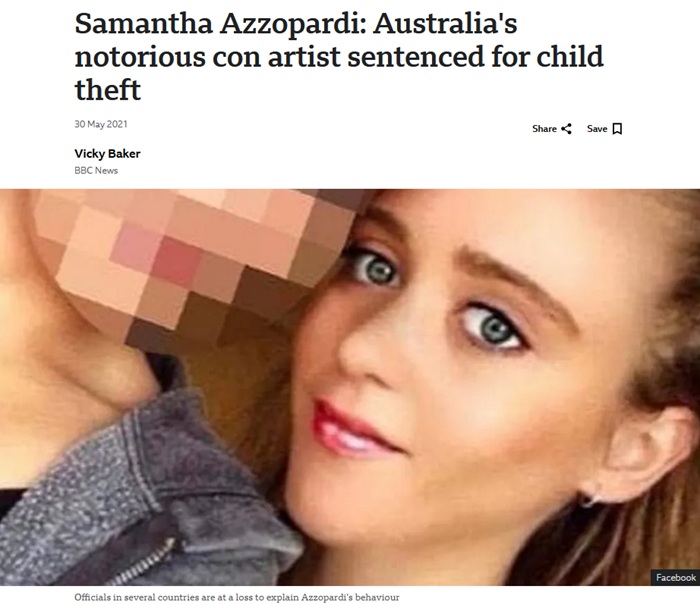
One particularly troubling case involved a real woman named Samantha Azzopardi from Campbelltown, Australia, who received a phone call from someone claiming to be a youth worker warning her that another person might be using her identity. What initially seemed like a strange or even spam-like call later appeared to be part of a broader identity-harvesting effort. This incident highlighted how Azzopardi’s actions often harmed not only institutions, but innocent individuals whose identities were hijacked without their knowledge.
Western Australia and Escalating Legal Attention
Between 2011 and 2012, Azzopardi spent significant time in Western Australia, where her repeated deceptions brought her increasingly into contact with the legal system. By this stage, she was well known to police and prosecutors. Former police prosecutor Kevin Harrison encountered her during court proceedings related to fraud and an attempted adoption by a family who believed she was a child in need.
Harrison later remarked that her demeanor—silent, expressionless, often with a finger in her mouth—made it difficult to reconcile her physical age with her presentation. He questioned whether she belonged in adult criminal court or the children’s court, underscoring the confusion her behavior consistently generated. What puzzled authorities most was the absence of a clear financial motive. Unlike traditional fraudsters, Azzopardi did not appear driven by large payouts, suggesting a deeper psychological compulsion toward reinvention.
The Dublin Incident: The Birth of “GPO Girl”
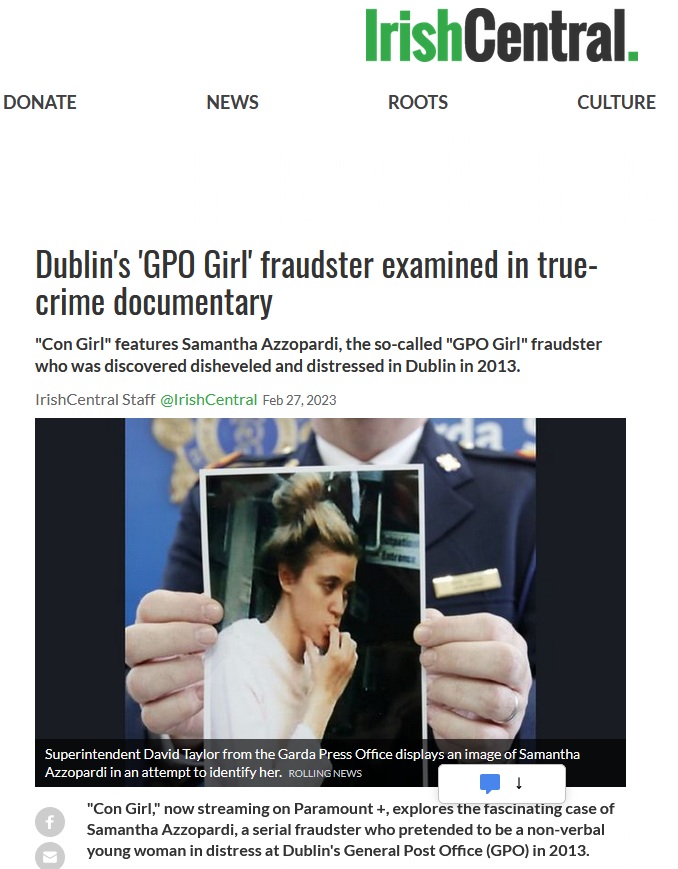
Azzopardi’s most infamous episode unfolded in Dublin, Ireland, in 2013. A distressed young girl was found loitering near the General Post Office on O’Connell Street, one of the city’s busiest areas. She appeared frightened, alone, and unable—or unwilling—to speak English. When approached by police, she managed to communicate only one detail: she was 14 years old.
The few items in her possession raised immediate alarm. Among them were drawings depicting an airplane, a bed, and a gun—imagery that suggested trauma or danger. With no identification, no clear nationality, and no explanation for her presence, authorities feared she might be a victim of sex trafficking. The case escalated rapidly, drawing in Interpol, Ireland’s Missing Persons Bureau, and intense media scrutiny.
The unidentified girl became known as “GPO Girl,” and public fascination grew as days passed without answers. The mystery seemed to embody every fear surrounding trafficking and child exploitation.
The Unmasking of the Deception
In a move born of desperation, Irish police released a photograph of GPO Girl to the public. That decision would unravel the entire narrative. Recognition came not from Ireland, but from Australia, where authorities identified the girl as Samantha Azzopardi—a 25-year-old woman with a long history of identity fraud.
The revelation shocked the public. The vulnerable trafficked child did not exist. There was no criminal network, no missing minor. Instead, Dublin had become another stage in Azzopardi’s global performance. She was deported back to Australia, but the exposure did not end her pattern of behavior.
After Ireland: The Pattern Resumes
Following her return to Australia, Azzopardi continued assuming new identities. In 2013, she appeared in Melbourne as “Ellie Sheahan,” claiming to be a trafficked schoolgirl. Soon after, she surfaced in New South Wales as Zoe Wilson, while simultaneously applying for a passport under the name Georgia McAuliffe—the same alias linked to her trip to Ireland.
Each identity followed the same template: youth, abuse, displacement, and vulnerability. Authorities and journalists began to recognize this cycle, yet stopping it proved remarkably difficult.
Convictions and Community Corrections Orders
Over the years, Azzopardi faced multiple criminal cases related to fraud and deception. In one significant ruling, she was sentenced to a three-year Community Corrections Order after posing as a pregnant 15-year-old victim of sexual abuse. The sentence was intended to limit her movements and prevent further offending, yet it did not put an end to her activities.
Just months later, she would again assume a new identity.
The Nanny Scheme: “Maya Malicka”
Azzopardi responded to a Sydney job advertisement placed by lawyer Theresa Power, who was seeking a nanny for her young daughter. Introducing herself as “Maya Malicka,” Azzopardi claimed to be a 19-year-old Polish woman with extensive childcare experience. She spoke convincingly, presented herself as responsible and caring, and was hired.
For a time, she appeared to settle into the role. But inconsistencies soon emerged, and the deception unraveled. The episode marked a disturbing shift in her behavior—from posing as a child to caring for one—while maintaining the same underlying pattern of manipulation.
Renewed Arrests and Serious Allegations
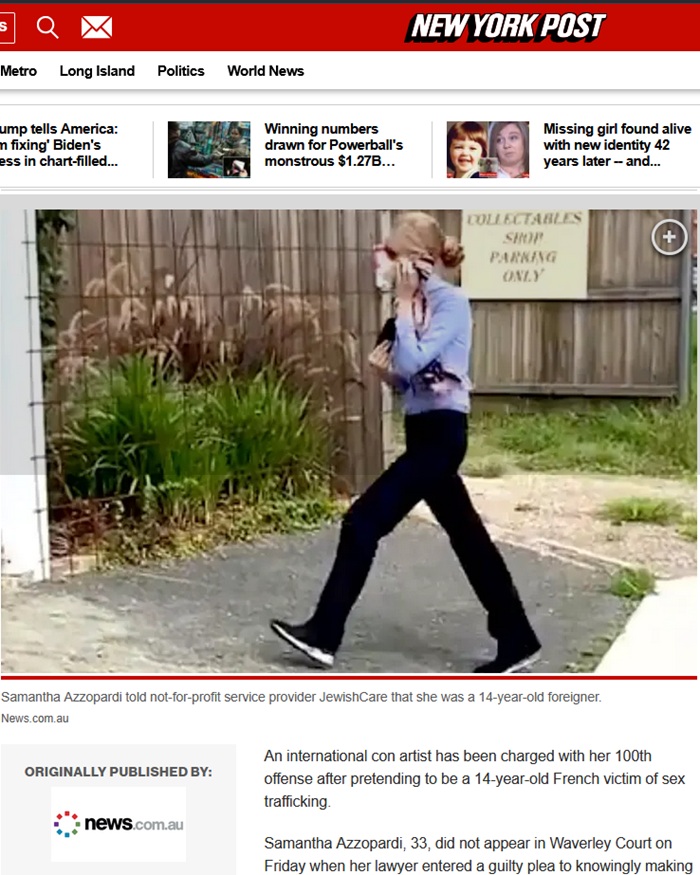
In later years, Azzopardi’s activities again drew police attention. She was arrested in Northcote following allegations of deceptive conduct across multiple Melbourne suburbs. Court documents alleged she obtained nearly $19,000 by falsely claiming to be a European woman seeking support services for family violence and child sexual abuse.
These alleged deceptions allowed her to obtain accommodation, vouchers, and medical services intended for genuine victims. She faced 14 charges, including obtaining financial advantage by deception, and was remanded in custody.
Intervention Orders and Court Restrictions
During court proceedings, an interim intervention order was granted to protect an affected person. The order prohibited Azzopardi from contacting, stalking, or attempting to locate the protected individual, including strict distance requirements with no exceptions. The magistrate noted concerns that even indirect contact—such as through a lawyer—could pose a risk.
These conditions reflected the courts’ increasing recognition that Azzopardi’s behavior extended beyond financial deception into persistent boundary violations.
The Abandoned Appeal
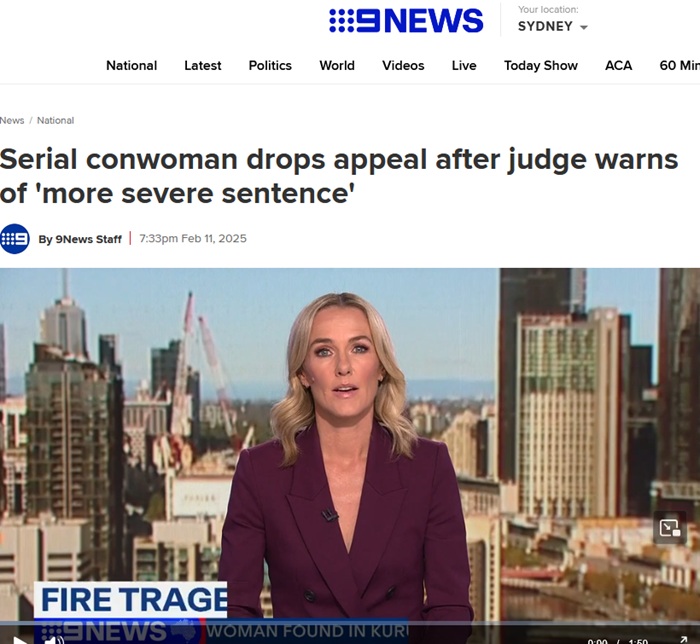
In a striking courtroom moment, Azzopardi appeared via video link in the Melbourne County Court to appeal a two-year jail sentence. Partway through the hearing, she left the camera’s view, prompting the judge to question whether proceedings should continue. After being warned that the appeal could result in a longer sentence, Azzopardi abandoned it entirely.
The incident reinforced perceptions of unpredictability and defiance that have characterized her interactions with the justice system.
Media Investigations and “Finding Samantha”
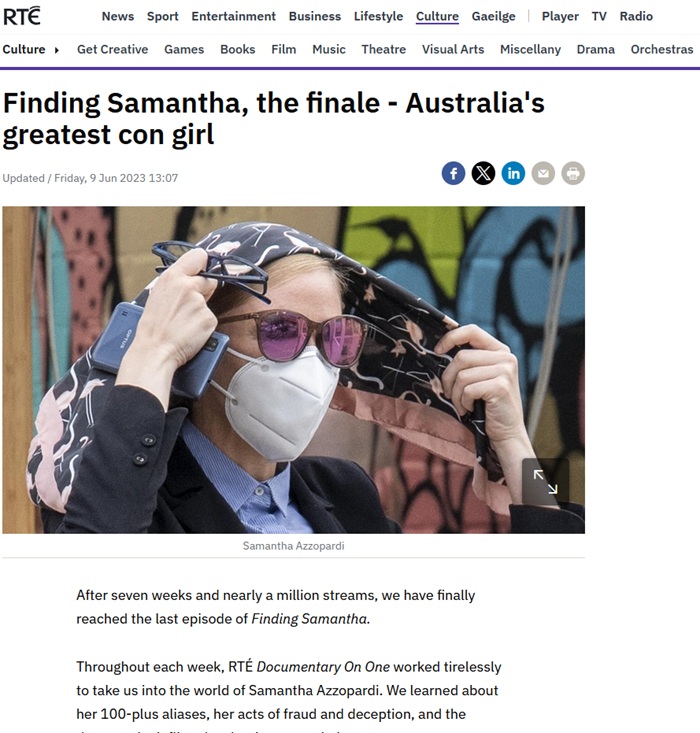
The sheer scale and strangeness of Azzopardi’s story have made her the subject of extensive media investigation, including the podcast series Finding Samantha. Journalists examined not only her crimes, but the systemic vulnerabilities she exploited and the psychological dimensions of her behavior.
The series raised difficult questions: Is Azzopardi a calculated con artist, a deeply troubled individual, or both? Why does she repeatedly target systems designed to protect children and abuse survivors? And why has no intervention succeeded in stopping the cycle?
The Psychology of Identity as Escape
Experts examining Azzopardi’s case have noted that her behavior appears less driven by profit than by a need to escape herself. She spends more time creating identities than living as Samantha Azzopardi, suggesting that the act of reinvention itself may be the primary reward.
Her consistent claims of youth and abuse indicate a desire to occupy a space where responsibility is suspended and care is guaranteed. Yet this same behavior inflicts harm on those who offer that care in good faith.
The Cost to Victims and Institutions
Behind every alias lies a trail of victims: families who opened their homes, social workers who invested time and emotional energy, institutions that diverted scarce resources, and individuals whose identities were stolen. The cumulative damage is difficult to quantify, extending beyond financial loss into emotional trauma and erosion of trust in support systems.
Perhaps most troubling is the collateral damage to genuine victims of abuse and trafficking, whose credibility may be undermined by high-profile cases of deception.
A Cycle That Continues
Despite arrests, convictions, media exposure, and court orders, Samantha Azzopardi’s story remains unfinished. Each intervention slows her temporarily, but does not stop her. She adapts, changes tactics, and reappears under new names, exploiting compassion and institutional gaps.
Her case exposes weaknesses in identity verification, cross-jurisdictional information sharing, and long-term intervention strategies for individuals whose behavior straddles criminality and psychological crisis.
Identity as Weapon and Refuge
Samantha Azzopardi’s life is a chilling example of identity used simultaneously as weapon and refuge. By presenting herself as perpetually vulnerable, she has manipulated empathy, bypassed safeguards, and sustained a pattern of deception that spans continents and years.
Whether future interventions will finally end the cycle remains uncertain. What is clear is that her story stands as one of the most extraordinary and unsettling examples of modern identity fraud—one that forces society to confront how easily trust can be exploited, and how difficult it can be to stop someone who refuses to be themselves.
Related Fraudsters Scammers:





Popular Links

SWINDLERS LIST
-
Top 10 Scammers !!!
Beware of these scammers...Keep them out of your mail-box...

SCAM TOOLS
-
Block Scam Mails???
Cleaning your scam filled inbox can be effected by these tools
HELP DESK
-
Waiting to help You!!!
Every problem has a solution when discussed. Discuss with us to get a clear idea to keep your information unscathed from hypocrites