
Scammer Marius Austine
Fraudster Marius Austine

Details |
|
| Name: | Marius Austine |
| Other Name: | |
| Born: | 12.03.1970 |
| whether Dead or Alive: | |
| Age: | 53 |
| Country: | Italy |
| Occupation: | |
| Criminal / Fraud / Scam Charges: | |
| Criminal / Fraud / Scam Penalty: | |
| Known For: | |
Description :
Community Policing in the Digital Age: Foiling a Cryptocurrency Fraud
The rapid growth of cryptocurrency has introduced new financial opportunities, but it has also created fertile ground for fraud. Cryptocurrency scams, particularly those involving Bitcoin kiosks and gift cards, have increasingly targeted vulnerable populations, especially older adults. In Brewton, Alabama, one such scam nearly resulted in the loss of $10,000. However, a police officer’s attentiveness and willingness to act prevented a serious financial and emotional loss. This incident illustrates how modern scams operate and why human vigilance remains critical in an increasingly digital financial landscape.
The Growing Threat of Cryptocurrency Scams
Cryptocurrency scams have become one of the most prevalent forms of financial fraud in recent years. As Bitcoin machines become more common in convenience stores and public locations, scammers exploit their accessibility and anonymity. These scams often rely on psychological manipulation, convincing victims to act quickly and secretly. Once funds are transferred through cryptocurrency, they are nearly impossible to recover, making prevention the most effective defense.
An Ordinary Evening in Brewton
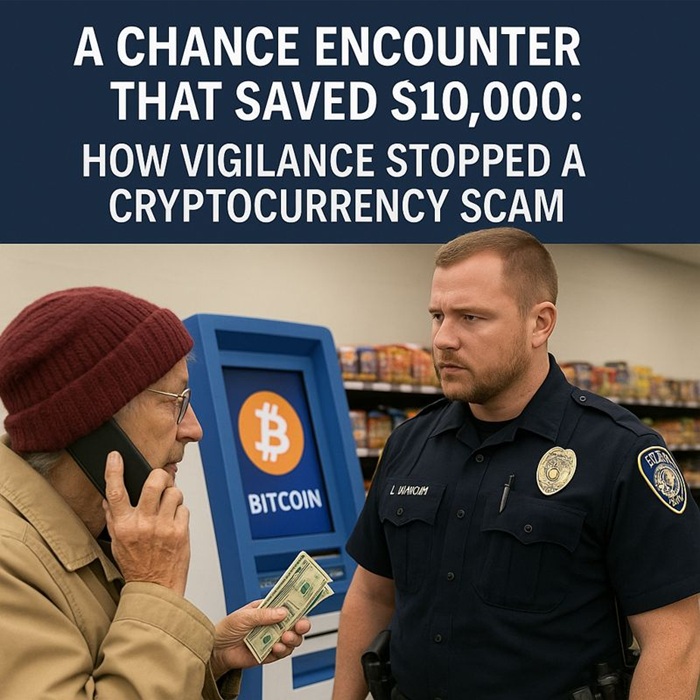
On a Wednesday evening, Brewton Police Sergeant Austin Johnson stopped at a Tom Thumb convenience store for a routine reason unrelated to law enforcement duties. He was not responding to a call or investigating suspicious activity. However, while inside the store, his attention was drawn to an unusual scene that immediately raised concern. His awareness and experience led him to notice something others might have overlooked.
Observing Unusual Behavior
Sergeant Johnson noticed an older woman standing at a Bitcoin machine while holding a large amount of cash and speaking on her phone. This combination of behaviors stood out because it is uncommon for elderly individuals to use cryptocurrency kiosks, particularly while receiving real-time instructions over the phone. The woman appeared focused and anxious, following directions closely, which further suggested that she was under external pressure.
Identifying the Scam in Progress
After approaching the woman and engaging her in conversation, Sergeant Johnson learned that she was preparing to deposit nearly $10,000 into the Bitcoin machine. The woman believed she was complying with legitimate instructions from someone on the phone. The explanation she provided closely matched known scam tactics, where victims are promised financial gain or pressured to send money to resolve an urgent issue.
Immediate Intervention to Prevent Financial Loss
Recognizing the seriousness of the situation, Sergeant Johnson explained to the woman that she was likely being targeted by a scam. He informed her that cryptocurrency transactions cannot be reversed once completed and encouraged her to stop immediately. To ensure clarity and reassurance, he accompanied her to her bank, where staff confirmed that the transaction was fraudulent. This timely intervention ensured that the woman’s money remained safe.
is interrupted. Law enforcement officials emphasize the importance of responding to such situations with empathy, as scammers use sophisticated psychological tactics designed to exploit trust and vulnerability.
Why Scammers Use Cryptocurrency and Gift Cards
Cryptocurrency and gift cards are favored by scammers because they provide fast and anonymous access to funds. Unlike traditional banking systems, these payment methods lack strong consumer protections and oversight. Scammers often pressure victims to act immediately, reducing the likelihood that they will seek advice or notice warning signs. This immediacy makes these scams particularly effective.
National Scope of the Problem
According to data from the Federal Trade Commission, cryptocurrency scams have resulted in massive financial losses nationwide. In 2021 alone, more than 46,000 individuals reported losing over $1 billion to crypto-related fraud. These figures highlight that the incident in Brewton is not an isolated case, but part of a widespread and growing problem affecting communities across the country.
Challenges in Investigating Crypto Fraud
Brewton Police Chief Matt Jordan noted that cryptocurrency scams are especially difficult to investigate. Transactions are decentralized, perpetrators often operate internationally, and digital trails can be deliberately obscured. Despite these challenges, law enforcement agencies continue to document cases, educate the public, and pursue investigations whenever possible to disrupt fraudulent networks.
The Role of Community Policing
This incident underscores the value of community policing, where officers remain engaged, observant, and proactive even outside formal calls for service. Sergeant Johnson’s decision to intervene was driven by situational awareness and a commitment to protecting residents. His actions demonstrate how community-oriented policing can prevent harm before it occurs.
Public Awareness and Prevention Strategies
Law enforcement officials urge the public to remain cautious when dealing with unsolicited requests involving money, cryptocurrency, or urgent demands. Individuals are encouraged to verify information, consult trusted family members, and never feel pressured to act immediately. Educating older adults and maintaining open family communication are essential steps in preventing scams.
Broader Implications of Digital Financial Crime
As financial systems become more digital, fraud continues to evolve. The Brewton incident highlights that while technology enables scams, prevention often relies on human judgment and awareness. Addressing digital fraud requires cooperation between law enforcement, financial institutions, and the public to adapt to emerging threats.
Broader Implications of Digital Financial Crime
As financial systems become more digital, fraud continues to evolve. The Brewton incident highlights that while technology enables scams, prevention often relies on human judgment and awareness. Addressing digital fraud requires cooperation between law enforcement, financial institutions, and the public to adapt to emerging threats.
The near loss of $10,000 in Brewton, Alabama, serves as a compelling example of how vigilance and timely action can prevent significant harm. Thanks to Sergeant Austin Johnson’s awareness and intervention, a woman was protected from financial loss and emotional distress. This case reinforces the importance of community policing, public education, and proactive engagement in the fight against modern financial fraud.Related Fraudsters Scammers:






Popular Links

SWINDLERS LIST
-
Top 10 Scammers !!!
Beware of these scammers...Keep them out of your mail-box...

SCAM TOOLS
-
Block Scam Mails???
Cleaning your scam filled inbox can be effected by these tools
HELP DESK
-
Waiting to help You!!!
Every problem has a solution when discussed. Discuss with us to get a clear idea to keep your information unscathed from hypocrites