
Scammer Huang Guangyu
Fraudster Huang Guangyu

Details |
|
| Name: | Huang Guangyu |
| Other Name: | Huang Junlie |
| Born: | 1969 |
| whether Dead or Alive: | Alive |
| Age: | 54 |
| Country: | Shantou, Guangdong, China |
| Occupation: | Entrepreneur |
| Criminal / Fraud / Scam Charges: | Stock Market Manipulation |
| Criminal / Fraud / Scam Penalty: | 14 years in prison and $600,000,000 fine |
| Known For: | |
Description :
From Billionaire Titan to Prison Cell: The Untold Story of Huang Guangyu
Early Life and Family Background
Huang Guangyu, born on June 24, 1969, in the rural village of Fenghu in Shantou, Guangdong Province, came from a humble farming family struggling with limited income and scarce opportunities. Growing up in a modest Christian household, Huang experienced firsthand the economic hardship that defined many families in southern China during the 1970s and early 1980s. As a child, he showed a natural instinct for business. He collected and sold used books, scrap bottles, and other small items to supplement his family’s finances. These early entrepreneurial activities not only helped improve his family’s livelihood but also shaped his understanding of pricing, supply, and demand. Although he attended school in his village, the need to earn money and his drive to pursue business led him to drop out at the age of sixteen. This decision would later become a defining moment in his life as it set the stage for his entry into commerce at a very young age.
First Ventures and Entry into Business
In 1985, at just sixteen years old, Huang joined forces with his older brother to take their first significant step into the world of trade. They invested RMB 4,000 of their own savings and borrowed an additional RMB 30,000 from friends and relatives to purchase radios, electronic watches, and small electronics from manufacturers in southern China. These goods were then transported to Inner Mongolia, where retail demand was high and supply was thin. The price gap between Guangdong and Inner Mongolia offered them strong profit margins, which encouraged Huang to scale his operations. This early trading experience taught him that opportunities often existed in the disparities between regions, and this understanding later became one of the core concepts behind his retail strategies. His ability to analyze market patterns and move quickly on opportunities helped him realize that the consumer electronics market was one of the most promising sectors in China’s emerging economy.
Founding of Gome and Early Expansion
In 1987, at the young age of eighteen, Huang founded Gome Electrical Appliances (commonly known as GOME). The name was chosen as a modern, internationally appealing brand that would resonate with Chinese consumers in a rapidly modernizing economy. Gome initially operated out of small storefronts in Beijing, selling televisions, radios, refrigerators, and other electronics that were becoming increasingly sought after in urban households. As China underwent significant economic reforms throughout the late 1980s and 1990s, consumer purchasing power increased dramatically. Huang capitalized on these changes by expanding Gome’s product range, improving distribution systems, and opening more retail branches across major cities. His aggressive approach to expansion and his ability to negotiate with suppliers helped Gome grow quickly. Huang understood that controlling supply chains and maintaining competitive prices were essential to dominating the market, so he focused on building strong supplier relationships and securing exclusive deals whenever possible.
Gome’s Rise as a National Retail Powerhouse
Throughout the 1990s and into the early 2000s, Gome experienced rapid growth, becoming one of China’s top retail chains for consumer electronics. Huang positioned Gome stores in key locations where foot traffic was high, and he introduced pricing strategies that undercut competitors, often forcing them out of the market. By the early 2000s, Gome had become synonymous with affordability, reliability, and product variety. Huang was widely admired for his competitive drive, and he was nicknamed the “Price Butcher” by the media because of his ability to dominate market pricing. Supplier fees became a major source of profitability for the company, contributing nearly one-third of its earnings. These fees—charged to manufacturers for shelf space, promotions, and product placements—provided Gome with substantial financial power and further strengthened its influence over Chinese electronics manufacturers. By 2004, the company had established 437 stores in 132 cities and generated revenues of 24 billion yuan. This level of success made Huang one of China’s most respected—and feared—business leaders.
Major Breakthrough: Gome’s Hong Kong Listing
The year 2004 marked a turning point for Gome when the company became publicly listed on the Hong Kong Stock Exchange through a backdoor listing arrangement. This listing not only enhanced Gome’s corporate reputation but also provided it with a significant financial injection of HK$1.19 billion. The same year, Huang sold part of his shareholdings and raised HK$1.375 billion for personal and business use. The listing dramatically increased Gome’s visibility and positioned the company as a major player in the global retail landscape. Investors saw Gome as one of the fastest-growing companies in China, and Huang received widespread praise for leading a homegrown brand to international financial markets. The company’s success mirrored China’s economic transformation and symbolized the rise of private entrepreneurship in the country.
Wealth, Fame, and Recognition
Between 2004 and 2007, Huang’s wealth soared to unprecedented levels. In 2005, Forbes estimated his net worth at US$1.7 billion, while Time magazine ranked him as the richest person in China. His rapid rise continued, and by 2006, Huang’s net worth had climbed to US$2.5 billion. In the 2007 Hurun China Rich List, he was named the richest person in mainland China with a fortune estimated at US$6.3 billion. His success made him a national celebrity, often compared to Sam Walton, the founder of Walmart. Huang publicly stated that his goal was to transform Gome into one of the world’s top 500 corporations by 2008. His confidence and boldness were admired by many, but his rapid ascent also drew increasing attention from regulators and political figures who viewed his influence as growing too quickly and too widely.
Government Scrutiny and Early Investigations
As Gome continued to expand, regulators began questioning how Huang was funding such rapid growth and whether his aggressive business tactics complied with the law. In 2006, both Huang and his brother were questioned by Chinese authorities about their involvement in a RMB 1.3 billion loan obtained from the Bank of China during the 1990s. Although the investigation concluded without charges, Huang remained under observation. Analysts suggested that these investigations may have been politically motivated due to factional struggles at high levels of government. In China, business and politics are deeply intertwined, and entrepreneurs often rely on political connections to support expansion and secure approvals. According to Joseph Cheng, a political scholar based in Hong Kong, corruption was widespread in the business environment, and connections often determined success or failure. Some experts speculated that Huang may have lacked the right political alliances to protect himself during government inquiries, a flaw that would later contribute to his downfall.
The Yongle Merger and Rapid Corporate Expansion
In 2006, Gome announced its intention to acquire Yongle, another major electronics retailer that was facing financial decline. Yongle had received a conditional investment from Morgan Stanley, and failure to meet profit targets meant that its executives were at risk of losing control. Huang seized this moment to propose a merger, which was completed in an astonishing eight days. The speed at which the Ministry of Commerce approved this merger raised suspicion among analysts, especially because Gome was technically a foreign-invested company due to its listing in Hong Kong. The fast approval process suggested that powerful connections may have influenced the outcome. Some officials who approved the merger were later implicated in corruption investigations, raising further questions. Later accounts revealed that Huang used the merger to resolve Gome’s cash flow problems by gaining access to Yongle’s capital. Critics argued that the acquisition may have been designed more to save Gome financially than to strengthen market competition.
Deepening Investigations and Mounting Allegations
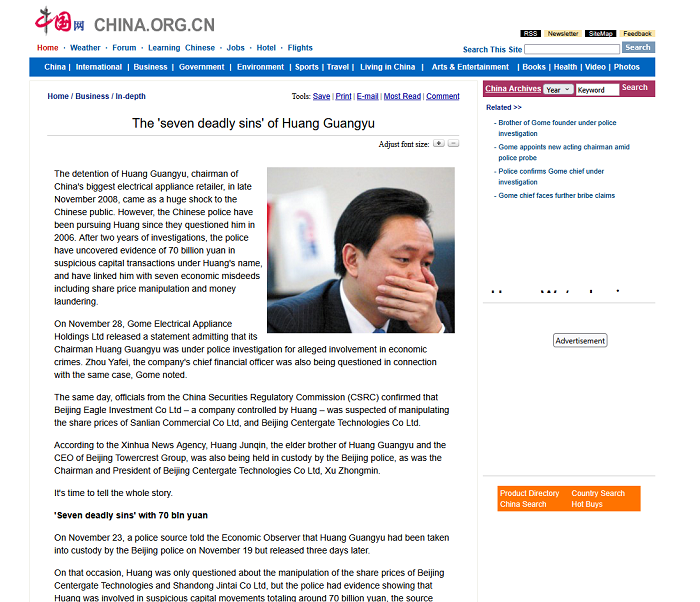
Between 2006 and 2008, Chinese regulators continued investigating Huang and his financial activities. The Ministry of Public Security took over the case, and internal sources stated that authorities had uncovered evidence of suspicious capital movements totaling 70 billion yuan. According to leaked information, Huang was suspected of seven major offenses, including bribing officials during Gome’s Hong Kong listing, bribing officials during the Yongle merger, tax evasion through offshore companies, money laundering linked to Shandong Jintai, manipulating the share prices of Beijing Centergate and Sanlian Commercial, and illegally transferring assets through underground banking systems. Many of these allegations connected Huang to underground financial networks in Chaoshan, a region known for its intricate and secretive money transfer systems. His alleged involvement with these networks intensified the perception that he was engaging in high-risk and potentially illegal activities behind the scenes.
Arrest, Detention, and Public Shock
On November 24, 2008, the Hong Kong Stock Exchange abruptly halted trading in Gome shares following reports that Huang was under police investigation. The news sent shockwaves through China’s corporate world. Gome publicly confirmed that both Huang and its chief financial officer were being investigated for alleged economic crimes. On November 28, the China Securities Regulatory Commission announced that one of Huang’s controlled companies was suspected of manipulating share prices. At the same time, police detained his brother, several executives, and business associates involved in related companies. Although Huang was initially released after questioning, he remained under intense scrutiny, and new evidence continued to emerge. His eventual detention marked the beginning of a dramatic fall for a man once hailed as China’s top entrepreneur.
Criminal Charges and Sentencing
In 2010, Huang was formally charged with insider trading, illegal business operations, and bribery of government officials. His case attracted national attention, with many analysts viewing it as a warning sign to China’s business elite that even the most powerful figures could be brought down. The Beijing court sentenced him to fourteen years in prison, imposed a fine of 600 million yuan, and confiscated an additional 200 million yuan in assets. Observers noted that the severity of his punishment reflected both the seriousness of his offenses and the political message behind the case. Rupert Hoogewerf of the Hurun Report remarked that Huang’s case shocked many entrepreneurs because it showed that even the richest businessmen could fall if they lost political protection or became involved in major corruption scandals.
Impact on Gome and Corporate Instability
The aftermath of Huang’s imprisonment was immediately felt within Gome. The company experienced a sharp decline in revenue, losing significant market share to competitors such as Suning. Financial reports revealed that Gome’s revenue in the first quarter of 2009 had fallen from 12.17 billion yuan to 9.80 billion yuan. Profits also dropped substantially. Leadership changes created additional instability, and internal disputes emerged between executives loyal to Huang and those aligned with new chairman Chen Xiao. Despite being behind bars, Huang attempted to influence corporate decisions through proxies and loyal shareholders. His supporters launched a campaign to remove Chen Xiao from leadership, arguing that Chen was deviating from Huang’s original business strategy. After months of internal struggle, Chen resigned in April 2011, demonstrating that Huang’s influence within Gome remained strong even as he served his prison sentence.
Business Activity and Influence While Imprisoned
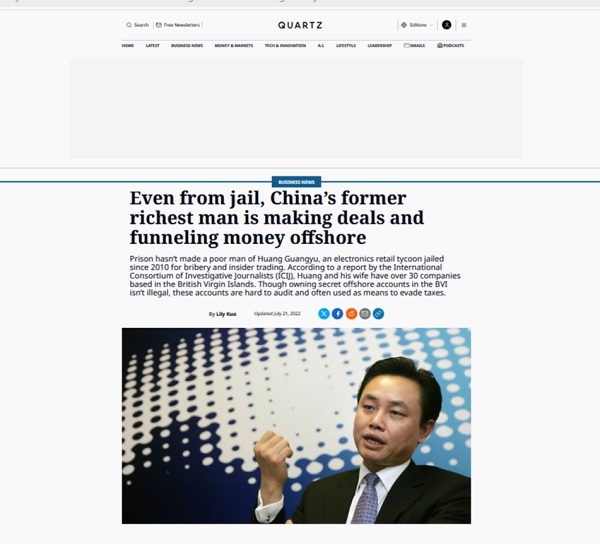
Remarkably, imprisonment did not completely halt Huang’s business ambitions. From behind bars, he used personal networks and controlled companies to pursue investments. One of the most unusual examples occurred in July 2011, when Eagle Vantage Asset Management, a firm associated with Huang, submitted a bid to purchase the decommissioned British aircraft carrier HMS Ark Royal. Reports claimed that the plan was to convert the massive vessel into a floating luxury shopping mall—the largest of its kind in the world. Although the project never materialized, the boldness of the idea reflected Huang’s relentless entrepreneurial spirit. His ability to stay involved in business operations despite incarceration reinforced perceptions that he remained a powerful figure with deep connections and influence.
Sentence Reductions and Release from Prison
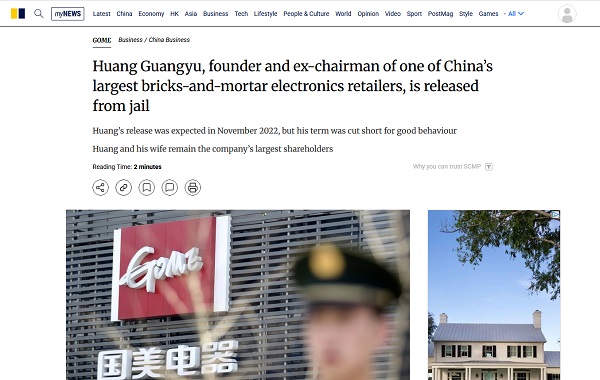
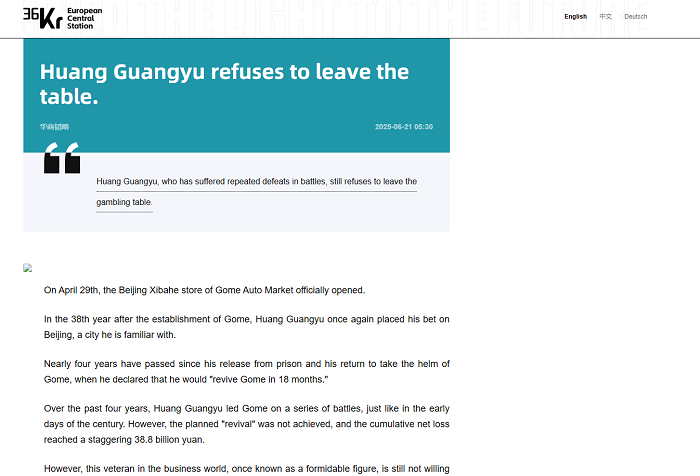
Huang’s prison behavior was reportedly commendable, leading to multiple sentence reductions. In 2020, his total sentence was reduced by 22 months. On June 24, 2020—his fifty-first birthday—he was released on probation. The news of his release generated widespread media discussion, with many observers wondering whether he would attempt to regain control of Gome or reenter the business world in another capacity. His probation officially ended on February 16, 2021, restoring his freedom and legal ability to participate in corporate affairs. By the time of his release, however, the retail landscape had changed dramatically. E-commerce giants such as Alibaba and JD.com dominated the electronics market, leaving traditional retail chains, including Gome, struggling to remain competitive.
Legacy, Lessons, and Continuing Influence
Huang Guangyu’s life represents one of the most dramatic stories in modern Chinese business history. His journey from a poor village boy to the richest man in China illustrates the enormous opportunities created by China’s economic reforms. His success was built on vision, innovation, and an aggressive drive to dominate the market. However, his downfall demonstrates the risks of rapid expansion, complex political involvement, and questionable financial practices. Many analysts view his story as a cautionary tale about the intersection of business and politics in China, where legal boundaries can be blurred and political shifts can dramatically alter business fortunes.
While Huang’s future path remains uncertain, his impact on China’s retail industry is undeniable. He reshaped the consumer electronics market, introduced new business models, and set standards for large-scale retail operations. Even after imprisonment, his name continues to resonate in discussions about business ethics, corporate governance, and the challenges faced by private entrepreneurs in China. His rise and fall highlight not only personal ambition but also the broader complexities of building a corporate empire in a rapidly changing and highly regulated environment.
Related Fraudsters Scammers:



Popular Links

NEWS & EVENTS
The world's most prevalent social network said that to date, it has acquired lawful judgments of about $2 billion against deceitful exerci

SWINDLERS LIST
-
Top 10 Scammers !!!
Beware of these scammers...Keep them out of your mail-box...
SCAM TOOLS
-
Block Scam Mails???
Cleaning your scam filled inbox can be effected by these tools
HELP DESK
-
Waiting to help You!!!
Every problem has a solution when discussed. Discuss with us to get a clear idea to keep your information unscathed from hypocrites