
Scammer David Yonggi Cho
Fraudster David Yonggi Cho

Details |
|
| Name: | David Yonggi Cho |
| Other Name: | |
| Born: | |
| whether Dead or Alive: | |
| Age: | 85 |
| Country: | South Korea |
| Occupation: | Evangelist |
| Criminal / Fraud / Scam Charges: | |
| Criminal / Fraud / Scam Penalty: | |
| Known For: | |
Description :
Sacred Trust Betrayed: Power, Wealth, and Corruption Inside Korea’s Megachurch Empire
The Emergence of a Spiritual Giant in Postwar South Korea
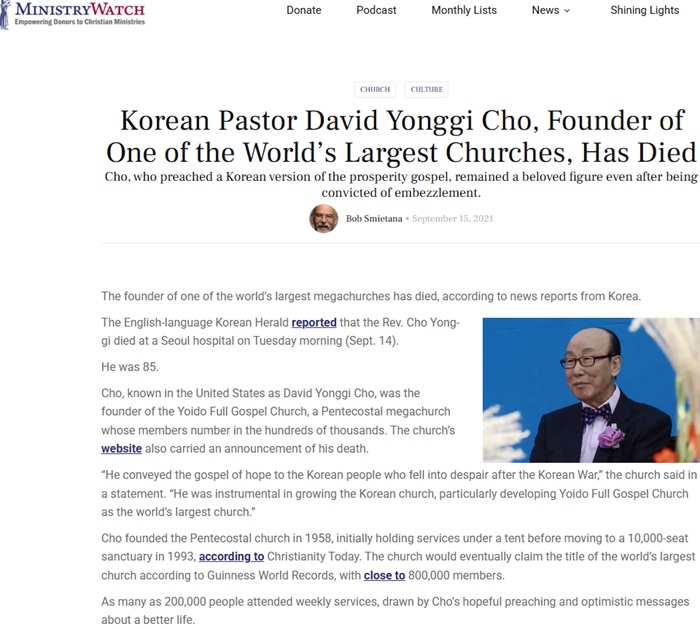
In the aftermath of the Korean War, South Korea was a nation marked by devastation, poverty, and social dislocation. It was during this period of despair that David Yonggi Cho emerged as a powerful religious figure. Born into a Buddhist family, Cho converted to Christianity after suffering from a severe illness in his youth—an experience he later described as transformative and miraculous. His conversion shaped his theology, which emphasized hope, healing, and faith as tools for both spiritual and material restoration. These messages resonated deeply with ordinary Koreans struggling to rebuild their lives, laying the foundation for what would become one of the largest Christian congregations in the world.
The Founding and Explosive Growth of Yoido Full Gospel Church
Cho founded Yoido Full Gospel Church in 1958, initially preaching under a tent to small groups of believers. Over time, his innovative approach to church organization—particularly the use of small “cell groups” led by lay members—allowed the congregation to grow rapidly while maintaining close personal ties among members. By the 1970s and 1980s, the church had become a dominant force in Korean Protestantism. In 1993, it moved into a massive 10,000-seat sanctuary on Yeouido Island in Seoul, symbolizing its transformation from a grassroots movement into a global religious institution. At its peak, weekly attendance exceeded 200,000 worshippers, and total membership approached 800,000, earning the church recognition as the largest congregation in the world.
Wealth, Power, and Centralized Control
With extraordinary growth came extraordinary wealth. Donations from hundreds of thousands of faithful members poured into Yoido Full Gospel Church, making it one of the richest religious organizations in South Korea. The church expanded into real estate, media, overseas missions, and cultural institutions. However, financial oversight remained highly centralized, with key decisions controlled by Pastor Cho and a small circle of trusted associates. This concentration of authority, combined with limited transparency, created conditions ripe for abuse. Many members gave sacrificially, trusting that their contributions were being used solely for religious and charitable purposes.
The Stock Transaction That Sparked Legal Scrutiny
The scandal that would ultimately bring down Pastor Cho began with a stock transaction dating back to 2002. At the request of his son, Cho Hee-jun, the church invested funds to purchase approximately 250,000 shares linked to a company associated with him. While the shares were trading at around 35 won on the market, the church purchased them at an inflated price of 87 won per share. This decision resulted in losses totaling 13.1 billion won—roughly €9 million—borne entirely by the church and its members. Prosecutors later argued that this transaction was designed to benefit Cho’s son at the expense of the congregation, constituting a clear breach of fiduciary duty.
Investigation, Trial, and Conviction
Following a formal investigation launched by South Korean prosecutors in 2013, David Yonggi Cho was charged with embezzlement and tax evasion. In 2014, the Seoul District Court found him guilty of defrauding the church of 13.1 billion won and evading 3.5 billion won in taxes. He was sentenced to three years in prison and fined nearly 5 billion won, though the prison sentence was suspended for five years due to his age and health. His son, Cho Hee-jun, former chairman of the Yeongsan Christian Cultural Center, received a three-year prison sentence without suspension and was immediately jailed. The verdict sent shockwaves through South Korea’s religious community and triggered angry reactions from some of Cho’s supporters outside the courthouse.
Whistleblowers and Allegations of Larger-Scale Corruption
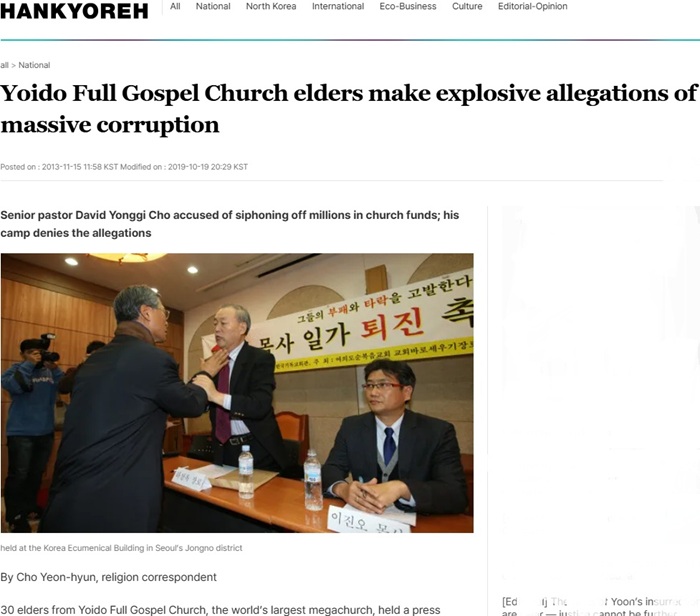
The convictions did not end the controversy. Later in 2013, a group of approximately 30 church elders filed additional complaints alleging embezzlement and corruption totaling nearly $500 million. One prominent whistleblower, Ha Sang-ok, admitted his own involvement in fraudulent practices during his two decades in church leadership. He described a culture of secrecy and unquestioned loyalty, claiming that attempts to stop unethical behavior were ignored. According to Ha, church funds—including money designated for overseas missions—were diverted into unauthorized severance payments and other personal benefits.
Audits and the Broader Crisis of Church Fraud
In response to these allegations, Korean authorities announced plans to audit Yoido Full Gospel Church more extensively, suspecting that over $60 million may have been misappropriated over time. The case drew attention to a broader issue: financial fraud within religious and nonprofit organizations. Experts note that faith communities are especially vulnerable to “affinity fraud,” where trust in religious leaders overrides skepticism. Studies suggest that billions of dollars donated by Christians worldwide may be lost annually to fraud and embezzlement, much of it unreported due to fear of reputational damage.
Structural Weaknesses in Nonprofit Oversight
Nonprofit organizations often prioritize mission over administration, resulting in weak internal controls and limited financial training for leaders. This vulnerability is compounded by tax-exempt status and a culture of trust that discourages scrutiny. As seen in the Yoido case, misconduct can persist for years when financial authority is concentrated and accountability mechanisms are absent. Experts emphasize the importance of internal audits, restricted access to financial systems, whistleblower protections, and insurance coverage to mitigate such risks.
Decline, Death, and a Divided Legacy
David Yonggi Cho retired as senior pastor in 2007 but remained an influential figure as pastor emeritus. Despite his conviction, he continued to be revered by many followers. Cho died on September 14 at the age of 85 after years of declining health following a brain hemorrhage in 2020. Tributes praised his role in spreading Christianity and offering hope to postwar Korea. Yet his legacy remains deeply divided. To supporters, he was a visionary spiritual leader; to critics, his downfall symbolizes the dangers of unchecked power within religious institutions.
Faith, Accountability, and Responsibility
The story of Yoido Full Gospel Church is a cautionary tale about the intersection of faith, wealth, and authority. While religion can inspire hope and social good, it is not immune to corruption. The scandal surrounding David Yonggi Cho underscores the necessity of transparency, ethical leadership, and accountability in all institutions—especially those built on trust. Ultimately, safeguarding integrity is essential not only for protecting donors and members, but also for preserving the moral credibility of faith itself.
Related Fraudsters Scammers:



Popular Links

NEWS & EVENTS
The world's most prevalent social network said that to date, it has acquired lawful judgments of about $2 billion against deceitful exerci

SWINDLERS LIST
-
Top 10 Scammers !!!
Beware of these scammers...Keep them out of your mail-box...
SCAM TOOLS
-
Block Scam Mails???
Cleaning your scam filled inbox can be effected by these tools
HELP DESK
-
Waiting to help You!!!
Every problem has a solution when discussed. Discuss with us to get a clear idea to keep your information unscathed from hypocrites