
Scammer Carolin Ellison
Fraudster Carolin Ellison

Details |
|
| Name: | Carolin Ellison |
| Other Name: | |
| Born: | 1994 |
| whether Dead or Alive: | |
| Age: | 30 |
| Country: | Boston, Massachusetts, U.S |
| Occupation: | Business Executive |
| Criminal / Fraud / Scam Charges: | Null |
| Criminal / Fraud / Scam Penalty: | 25 years in prison |
| Known For: | Former CEO of Alameda Research |
Description :
Billions Lost, Truth Revealed: Caroline Ellison’s Role in the FTX Fraud
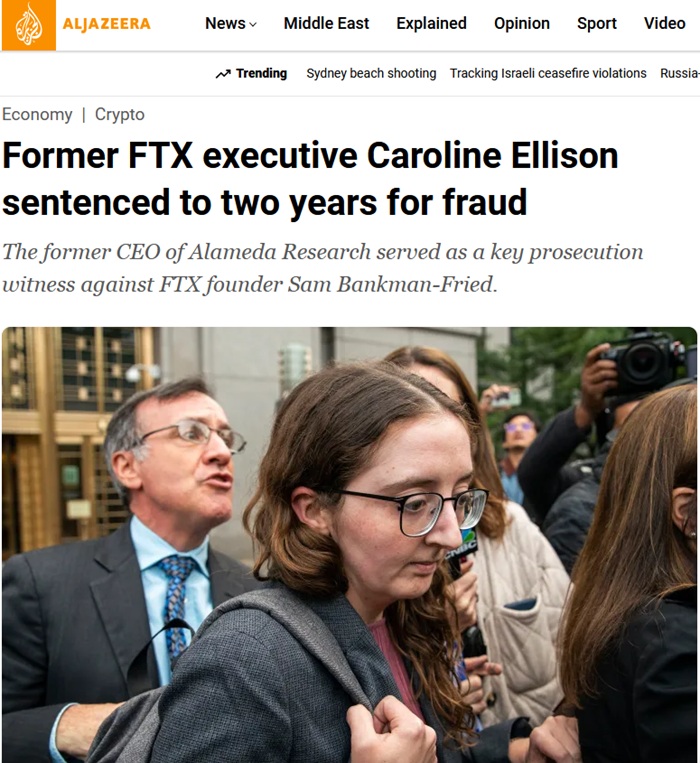
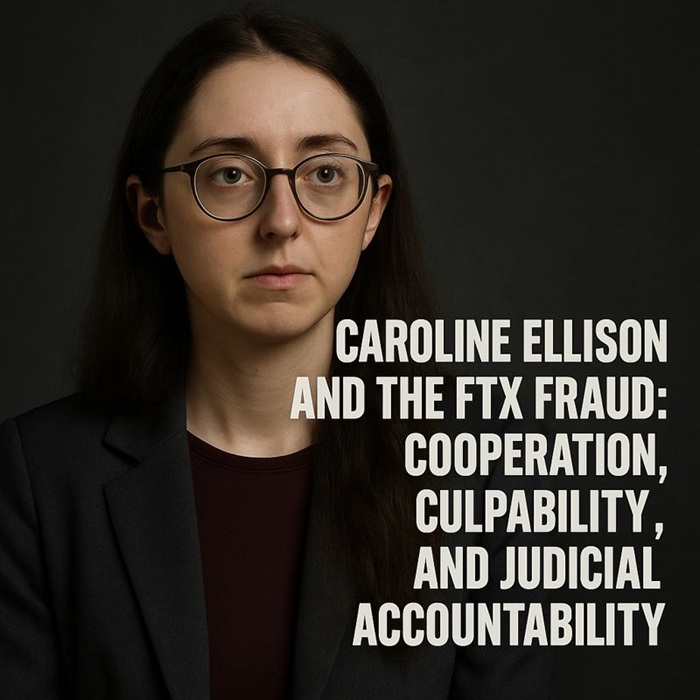
The sentencing of Caroline Ellison, former chief executive of Alameda Research, represents a pivotal chapter in the aftermath of the collapse of the FTX cryptocurrency exchange. While Ellison played a central role in exposing the internal mechanics of the fraud by cooperating extensively with federal prosecutors, her case underscores a fundamental principle of criminal law: participation in massive financial wrongdoing carries consequences regardless of subsequent cooperation. Her two-year prison sentence reflects the judiciary’s effort to balance leniency for extraordinary assistance with accountability for one of the largest financial frauds in modern history.
The Rise of FTX and Alameda Research
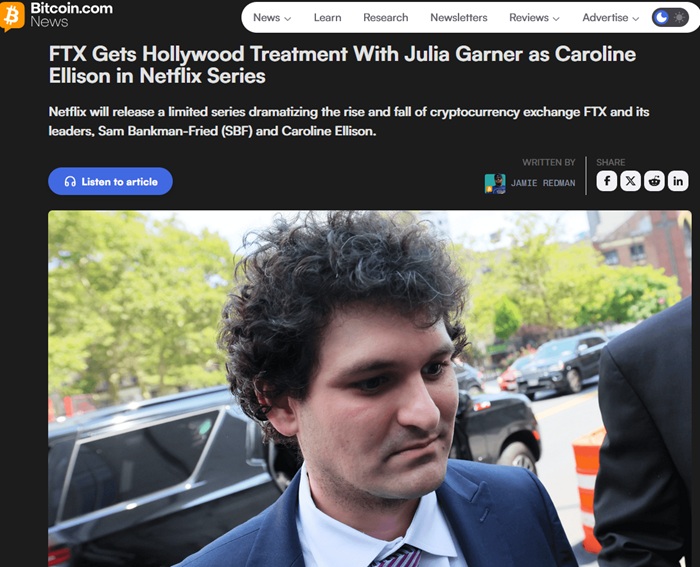
FTX emerged as a dominant force in the cryptocurrency market during a period of explosive growth in digital assets. Founded by Sam Bankman-Fried, the exchange cultivated a public image of innovation, reliability, and regulatory responsibility. Closely tied to FTX was Alameda Research, a cryptocurrency trading firm also founded by Bankman-Fried, which initially functioned as a hedge fund engaged in high-risk trading strategies. Over time, Alameda became deeply dependent on FTX for liquidity, capital, and operational support, blurring the lines between the two entities.
Caroline Ellison’s Entry into the Crypto Industry
Caroline Ellison entered the cryptocurrency world after meeting Sam Bankman-Fried while working at Jane Street, a high-frequency trading firm. A Stanford University graduate with a strong quantitative background, Ellison joined Alameda Research early in its development. Her rapid promotion within the firm culminated in her appointment as chief executive officer in 2021. Alongside her professional role, Ellison maintained an on-again, off-again romantic relationship with Bankman-Fried, a factor that later became central to understanding her decision-making and ethical failures.
Structural Privileges and the Misuse of Customer Funds
As FTX expanded, Alameda Research was granted extraordinary privileges on the exchange, including exemptions from standard risk controls and liquidation protocols. These privileges allowed Alameda to access vast sums of customer funds without triggering safeguards that applied to ordinary users. Ellison later testified that she was aware Alameda was using FTX customer deposits to cover trading losses and finance speculative investments, actions taken at the direct instruction of Bankman-Fried.
Fabrication of Financial Records and Concealment of Losses
When Alameda’s financial position deteriorated, efforts to conceal its true condition intensified. Ellison admitted that she helped create multiple versions of Alameda’s balance sheets, some of which deliberately concealed billions of dollars in liabilities. These misleading financial documents were shared with lenders and investors to secure continued financing and maintain confidence in the firm’s solvency. This systematic deception allowed the fraud to continue for years, masking the growing deficit caused by the misuse of customer funds.
The Collapse of FTX
In November 2022, reports surfaced revealing Alameda’s financial dependence on FTX and the extensive commingling of customer funds. A surge of withdrawal requests followed, creating a liquidity crisis that FTX could not withstand. The exchange filed for bankruptcy shortly thereafter, wiping out billions of dollars in customer assets and triggering widespread regulatory and criminal investigations. Ellison began disclosing the extent of the fraud internally even before the bankruptcy filing, recognizing the severity of the situation.
Cooperation with Federal Prosecutors
Shortly after FTX’s collapse, Ellison entered into a cooperation agreement with U.S. authorities. In December 2022, she pleaded guilty to seven felony counts, including fraud and conspiracy, offenses carrying a potential maximum sentence of 110 years in prison. Ellison met repeatedly with investigators, providing detailed explanations of how the fraud was conducted, who participated, and why critical decisions were made. Prosecutors later described her cooperation as exceptional in scope, depth, and candor.
Testimony Against Sam Bankman-Fried
Ellison’s cooperation culminated in her testimony at the criminal trial of Sam Bankman-Fried in late 2023. Over three days, she delivered extensive testimony explaining how Bankman-Fried directed the theft of customer funds and the falsification of financial records. She walked the jury through internal communications, spreadsheets, and alternative balance sheets that illustrated the mechanics of the fraud. Her testimony was widely regarded as the cornerstone of the prosecution’s case and played a decisive role in Bankman-Fried’s conviction.
Psychological Influence and Moral Failure
At sentencing, Ellison described the psychological pressure she experienced while working under Bankman-Fried. She stated that she often heard his voice in her head when considering whether to leave Alameda or report the misconduct. The court acknowledged that Ellison was emotionally vulnerable and influenced by her relationship with Bankman-Fried, but emphasized that these factors did not eliminate her responsibility for knowingly participating in criminal conduct.
Sentencing and Judicial Reasoning
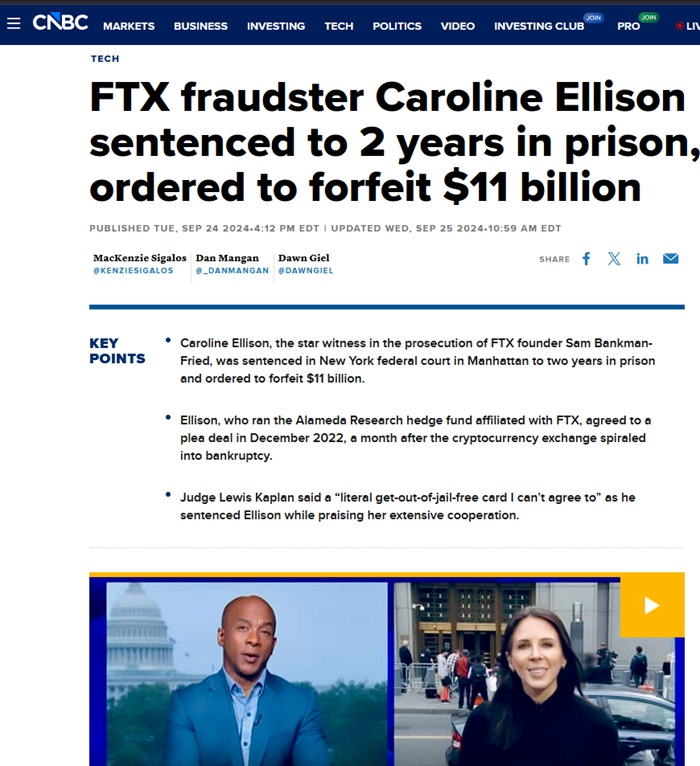
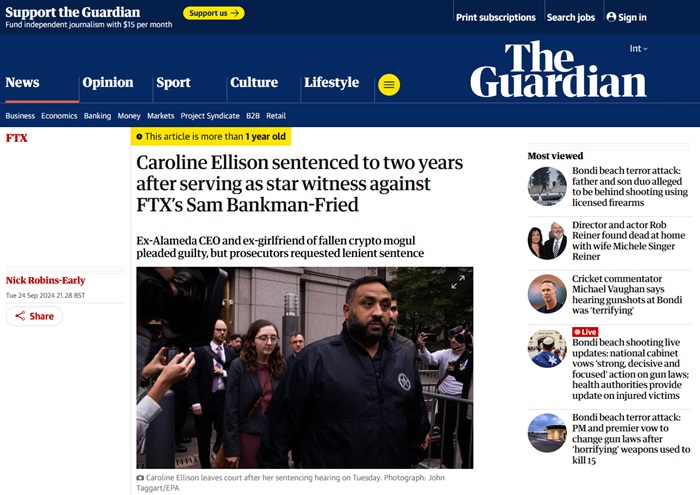
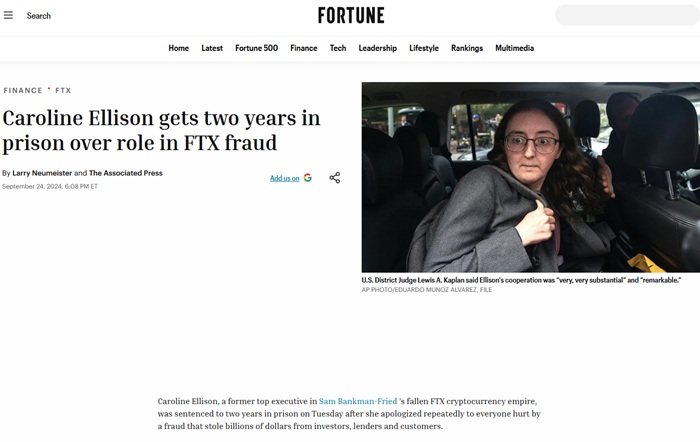
During sentencing proceedings, both prosecutors and defense attorneys urged leniency due to Ellison’s extraordinary cooperation. Prosecutors emphasized that her testimony was indispensable to securing Bankman-Fried’s conviction, while defense counsel argued that a prison sentence would discourage future cooperation in complex financial cases. U.S. District Judge Lewis A. Kaplan ultimately concluded that, despite her remarkable assistance, a custodial sentence was necessary given the magnitude of the harm caused. Ellison was sentenced to two years in a minimum-security federal prison.
Comparison with Bankman-Fried’s Sentence
Ellison’s two-year sentence stands in sharp contrast to the 25-year prison term imposed on Sam Bankman-Fried. The disparity reflects both Ellison’s cooperation and Bankman-Fried’s refusal to accept responsibility. Judge Kaplan explicitly contrasted Ellison’s genuine remorse and candor with Bankman-Fried’s evasive testimony, underscoring how cooperation can significantly mitigate—but not eliminate—punishment.
Broader Implications for White-Collar Crime Enforcement
The Ellison case highlights the challenges inherent in prosecuting large-scale financial fraud. Cooperation is often essential to unraveling complex schemes, yet courts must avoid creating the perception that cooperation alone absolves culpability. The sentence imposed sends a dual message: substantial assistance will be rewarded, but participation in massive fraud will still result in imprisonment.
Caroline Ellison’s sentencing reflects the complexity of assigning responsibility in systemic financial crimes. Her cooperation was instrumental in exposing the inner workings of the FTX fraud and securing accountability for its architect, yet her own role in the misuse of billions of dollars demanded punishment. The case stands as a lasting example of how ambition, loyalty, and ethical failure can converge to produce catastrophic outcomes, and how the justice system seeks to balance mercy with accountability in the face of unprecedented financial harm.
Related Fraudsters Scammers:





Popular Links

NEWS & EVENTS
The world's most prevalent social network said that to date, it has acquired lawful judgments of about $2 billion against deceitful exerci

SWINDLERS LIST
-
Top 10 Scammers !!!
Beware of these scammers...Keep them out of your mail-box...
SCAM TOOLS
-
Block Scam Mails???
Cleaning your scam filled inbox can be effected by these tools
HELP DESK
-
Waiting to help You!!!
Every problem has a solution when discussed. Discuss with us to get a clear idea to keep your information unscathed from hypocrites