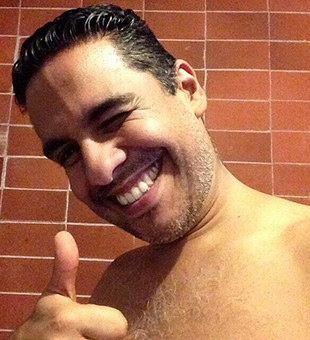
Male Scammer Mike Ramos

Scammer Mike Ramos
E-mail:
★★★★★ 1 ratings
Scam Danger:
 |
Details |
|
| First Name: | Mike |
| Location [Address]: | |
| Age: | 35 |
| Aka: | |
| Aliases: | |
| Phone: | |
Reports :
I never thought a simple friend request could turn into something so unsettling and emotionally draining. It all began like any ordinary day on social media. I was scrolling through my Facebook notifications when I noticed a new friend request from someone named "Mike Ramos." At first glance, the profile seemed completely normal—there was a smiling young man, appearing friendly and approachable, with photos that suggested an active and interesting life. One picture showed him in a military uniform, another outdoors in what looked like a scenic location. It gave the impression of someone disciplined, adventurous, and genuine.There was nothing immediately alarming about the profile. In fact, it looked more authentic than many others I had seen. The photos were clear, the person looked real, and the profile wasn't empty. I remember thinking that perhaps this was someone I had met in passing or had mutual connections with, even though I didn't recognize the name. Without much hesitation, I accepted the request.
That decision, I now realize, opened the door to a carefully planned deception.
Not long after accepting, I received a message. It was simple at first—just a greeting, polite and respectful. I responded casually, not thinking much of it. But the messages kept coming. The conversation quickly became more engaging. The person behind the profile seemed attentive, kind, and genuinely interested in getting to know me. There was a warmth in the way he communicated that made it easy to respond and continue the interaction.
Over the next few days, our conversations became more frequent. He shared details about his life, claiming to be in the military and often stationed away from home. He spoke about loneliness, about wanting someone to talk to, and about building a meaningful connection. Everything he said was carefully worded to create trust and emotional closeness. At the time, it felt sincere. I didn't see any reason to doubt him.
Looking back, I can now see how intentional it all was.
The profile itself was designed to appear credible. The use of a military image added a sense of respect and legitimacy. The outdoor photo gave a glimpse of personality and lifestyle. It was the kind of profile that naturally lowers your guard. It didn't feel like a fake account—it felt like a real person reaching out.
But slowly, small things began to feel off.
One of the first things I noticed was the lack of interaction on the profile. There were very few comments from friends, no meaningful conversations visible, and no tagged photos. It was as if the account existed in isolation. Despite having pictures, it lacked the depth and activity that most real profiles have.
Then there were inconsistencies in the stories he told. Details about his location, his work, and his daily life didn't always align. When I asked simple follow-up questions, the answers were often vague or shifted slightly. At first, I brushed it off, thinking maybe it was just poor communication or misunderstanding. But over time, the inconsistencies became harder to ignore.
The tone of the conversations also began to change.
What started as friendly chats gradually became more personal and emotionally charged. He began expressing strong feelings, talking about trust, connection, and even affection far too quickly. It felt rushed, unnatural. There was a sense of urgency in building an emotional bond, as if he was trying to establish something deep in a very short time.
Then came the turning point.
He began to talk about problems—serious ones. Financial difficulties, unexpected situations, and urgent needs started to come up in conversation. The way he presented these issues made it seem like he was in a difficult position and had no one else to turn to. There were subtle hints at first, then more direct suggestions that I could help.
That was the moment everything became clear.
I realized I was being manipulated.
The emotional connection that had been built was not genuine—it was a tool. The kindness, the attention, the carefully crafted conversations—they were all part of a strategy designed to gain my trust and eventually exploit it. The profile, the photos, the entire identity—it was all a fabrication.
I decided to take a step back and investigate.
I looked more closely at the photos on the profile. They seemed too perfect, too polished. I performed a reverse image search and discovered that the images were being used elsewhere online, associated with completely different identities. That confirmed my worst suspicion: the photos were stolen.
The person I had been talking to did not exist.
I cannot fully describe the feeling that followed. It was a mix of shock, disappointment, and anger. I felt betrayed—not just because of the deception, but because of how convincingly it had been carried out. It made me question my own judgment and how easily trust can be manipulated in an online environment.
I immediately stopped all communication. I blocked the account and reported it to Facebook, providing all the details I had gathered. I also took steps to secure my own account, reviewing my privacy settings and ensuring that no personal information had been compromised.
Even after taking these actions, the experience stayed with me.
What disturbed me the most was how calculated everything had been. The scammer knew exactly how to present himself, what to say, and how to create a sense of connection. He used emotional storytelling, consistent messaging, and a believable persona to draw me in. It wasn't random—it was deliberate.
This experience opened my eyes to how sophisticated online scams have become.
It's not always obvious. Scammers don't always appear suspicious or aggressive. Sometimes, they are patient, polite, and incredibly convincing. They take their time to build trust before making their move. And by the time you start to notice something is wrong, they have already established a connection that makes it harder to walk away.
I share this experience as a warning.
If you receive a friend request from someone you don't know, take a moment to look closely. Check their profile activity, their interactions, and their history. If something feels off, trust that instinct. Don't ignore small inconsistencies—they often point to something bigger.
Be especially cautious if someone you've just met online starts sharing emotional stories or expressing strong feelings too quickly. Genuine relationships take time. Scammers, on the other hand, often try to accelerate that process.
And most importantly, never send money or share personal information with someone you haven't verified. No matter how convincing their story may be, it's not worth the risk.
What happened to me could have been much worse. I was able to recognize the signs before any financial harm was done. But many people are not as fortunate. These scams are designed to exploit trust, kindness, and human connection.
The account I encountered—using the name "Mike Ramos"—is not real. The images are stolen, the information is false, and the intentions are harmful. It is a reminder that not everything online is what it seems.
I hope that by sharing this, others will be more aware and more cautious. No one deserves to be deceived in this way. The more we talk about these experiences, the harder it becomes for scammers to succeed.
Please stay alert, protect yourself, and don't be afraid to question what you see online. Your safety and peace of mind are worth it.
Related Male Scammers:





Rate this Profile
Romance Scams Must read
- Dating Scams Are BIG Business
- Why scammers use fake docs?
- How to Recognize Scammer
- Asian And Chinese Online Dating Scam
- How to Recognize a Female Dating Scammer
- 10 Practical Steps to Stay Safe From Online Romance Scams
- Prevent Internet Dating Scams Using These 4 Tips
- How Romance Fraudsters Use Photoshop
- Avoid Internet Dating Scams With These 4 Practical Tips
- Gold & Romance Fraud Scenarios Led by Female Scammers
- Meeting a Model and Birthday Scam Scenarios
- Ukraine Online Dating Scams
- A Typical Translation Scam Scenario
- Online Dating Scams: The Costly Travel Scenario
- 10 Ways to Check Who You Are Chatting With
Popular Links

NEWS & EVENTS
2014-10-06
The world's most prevalent social network said that to date, it has acquired lawful judgments of about $2 billion against deceitful exerci

SWINDLERS LIST
-
Top 10 Scammers !!!
Beware of these scammers...Keep them out of your mail-box...
SCAM TOOLS
-
Block Scam Mails???
Cleaning your scam filled inbox can be effected by these tools
HELP DESK
-
Waiting to help You!!!
Every problem has a solution when discussed. Discuss with us to get a clear idea to keep your information unscathed from hypocrites