Female Scammer Lara Vazquez
Female Scammer Lara Vazquez
E-mail:
★★★★☆ 8 ratings
Scam Danger:
 |
Details |
|
| First Name: | Lara |
| Location [Address]: | |
| Age: | |
| Birth Date: | |
| Aliases: | |
Reports :
I never imagined that something like this could happen to me. I’ve always considered myself careful, aware of online risks, and not the kind of person who would fall into an internet scam. But what started as a simple conversation turned into an emotionally draining and financially damaging experience that I feel compelled to share so others don’t go through the same thing.
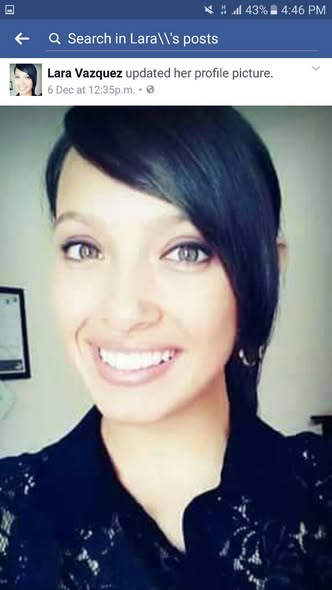
It began on social media, where I came across a profile that seemed completely genuine. The account belonged to a woman named “Lara Vazquez.” Her profile picture showed a friendly, attractive woman with a warm smile—someone who looked approachable and trustworthy. Her page included details that made her seem even more real: she claimed to be a Sergeant in the U.S. Army, mentioned studying at New York University, and listed her hometown as New York, though she said she was currently living in Phoenix, Arizona.
At first glance, everything looked legitimate. The profile had photos, basic personal information, and posts that didn’t immediately raise suspicion. When she reached out to me, it felt natural, even flattering. The conversation started casually—just small talk, asking how I was doing, what I did for work, and how my day had been.
Over time, the conversations became more frequent. She was always attentive, kind, and seemed genuinely interested in my life. She shared stories about her work in the military, often mentioning how difficult it was being deployed and feeling lonely. That’s when things started to shift emotionally. She began expressing how much she appreciated having someone to talk to, someone who understood her.
I didn’t realize it at the time, but this was the beginning of emotional manipulation.
As days turned into weeks, the connection deepened. She spoke about wanting a serious relationship, about building a future, and how she felt like she had finally found someone she could trust. It all felt very fast, but also very real. Looking back, I can see how carefully everything was orchestrated.
At some point, she started moving the conversation away from the original platform. She suggested we talk on another messaging app, claiming it was more secure and convenient given her “military restrictions.” That seemed reasonable at the time, so I agreed.
That’s when the tone of the conversations changed again.
She began sharing more personal struggles. She said being in the military made it hard to access her finances and that she sometimes faced urgent situations where she needed help. At first, it was small requests—nothing too alarming. She framed them in a way that made it seem temporary and promised she would pay me back.
I hesitated, but by then I was emotionally invested. I believed I was helping someone I cared about.
Then the requests became more frequent—and larger.
There was always a reason: emergency travel issues, problems with military clearance, fees that needed to be paid for her to take leave, or packages she supposedly wanted to send me but couldn’t release without payment. Each story was detailed and convincing. She always reassured me that everything would be returned and that this was just a temporary situation.
I started to feel uneasy, but every time I questioned things, she would respond with emotional pressure. She would say things like, “Don’t you trust me?” or “I thought you cared about me.” Sometimes she would act hurt or distant, making me feel guilty for doubting her.
That emotional manipulation made it incredibly difficult to step back and think clearly.
Eventually, I realized something wasn’t right. The stories didn’t add up. There were inconsistencies in what she said about her location, her job, and her circumstances. I started doing some research, and that’s when everything began to unravel.
I discovered that the profile picture she was using didn’t belong to her at all—it was a stolen image. The person in the photos was completely unrelated to the account. The identity of “Lara Vazquez” was fabricated.
Even more disturbing, I found warnings from others describing the exact same situation—same name, same story, same tactics. It became clear that this wasn’t just one person casually misleading others. This was a deliberate scam operation, likely run by someone posing as a woman to gain trust and exploit victims emotionally and financially.
Realizing the truth was devastating.
It wasn’t just about the money. It was the emotional impact—the feeling of being deceived, manipulated, and taken advantage of. I had trusted someone who didn’t exist. The connection I thought was real was nothing more than a carefully constructed illusion designed to exploit me.
Looking back, there were warning signs:
The relationship progressed very quickly.
There was a strong emotional push early on.
Requests for money started appearing under urgent and emotional circumstances.
There was always an excuse for why traditional methods (like bank transfers or verifiable details) couldn’t be used.
The profile information couldn’t be independently verified.
The communication moved off the original platform quickly.
At the time, these things didn’t seem obvious. But now, they stand out clearly.
What makes this type of scam so dangerous is how personal it feels. It’s not just a random message asking for money—it’s someone building a connection, gaining trust, and then using that trust against you.
I’m sharing this experience so others can be aware and stay cautious. If something feels off, it probably is. Take time to verify identities. Don’t rush into emotional connections with someone you’ve never met. And most importantly, never send money to someone you only know online, no matter how convincing their story may be.
These scammers are skilled at what they do. They know how to manipulate emotions, how to create believable stories, and how to exploit trust. Anyone can fall victim to this—not because they are careless, but because they are human.
I learned this lesson the hard way. And while I can’t change what happened, I hope sharing this helps prevent it from happening to someone else.
Related Female Scammers:





Rate this Profile
Romance Scams Must read
- Dating Scams Are BIG Business
- Why scammers use fake docs?
- How to Recognize Scammer
- Asian And Chinese Online Dating Scam
- How to Recognize a Female Dating Scammer
- 10 Practical Steps to Stay Safe From Online Romance Scams
- Prevent Internet Dating Scams Using These 4 Tips
- How Romance Fraudsters Use Photoshop
- Avoid Internet Dating Scams With These 4 Practical Tips
- Gold & Romance Fraud Scenarios Led by Female Scammers
- Meeting a Model and Birthday Scam Scenarios
- Ukraine Online Dating Scams
- A Typical Translation Scam Scenario
- Online Dating Scams: The Costly Travel Scenario
- 10 Ways to Check Who You Are Chatting With
Popular Links

NEWS & EVENTS
The world's most prevalent social network said that to date, it has acquired lawful judgments of about $2 billion against deceitful exerci

SWINDLERS LIST
-
Top 10 Scammers !!!
Beware of these scammers...Keep them out of your mail-box...
SCAM TOOLS
-
Block Scam Mails???
Cleaning your scam filled inbox can be effected by these tools
HELP DESK
-
Waiting to help You!!!
Every problem has a solution when discussed. Discuss with us to get a clear idea to keep your information unscathed from hypocrites