
Scammer Tetsuya Komuro
Fraudster Tetsuya Komuro

Details |
|
| Name: | Tetsuya Komuro |
| Other Name: | |
| Born: | 1958 |
| whether Dead or Alive: | |
| Age: | 0 |
| Country: | Japan |
| Occupation: | Musician,songwriter,composer,record producer |
| Criminal / Fraud / Scam Charges: | |
| Criminal / Fraud / Scam Penalty: | |
| Known For: | |
Description :
Tetsuya Komuro and the Limits of Celebrity Power in Japan’s Music Industry
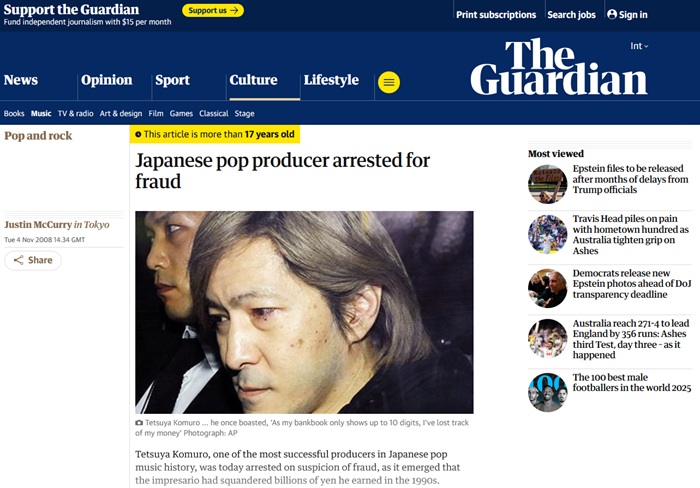
For much of the 1990s, Tetsuya Komuro was one of the most powerful figures in Japanese popular culture. His name was inseparable from the sound, success, and spectacle of J-Pop during its most commercially explosive era. As a producer, composer, and cultural tastemaker, Komuro shaped the careers of numerous chart-topping artists and transformed a modest record label into an entertainment powerhouse. His music dominated radio, television, and karaoke venues across Japan and much of East Asia. Yet by the late 2000s, this image of creative genius and immense wealth had been replaced by scenes of public humiliation, arrest, and criminal conviction. Komuro’s fraud case was not merely a personal tragedy; it was a dramatic illustration of how fame, financial collapse, and desperation can converge to destroy even the most celebrated careers.
Early Life and Musical Foundations
Tetsuya Komuro was born in 1958 and came of age during a period of rapid change in Japan’s cultural and economic landscape. He entered the professional music world in 1984 as a member of the three-piece rock band TM Network, where he served as a keyboardist and songwriter. While the group enjoyed considerable popularity, Komuro quickly distinguished himself as more than a performer. His interest lay in composition, arrangement, and production, and he demonstrated a keen ability to anticipate musical trends before they reached the mainstream.
TM Network’s success gave Komuro access to the broader music industry, and by the late 1980s he had begun transitioning into a behind-the-scenes role. Drawing inspiration from European electronic music and American dance pop, he developed a sound that blended global influences with distinctly Japanese melodic sensibilities. This fusion would become his trademark and lay the foundation for his later dominance as a producer.
The Explosion of the Komuro Sound in the Early 1990s
The early 1990s marked the beginning of Komuro’s extraordinary ascent. He emerged as a producer capable of creating hits with remarkable consistency, launching the careers of artists who would soon become household names. His work with performers such as Namie Amuro, hitomi, and Ryoko Shinohara redefined the commercial possibilities of Japanese pop music. Media outlets soon began referring to his circle of artists as the “Komuro Family,” reflecting both their shared sound and Komuro’s central role in shaping their success.
By 1995, Komuro’s influence had reached unprecedented heights. Songs he produced occupied all five of the top positions on Japan’s singles chart simultaneously, an achievement that cemented his reputation as the most powerful figure in the industry. His sound was omnipresent, shaping not only music charts but advertising campaigns, television programming, and youth culture more broadly. Japanese pop music had become a dominant cultural export across East Asia, and Komuro stood at the centre of that phenomenon.
Transforming Avex into an Industry Giant
Komuro’s success was closely tied to Avex, a record label that he helped transform from a mid-level company into one of Japan’s largest entertainment conglomerates. His ability to generate consistent blockbuster hits gave Avex enormous leverage within the industry. The label’s fortunes rose in tandem with Komuro’s output, and his influence extended far beyond music into branding, marketing, and media strategy.
During this period, Komuro was not only a producer but also a symbol of Japanese pop modernity. His work represented a confident, outward-looking Japan, eager to engage with global culture while asserting its own creative identity. His collaborations reached international audiences, including his co-writing of the theme song for the 1998 FIFA World Cup with French composer Jean-Michel Jarre and his involvement in the official music for the 2000 G8 summit.

Wealth, Fame, and a Culture of Excess
The rewards of Komuro’s success were immense. By the mid-1990s, his annual income reportedly exceeded 2 billion yen, making him one of the wealthiest figures in Japan’s entertainment industry. He sold an estimated 170 million CDs, and his music was enormously popular not only in Japan but also in Hong Kong and Taiwan. With wealth came an extravagant lifestyle that became part of his public persona.
Komuro owned luxury properties in Hawaii, Bali, and Malibu, drove high-end sports cars, and travelled in unparalleled comfort. One widely reported incident described him spending approximately 20 million yen to reserve the entire first-class cabin of a flight from Tokyo to Los Angeles. In interviews, he was portrayed as a man so wealthy that he had lost track of his own fortune, once remarking that his bankbook could display only ten digits, making it impossible to know how much money he truly possessed.
This image of excess was embraced by the media and admired by fans, but it also masked a dangerous reality. Komuro’s lifestyle was sustained by continuous success, and as long as the hits kept coming, the illusion of infinite wealth could be maintained. When that success began to wane, the foundations of his empire proved far less secure than they appeared.
Creative Decline and Industry Shifts
By the late 1990s and early 2000s, the music industry was undergoing significant transformation. New producers emerged, digital technology altered consumption patterns, and audience tastes shifted rapidly. The euro-dance style that Komuro had popularised began to feel dated, and his ability to dominate the charts diminished.
As his creative output slowed, so did his income. Artists once associated with his brand faded from prominence, and Avex gradually reduced its reliance on his work. Komuro struggled to adapt to the changing landscape, and attempts to recapture his earlier success fell short. The decline was not sudden but relentless, and it left him increasingly isolated within an industry that had once revolved around him.

Financial Mismanagement and Mounting Pressure
As professional success declined, Komuro’s financial situation deteriorated rapidly. He became involved in a series of overseas business ventures that failed to produce returns, draining what remained of his wealth. At the same time, personal obligations placed enormous strain on his finances. A costly divorce and ongoing alimony payments imposed long-term liabilities that he struggled to meet.
Despite shrinking income, Komuro did not significantly reduce his spending. Creditors began to pursue repayment, and his assets were gradually depleted. The contrast between his public image as a wealthy celebrity and his private reality of mounting debt became increasingly stark. According to media reports, Komuro was deeply in debt by the mid-2000s, trapped by obligations he could no longer satisfy.
The Copyright Deal That Became Fraud
It was within this context of desperation that Komuro committed the act that would lead to his downfall. In July 2006, he approached an investor from Ashiya, Hyogo Prefecture, offering to sell the copyrights to 806 songs he had composed. The total value of the deal was set at 1 billion yen. Komuro represented himself as the rightful owner of the copyrights, despite knowing that they were held by music publishers and therefore could not legally be transferred by him.
In August 2006, the investor paid Komuro an advance of 500 million yen, equivalent to half the agreed sum. Rather than placing the money in escrow or resolving the ownership issues, Komuro immediately used the funds to pay off personal debts. Court records later revealed that the money was distributed among various creditors, including a substantial payment to A.C. Holdings, repayment of a loan from an auditor, and settlement of credit card obligations.
This transaction was not a misunderstanding or administrative error. Prosecutors later established that Komuro knew he lacked the authority to sell the copyrights at the time he accepted the money. His actions therefore constituted deliberate fraud.
Civil Dispute and Failed Settlement
When the investor discovered that no copyrights had been transferred, he demanded the return of his money. Komuro was unable to repay the funds, prompting the investor to file a civil lawsuit. In July 2008, the two parties reached a settlement agreement valued at approximately 6 million dollars. Under the terms of the settlement, Komuro was required to repay the investor by a specified deadline.
Komuro failed to meet the settlement obligations. His financial situation had deteriorated to the point where repayment was impossible. When he defaulted, the investor escalated the matter by filing a criminal complaint with the Osaka public prosecutors office. This decision transformed the dispute from a private civil matter into a criminal case.
Arrest and National Shock
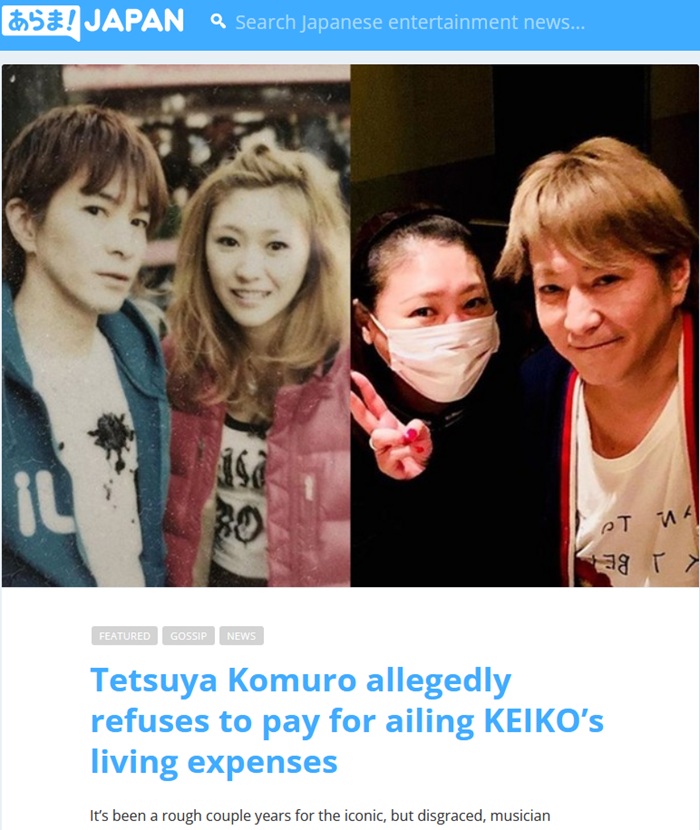
On November 4, 2008, prosecutors in Osaka arrested Tetsuya Komuro on suspicion of fraud. Television footage broadcast nationwide showed him leaving a hotel in tears, surrounded by officials. At the same time, investigators raided his luxury apartment in Tokyo, underscoring the seriousness of the charges. Two senior officials from an entertainment agency connected to the case were also taken into custody.
The arrest stunned the nation. Komuro’s fall from grace dominated headlines, with commentators emphasising the dramatic contrast between his former wealth and his present disgrace. In statements reported by Japanese media, Komuro apologised to the victim and expressed readiness to face criminal charges.
Industry Fallout and Avex’s Intervention
Komuro’s arrest sent shockwaves through the entertainment industry. Avex Group Holdings, whose success had been closely linked to his work, moved quickly to manage the fallout. Planned CD releases associated with Komuro’s group globe were cancelled, and digital downloads were suspended.
Behind the scenes, Avex executives took decisive action. Company president Masato Matsuura reimbursed the defrauded investor the full 500 million yen advance, plus interest, bringing the total to approximately 648 million yen. Matsuura also personally appealed to the court to grant Komuro leniency, arguing that imprisonment would serve no social purpose given that restitution had been made.
Detention, Bail, and Public Apology
Komuro was formally charged with fraud later in November 2008 and spent more than two weeks in the Osaka Detention Center. He was eventually released on bail, part of which was reportedly covered by Avex. Upon his release, Komuro addressed a large group of reporters, offering a public apology and expressing a desire to continue working in music if permitted.
The statement reflected both remorse and uncertainty. Komuro no longer spoke as a dominant industry figure but as an individual seeking forgiveness and survival in the aftermath of public disgrace.
Trial Proceedings and Guilty Plea
Komuro’s trial began at Osaka District Court in late 2008. From the outset, he pleaded guilty to the fraud charges, acknowledging that he had knowingly accepted money for copyrights he did not own. His defence argued that his actions were driven by extreme financial distress rather than malicious intent, emphasising his cooperation with investigators and public remorse.
Prosecutors sought a five-year prison sentence, highlighting the scale of the fraud and arguing that leniency would undermine public trust. In Japan, suspended sentences are rare in cases involving damages exceeding 100 million yen, making the case particularly significant.

Arrest and National Shock
On November 4, 2008, prosecutors in Osaka arrested Tetsuya Komuro on suspicion of fraud. Television footage broadcast nationwide showed him leaving a hotel in tears, surrounded by officials. At the same time, investigators raided his luxury apartment in Tokyo, underscoring the seriousness of the charges. Two senior officials from an entertainment agency connected to the case were also taken into custody.
The arrest stunned the nation. Komuro’s fall from grace dominated headlines, with commentators emphasising the dramatic contrast between his former wealth and his present disgrace. In statements reported by Japanese media, Komuro apologised to the victim and expressed readiness to face criminal charges.
Industry Fallout and Avex’s Intervention
Komuro’s arrest sent shockwaves through the entertainment industry. Avex Group Holdings, whose success had been closely linked to his work, moved quickly to manage the fallout. Planned CD releases associated with Komuro’s group globe were cancelled, and digital downloads were suspended.
Behind the scenes, Avex executives took decisive action. Company president Masato Matsuura reimbursed the defrauded investor the full 500 million yen advance, plus interest, bringing the total to approximately 648 million yen. Matsuura also personally appealed to the court to grant Komuro leniency, arguing that imprisonment would serve no social purpose given that restitution had been made.
Detention, Bail, and Public Apology
Komuro was formally charged with fraud later in November 2008 and spent more than two weeks in the Osaka Detention Center. He was eventually released on bail, part of which was reportedly covered by Avex. Upon his release, Komuro addressed a large group of reporters, offering a public apology and expressing a desire to continue working in music if permitted.
The statement reflected both remorse and uncertainty. Komuro no longer spoke as a dominant industry figure but as an individual seeking forgiveness and survival in the aftermath of public disgrace.
Trial Proceedings and Guilty Plea
Komuro’s trial began at Osaka District Court in late 2008. From the outset, he pleaded guilty to the fraud charges, acknowledging that he had knowingly accepted money for copyrights he did not own. His defence argued that his actions were driven by extreme financial distress rather than malicious intent, emphasising his cooperation with investigators and public remorse.
Prosecutors sought a five-year prison sentence, highlighting the scale of the fraud and arguing that leniency would undermine public trust. In Japan, suspended sentences are rare in cases involving damages exceeding 100 million yen, making the case particularly significant.
Sentencing and Judicial Reasoning
In early 2009, the Osaka District Court delivered its verdict. Tetsuya Komuro was sentenced to three years in prison, suspended for five years. The judge cited Komuro’s acceptance of responsibility, the full repayment of the victim’s losses, and the lack of social benefit in incarceration as reasons for the suspended sentence.
While the ruling spared Komuro imprisonment, it placed him under strict legal scrutiny. Any further criminal conduct during the suspension period would result in immediate incarceration.
Public Reaction and Legacy
Public reaction to the verdict was divided. Some viewed Komuro as a tragic figure undone by excess and financial mismanagement, while others criticised the suspended sentence as evidence that celebrity status afforded undue leniency. Industry figures responded cautiously, expressing hope for rehabilitation while warning against repetition of such behaviour.
Komuro’s artistic legacy remains significant, but it is now inseparable from the narrative of his downfall. His case exposed vulnerabilities within the entertainment industry and highlighted the risks of concentrating power and wealth in a single individual without adequate oversight.
From Cultural Icon to Cautionary Tale
Tetsuya Komuro’s story is one of extraordinary ascent followed by dramatic collapse. His career reshaped Japanese pop music, propelled artists to unprecedented success, and generated immense wealth. Yet the same forces that enabled his rise also contributed to his downfall. The fraud case served as a stark reminder that fame and artistic achievement do not exempt individuals from legal responsibility.
Related Fraudsters Scammers:





Popular Links

SWINDLERS LIST
-
Top 10 Scammers !!!
Beware of these scammers...Keep them out of your mail-box...

SCAM TOOLS
-
Block Scam Mails???
Cleaning your scam filled inbox can be effected by these tools
HELP DESK
-
Waiting to help You!!!
Every problem has a solution when discussed. Discuss with us to get a clear idea to keep your information unscathed from hypocrites