
Scammer Semion Mogilevich
Fraudster Semion Mogilevich
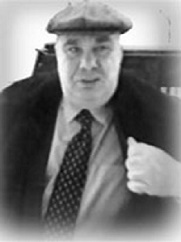
Details |
|
| Name: | Semion Mogilevich |
| Other Name: | |
| Born: | 1946 |
| whether Dead or Alive: | |
| Age: | 75 |
| Country: | Ukrainian |
| Occupation: | |
| Criminal / Fraud / Scam Charges: | |
| Criminal / Fraud / Scam Penalty: | |
| Known For: | |
Description :
Semion Mogilevich: The Global Manhunt for an Alleged Architect of International Financial Crime
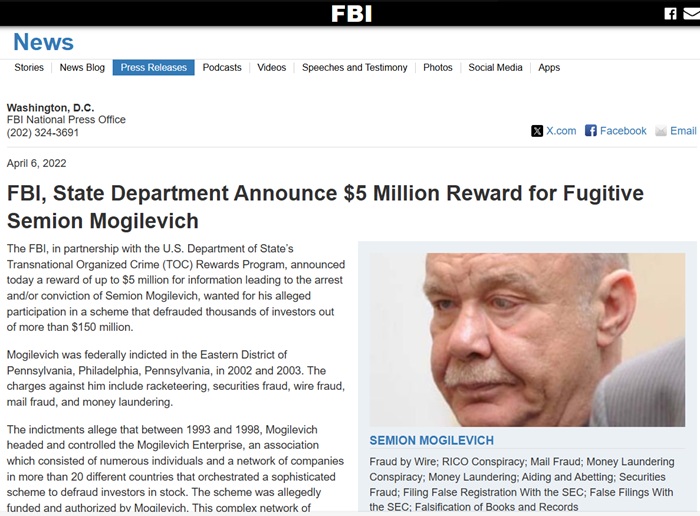
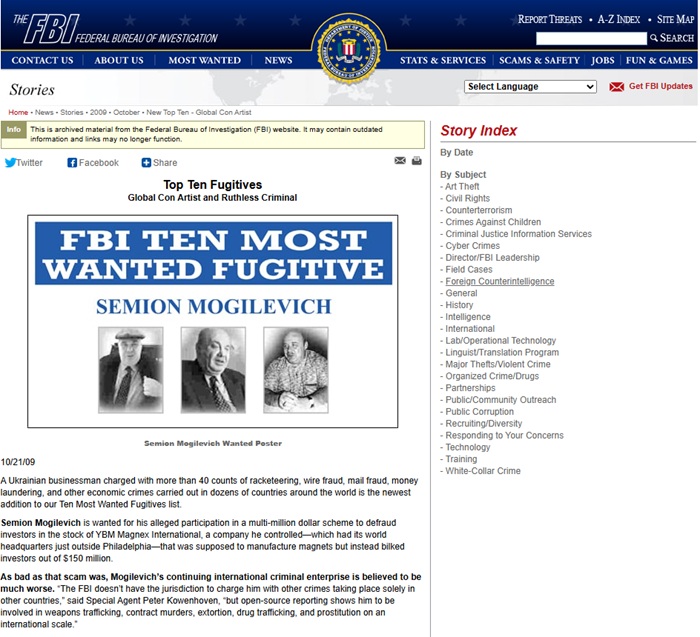
The United States Government has announced a reward of up to five million dollars for information leading to the arrest and/or conviction of Semion Mogilevich, a figure long associated with transnational organized crime and one of the most sought-after fugitives by U.S. law enforcement. This reward, jointly offered by the Federal Bureau of Investigation (FBI) and the U.S. Department of State under the Transnational Organized Crime Rewards Program, underscores the seriousness of the charges against Mogilevich and the extensive efforts undertaken to bring him to justice. Over several decades, Mogilevich has been accused of orchestrating complex international financial crimes, most notably a massive securities fraud scheme that allegedly defrauded thousands of investors of more than 150 million U.S. dollars.
Personal Background and Identity
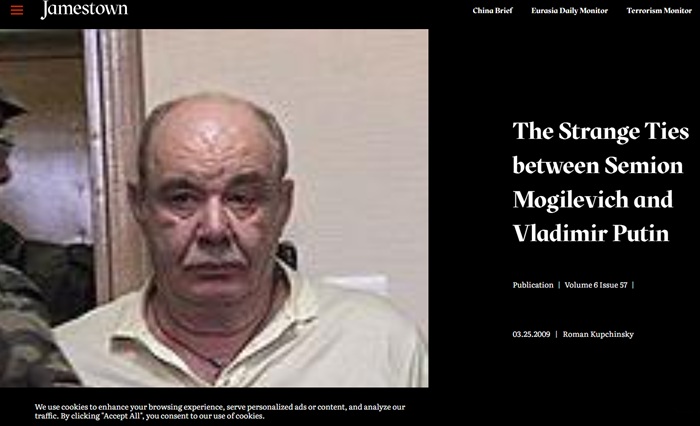
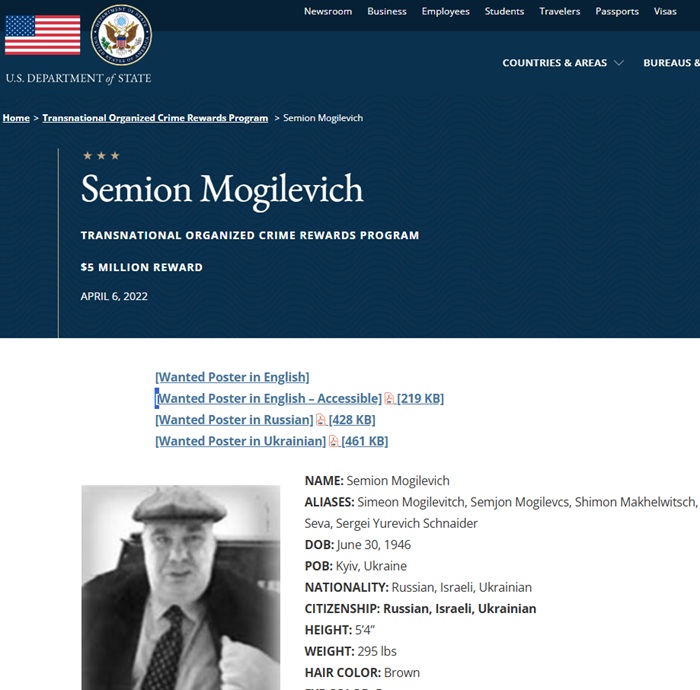
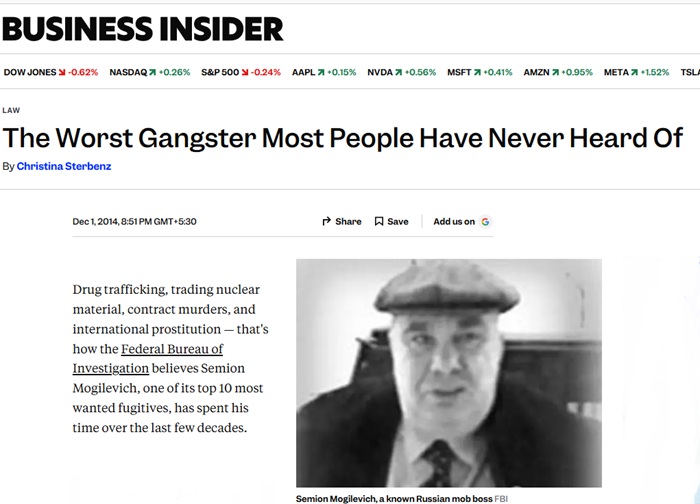
Semion Mogilevich was born on June 30, 1946, in Kyiv, Ukraine, although he has also been known to use July 5, 1946, as an alternate date of birth. He is described by U.S. authorities as a white male, approximately five feet six to five feet seven inches tall, weighing about 290 pounds. He is balding, with gray hair and green eyes, and may at times wear facial hair, including a moustache. Mogilevich is also known to be a heavy smoker. Over the years, he has reportedly used multiple passports, including Russian, Ukrainian, and Israeli documents, allowing him to travel extensively and operate across international borders. His primary residence is believed to be in Moscow, Russia.
Early Recognition by Law Enforcement
By the mid-1990s, Mogilevich had already drawn the attention of international law enforcement agencies. In 1995, Russia’s Ministry of Internal Affairs reportedly identified him as the leader of a vast criminal organization consisting of more than 300 associates operating in over thirty countries across Europe, Asia, and North America. According to these assessments, the organization was not limited to traditional organized crime activities but had evolved into a sophisticated network focused on financial crimes that exploited weaknesses in global markets and regulatory systems.
Scope of Alleged Criminal Activities
Authorities have alleged that Mogilevich’s criminal enterprise engaged in a wide range of illegal activities. These included securities fraud, bank fraud, money laundering, extortion, weapons trafficking, and human trafficking, including the trafficking of women for prostitution. In addition, the organization was accused of corrupting public officials in multiple countries and, in some instances, being connected to violent crimes, including murder. These allegations contributed to Mogilevich’s reputation as one of the most powerful and elusive figures within Russian Organized Crime.
Evolution of Russian Organized Crime
Russian Organized Crime groups such as the one allegedly led by Mogilevich underwent a significant transformation following the collapse of the Soviet Union. Rather than focusing solely on street-level criminal activity, these groups increasingly turned toward complex financial crimes. By penetrating international banking systems and securities markets, they were able to move and launder large sums of money while maintaining layers of separation between leadership figures and the criminal acts themselves. Mogilevich was widely described as a pioneer of this model, emphasizing intelligence, financial expertise, and global reach over overt violence.
The YBM Magnex Scheme: Origins
Between 1993 and 1998, Semion Mogilevich is alleged to have played a central role in a large-scale securities fraud scheme involving YBM Magnex International, Inc. The company was incorporated in Canada but headquartered in Newtown, Bucks County, Pennsylvania. According to U.S. indictments, Mogilevich allegedly funded, authorized, and controlled the scheme through a complex network of shell companies and intermediaries spread across numerous countries. These entities were designed to conceal true ownership and create the appearance of a legitimate and profitable international business.
Mechanics of the Alleged Fraud
The scheme allegedly relied on misleading investors through falsified financial statements, opaque corporate structures, and deceptive promotional activities. Investors were led to believe that YBM Magnex was a thriving company with strong international operations and growth potential. In reality, authorities claim that the company’s apparent success was largely an illusion created to inflate stock prices and facilitate the extraction of investor funds. The intricate corporate web made it difficult for regulators and investors to identify the individuals allegedly controlling the operation.
Collapse and Financial Impact
The YBM Magnex scheme collapsed in 1998, triggering substantial financial losses for investors. Thousands of individuals reportedly lost money, with total losses estimated to exceed 150 million U.S. dollars. The collapse prompted widespread outrage and led to intensified scrutiny from U.S. and international regulators. For many investors, the losses represented life-altering financial damage, further amplifying the significance of the case.
Launch of the Federal Investigation
In 1997, even before the scheme’s collapse, the FBI’s Philadelphia Division initiated a securities fraud investigation into YBM Magnex. This investigation was conducted in partnership with the Internal Revenue Service, the Securities and Exchange Commission, and the U.S. Customs Service. Investigators examined extensive financial records, international wire transfers, and corporate filings in an effort to trace the flow of funds and identify those responsible for orchestrating the scheme.
Findings and Criminal Enterprise Allegations
As the investigation progressed, authorities concluded that the YBM Magnex fraud was part of a broader criminal enterprise allegedly headed by Mogilevich. The indictments describe the “Mogilevich Enterprise” as an association-in-fact composed of individuals and companies operating across more than twenty countries. This network was allegedly used not only to commit securities fraud but also to launder proceeds and conceal criminal activity through legitimate-appearing businesses.
Federal Indictments in the United States
On March 13, 2002, Semion Mogilevich was indicted in the Eastern District of Pennsylvania. A superseding indictment was filed on February 23, 2003, charging Mogilevich and three co-conspirators with numerous federal offenses. These charges included racketeering conspiracy under the Racketeer Influenced and Corrupt Organizations Act (RICO), securities fraud, wire fraud, mail fraud, and money laundering. The indictments also sought forfeiture of assets exceeding 50 million U.S. dollars, alleged to be connected to criminal proceeds.
Role of U.S. Prosecutors
The prosecution of the case has been led by the U.S. Attorney’s Office for the Eastern District of Pennsylvania, in coordination with the Department of Justice’s Organized Crime and Gang Section. Prosecutors have described the case as one of the most complex international financial crime prosecutions undertaken by the department, requiring cooperation among multiple agencies and foreign partners.
International Challenges and Extradition Issues
Despite the indictments, Mogilevich has not been extradited to the United States. Russia does not extradite its citizens under its constitution, a policy that has complicated efforts to bring Mogilevich before a U.S. court. This legal barrier has been a significant factor in his continued status as a fugitive from U.S. justice, despite being openly known to reside in Moscow for extended periods.
Arrest in Russia on Separate Charges
In January 2008, Russian authorities arrested Mogilevich in Moscow on charges related to aiding tax evasion. The case involved Vladimir Nekrasov, the owner of the Arbat Prestige cosmetics retail chain. Mogilevich was accused of assisting in a scheme to evade Russian taxes, an allegation separate from the U.S. securities fraud charges.
Detention and Court Proceedings
On March 23, 2009, the Moscow City Court ruled that Mogilevich would remain in detention while investigators continued to examine the tax evasion case. This marked the third extension of his detention since his arrest. The proceedings attracted significant media attention due to Mogilevich’s international notoriety and the broader implications of his case.
Alleged Political Connections
Mogilevich’s case has been further complicated by persistent allegations of close ties to powerful political figures in Russia. Numerous media reports and intelligence assessments have suggested that he maintained connections with senior officials, including Vladimir Putin. These claims have never been conclusively proven in court, and Mogilevich has consistently denied them. Nevertheless, the allegations have fueled speculation about the extent to which political protection may have shielded him from extradition.
Energy Sector Allegations
Additional controversy surrounds Mogilevich’s alleged involvement in the international gas trade. He has been linked in media reports to RosUkrEnergo and Eural Trans Gas, companies involved in the transit of natural gas from Central Asia to Ukraine in cooperation with Gazprom, Russia’s state-owned gas company. Mogilevich has been described as a hidden partner of Ukrainian businessman Dmytro Firtash, who has acknowledged knowing Mogilevich but denied any criminal relationship.
Disputed Evidence and Reversals
One disputed piece of evidence is a letter allegedly written in 1998 by Major-General Alexander Mordovets of the Russian Ministry of Internal Affairs, describing a criminal relationship between Mogilevich and Andras Knopf, an executive associated with Eural Trans Gas. In 2004, Mordovets submitted an affidavit denying that he authored the letter, claiming it was a forgery. This reversal intensified debate over the reliability of evidence in cases involving powerful figures.
Public Appearances and Media Coverage
Despite claims that he was difficult to locate, Mogilevich was photographed attending services at a Moscow synagogue in December 2004, with the image appearing on the front page of Izvestia. The photograph raised questions about why he had not been arrested earlier, given his apparent visibility. In a 1999 interview with the BBC, Mogilevich denied being a leader of organized crime, rejecting allegations while living openly in Moscow.
Reward Announcement and Public Appeals
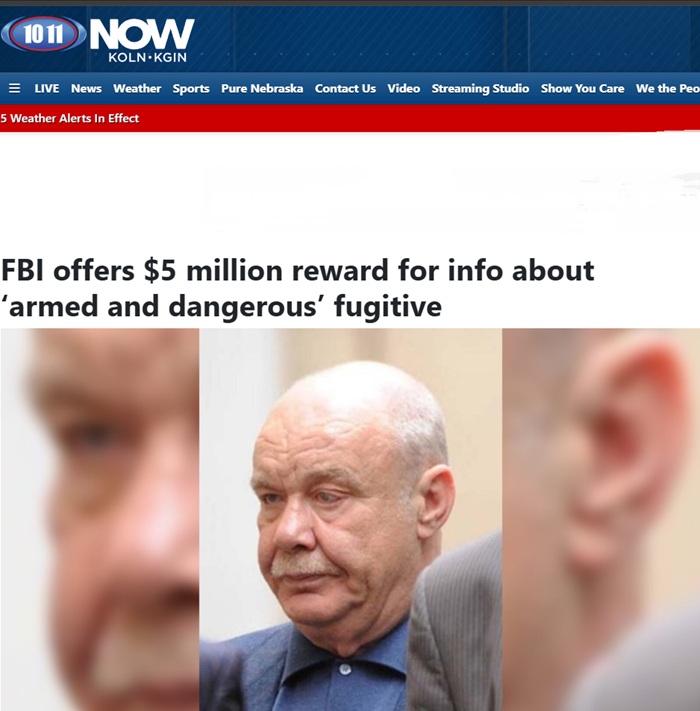
To renew efforts to locate and apprehend Mogilevich, the United States Government announced a reward of up to five million dollars for information leading to his arrest and/or conviction. The FBI and the U.S. Department of State emphasized that all tips would be handled confidentially and encouraged individuals worldwide to come forward with credible information.
Methods for Submitting Information
Individuals with information are instructed to contact the FBI by calling 1-800-CALL-FBI, submitting tips online at tips.fbi.gov, or using WhatsApp at +1-215-839-6844. Those outside the United States are advised to contact the nearest U.S. Embassy or Consulate. Government officials and employees are not eligible to receive rewards.
Semion Mogilevich remains one of the most notorious figures pursued by U.S. law enforcement for alleged involvement in international financial crime. His case illustrates the challenges of combating transnational organized crime in a globalized economy, particularly when legal, political, and jurisdictional barriers limit enforcement actions. The continuing reward offer reflects the U.S. Government’s determination to pursue accountability, even decades after the alleged crimes occurred. While many aspects of Mogilevich’s life and activities remain contested, the indictments and extensive investigations underscore the extraordinary scale and complexity of the case.
Related Fraudsters Scammers:



Popular Links

SWINDLERS LIST
-
Top 10 Scammers !!!
Beware of these scammers...Keep them out of your mail-box...

SCAM TOOLS
-
Block Scam Mails???
Cleaning your scam filled inbox can be effected by these tools
HELP DESK
-
Waiting to help You!!!
Every problem has a solution when discussed. Discuss with us to get a clear idea to keep your information unscathed from hypocrites