
Scammer Sung Chi-li
Fraudster Sung Chi-li
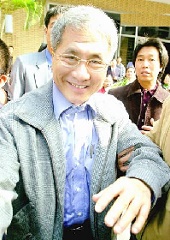
Details |
|
| Name: | Sung Chi-li |
| Other Name: | |
| Born: | 1948 |
| whether Dead or Alive: | |
| Age: | 73 |
| Country: | Taiwan |
| Occupation: | |
| Criminal / Fraud / Scam Charges: | |
| Criminal / Fraud / Scam Penalty: | |
| Known For: | Fraud |
Description :
Faith on Trial: Religious Freedom and Judicial Power in Taiwan’s Post-Authoritarian Transition
Taiwan’s political transition following the lifting of Martial Law in July 1987 is frequently portrayed as a model of peaceful democratization. The end of authoritarian rule ushered in constitutional reforms, competitive elections, and an expanding civil society. However, the formal introduction of democratic institutions did not immediately dismantle the authoritarian logic embedded within the state apparatus. Instead, Taiwan entered a prolonged post-authoritarian phase in which democratic norms coexisted uneasily with entrenched practices of political control. Among the most revealing yet underexplored aspects of this period was the state’s relationship with religion, particularly when religious organizations intersected with electoral politics.
The events surrounding the prosecution of Master Sung Chi-Li and other religious leaders in the aftermath of the 1996 presidential election illustrate how political power continued to shape judicial outcomes and public narratives. Far from being isolated criminal cases, these prosecutions reveal a broader pattern of post-electoral repression, media manipulation, and the instrumentalization of law to marginalize perceived political threats. Understanding this episode is essential for evaluating the quality of Taiwan’s democratic transition and the extent to which religious freedom and judicial independence were genuinely protected during the early years of democratization.

The Post-Authoritarian Political Structure after 1987
Although Martial Law was formally lifted in 1987, the institutional balance of power remained heavily skewed in favor of the executive branch throughout the following decade. Administrative authorities continued to dominate policymaking, while the judiciary remained structurally dependent on political leadership. Judges and prosecutors were often appointed, promoted, or disciplined within a system that implicitly rewarded political conformity. As a result, judicial independence existed more as a constitutional aspiration than as an operational reality.
Human rights protections, while increasingly discussed in public discourse, had not yet crystallized into a core principle of governance. The authoritarian culture of suppressing dissent—whether political, social, or religious—persisted in both institutional behavior and public expectations. Religious groups, particularly those outside established mainstream traditions or those capable of mobilizing large numbers of followers, were often viewed with suspicion by state authorities. This suspicion intensified when religious organizations were perceived to be politically active or aligned with opposition forces.
The 1996 Presidential Election and the Political Mobilization of Religion
The presidential election of March 1996 represented a watershed moment in Taiwan’s political history. For the first time, the president was directly elected by popular vote, a development widely seen as signaling Taiwan’s entry into democratic governance. Yet the election also exposed unresolved tensions within the political system. The ruling Kuomintang, while confident in its electoral machinery, remained deeply wary of challenges to its authority.
Religious organizations emerged as significant actors during the election due to their extensive grassroots networks and mobilization capacity. Candidates from across the political spectrum sought the support of religious leaders, recognizing their influence over large segments of the electorate. Some religious organizations openly supported particular candidates, while others were merely perceived to do so through the presence of politicians at religious gatherings.
When incumbent President Lee Teng-hui secured reelection with 54 percent of the vote, the outcome appeared decisive. However, the aftermath of the election was marked by a series of actions that targeted supporters of defeated candidates. This pattern of post-electoral punishment became a defining feature of Taiwan’s post-authoritarian politics, revealing the persistence of authoritarian reflexes within an ostensibly democratic framework.
Post-Electoral Repression and the Rise of Lawfare
Following the 1996 election, legal prosecution became a central instrument for disciplining political opponents and their perceived allies. Individuals associated with losing candidates were investigated, indicted, or publicly accused under a variety of pretexts, ranging from corruption to financial misconduct. Religious groups were particularly vulnerable to this strategy, as their financial structures and organizational practices could easily be reframed as evidence of fraud or tax evasion.
This phenomenon, often described as lawfare, relied on the selective enforcement of existing laws rather than the creation of new legal frameworks. Prosecutors, tax authorities, and administrative agencies were mobilized in coordinated campaigns that blurred the line between legitimate law enforcement and political retaliation. Media outlets played a crucial role in amplifying accusations and shaping public opinion, often presenting allegations as established facts long before judicial proceedings concluded.
The Religious Crackdown of 1996–1997
In late 1996, the Ministry of Justice, under Minister Liao Zheng-Hao, initiated what became known as the “religious crackdown.” Officially justified as an effort to combat fraud, tax evasion, and illegal construction, the campaign disproportionately targeted religious organizations associated—either directly or indirectly—with opposition political forces. The scale and intensity of the crackdown suggested a centrally coordinated effort rather than a series of independent investigations.
Multiple state agencies were involved in the campaign, including prosecutors’ offices, the National Taxation Bureau, police departments, and land administration authorities. Media coverage was relentless and often sensationalist, portraying religious leaders as immoral, greedy, or criminal. Angry former members were encouraged to provide accusations, no matter how vague, ensuring sustained media attention and public outrage.

Fo Guang Shan and the Targeting of Mainstream Buddhism
Fo Guang Shan, one of Taiwan’s most prominent Buddhist organizations, was among the first targets of the crackdown. Its founder, Master Hsing Yun, had publicly supported Chen Lu-An, a candidate who lost the 1996 presidential election. Shortly thereafter, a series of accusations emerged in KMT-aligned media outlets, alleging that Fo Guang Shan had engaged in illegal construction, excessive land reclamation, environmental pollution, and tax evasion.
These allegations were accompanied by orchestrated protests from nearby residents and a barrage of sensational headlines that framed the organization as lawless and corrupt. Despite the absence of conclusive judicial findings, the monastery was closed for three years. The closure sent a clear signal to other religious organizations regarding the potential consequences of political involvement.
Chung Tai Shan and Prolonged Judicial Harassment
Chung Tai Shan, led by Venerable Master Wei Jue, faced similar treatment after openly supporting the same losing presidential candidate. Prosecutors accused Master Wei Jue of seizing public land and evading taxes, launching a legal process that dragged on for several years. The case passed through multiple judges, reflecting its political sensitivity and the instability of the prosecution’s arguments.
In 2011, the High Court ultimately pronounced Master Wei Jue not guilty. The length of the legal process, however, imposed significant financial and psychological burdens on the organization, illustrating how legal harassment can function as punishment even in the absence of conviction.
The Taiwan Zen Buddhist Association and the Use of Tax Accusations
The Taiwan Zen Buddhist Association, founded by Zen Master Wu Jue Miao-Tian, represented another major target. In December 1995, the organization held a massive gathering of approximately 60,000 people in Taoyuan, drawing the attention of political authorities. Several politicians attended the event, including Hsieh Chang-Ting, then the Democratic Progressive Party’s vice-presidential candidate.
After the election, prosecutors indicted Master Miao-Tian for fraud and tax evasion related to the Columbarium Pagoda of the Tian Fo Temple. National Taxation Bureau officials publicly claimed that the Zen Master had earned enormous illegal profits and suggested that recoverable taxes and fines could exceed two billion yuan. These statements inflamed public opinion and transformed the case into a symbol of alleged religious corruption.
When Master Miao-Tian sought administrative relief and access to his organization’s tax file, he discovered that the file contained little more than a newspaper clipping. Although he was eventually exonerated of the primary fraud charges, he was convicted on lesser charges and given a suspended sentence. Exhausted by prolonged legal entanglement, he chose to settle part of the tax claims to bring the matter to an end.
The Sung Chi-Li case exemplifies the contradictions of Taiwan’s post-authoritarian transition. While democratic institutions were formally established, authoritarian practices persisted in the form of political repression, judicial manipulation, and media complicity. Religious freedom, though constitutionally guaranteed, proved vulnerable when religious organizations became entangled with electoral politics.
This episode underscores the importance of genuine judicial independence and a political culture committed to human rights. Taiwan’s subsequent democratic consolidation has addressed many of these shortcomings, but the events of 1996–1997 remain a cautionary reminder that democracy is not secured by elections alone. It requires constant vigilance to ensure that law is not weaponized against dissent and that freedom of belief is respected regardless of political convenience.
The Sung Chi-Li Miracle Association and Criminal Prosecution
Among the most controversial cases of the religious crackdown was that of Master Sung Chi-Li, founder of the Sung Chi-Li Miracle Association. Sung had supported Hsieh Chang-Ting during the 1996 election, placing him at odds with local KMT politicians. His religious teachings, which incorporated elements of qigong and supernatural claims, made him an easy target for public ridicule.
In October 1996, Sung was arrested on charges of fraud. In 1997, he was convicted and sentenced to seven years in prison, while his assistants received similar or lesser sentences. The main temple of the association was demolished by police, symbolizing the state’s determination to dismantle the movement entirely. Media portrayals depicted Sung as a quintessential cult leader exploiting gullible followers through fabricated miracles and doctored photographs.
Yu Fang-Chih, Frank Hsieh, and the Politics of Belief
The case took on additional political significance with the involvement of Yu Fang-Chih, wife of Kaohsiung Mayor Frank Hsieh. Charged with assisting Sung in publishing religious materials, Yu testified in court that she and her husband continued to believe in Sung’s spiritual powers despite his conviction. Her statements triggered widespread media outrage and intensified scrutiny of Hsieh’s political judgment.
In response, the Kaohsiung City Government issued a press release emphasizing respect for religious freedom and affirming Hsieh’s support for his wife’s beliefs. Nonetheless, the episode was widely framed as a political scandal, reinforcing narratives that linked opposition politicians with irrational or dangerous religious movements.
Judicial Reversal and the Restoration of Religious Freedom
In 2003, after years of appeals, Taiwan’s Supreme Court overturned Sung Chi-Li’s conviction. The Court ruled that the activities of the Sung Chi-Li Miracle Association fell within the scope of constitutionally protected religious freedom. This decision fundamentally contradicted earlier portrayals of Sung as a criminal fraudster and cast serious doubt on the legitimacy of the original prosecution.
The reversal highlighted the extent to which judicial decisions during the late 1990s had been influenced by political considerations. Although the Supreme Court’s ruling restored legal recognition of Sung’s rights, it could not undo the damage caused by years of imprisonment, media vilification, and institutional destruction.
Related Fraudsters Scammers:





Popular Links

NEWS & EVENTS
The world's most prevalent social network said that to date, it has acquired lawful judgments of about $2 billion against deceitful exerci

SWINDLERS LIST
-
Top 10 Scammers !!!
Beware of these scammers...Keep them out of your mail-box...
SCAM TOOLS
-
Block Scam Mails???
Cleaning your scam filled inbox can be effected by these tools
HELP DESK
-
Waiting to help You!!!
Every problem has a solution when discussed. Discuss with us to get a clear idea to keep your information unscathed from hypocrites