
Scammer Ruja Ignatova
Fraudster Ruja Ignatova
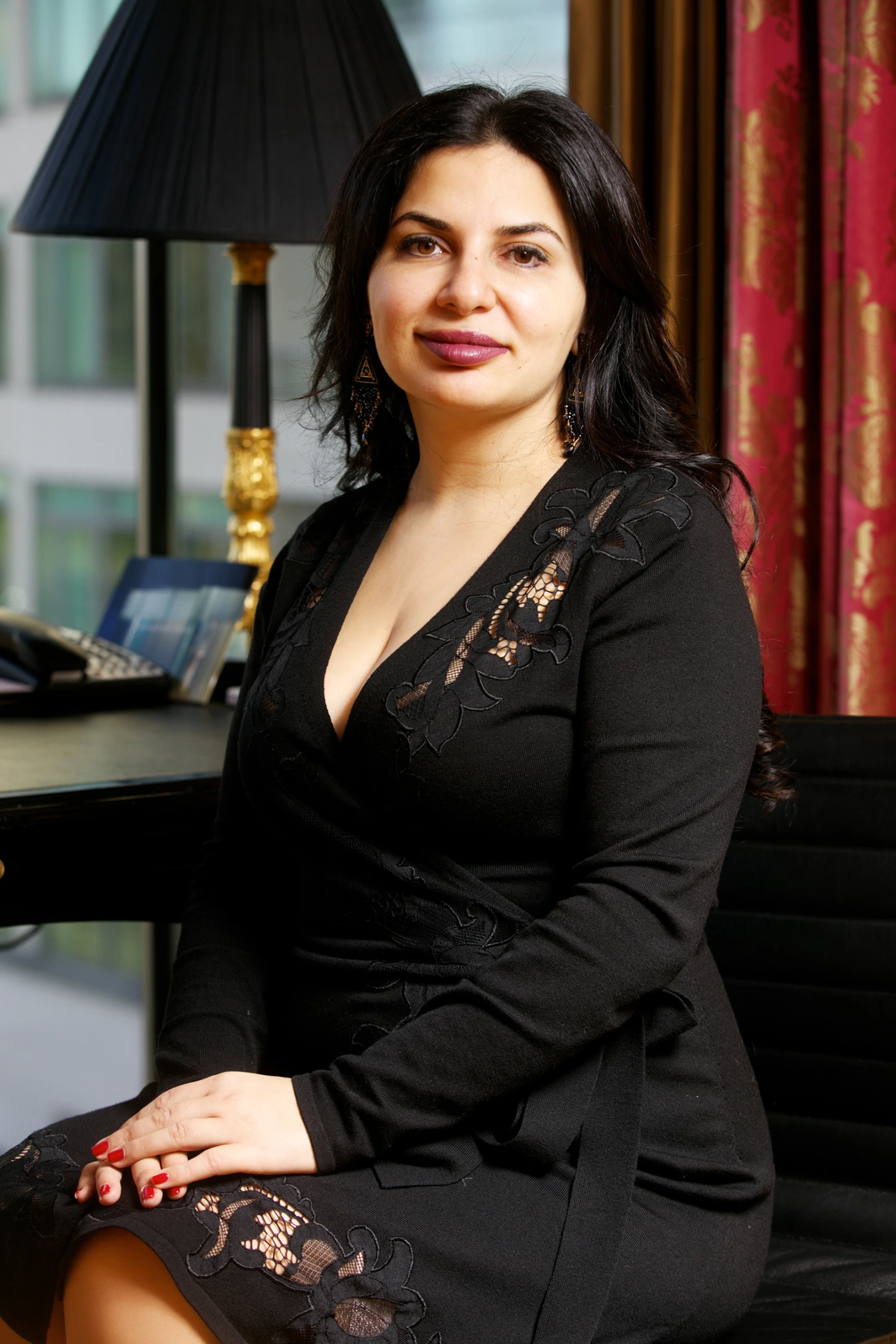
Details |
|
| Name: | Ruja Ignatova |
| Other Name: | Ruga Ignatova |
| Born: | 1980 |
| whether Dead or Alive: | |
| Age: | 43 |
| Country: | Ruse, Bulgaria |
| Occupation: | German Entrepreneur |
| Criminal / Fraud / Scam Charges: | Null |
| Criminal / Fraud / Scam Penalty: | Up to 30 years for the Ponzi scheme. 16 months' suspended imprisonment for a previous case |
| Known For: | Ponzi scheme, Crypto scam |
Description :
The OneCoin Illusion: How Ruja Ignatova Built a Global Fraud and Escaped into the Shadows
Ruja Ignatova’s journey into becoming one of the world’s most notorious fugitives began long before she stepped onto the stage as the self-proclaimed “Cryptoqueen.” Born in Bulgaria to a modest family—her father an engineer and her mother a teacher—Ignatova’s early years did not foreshadow the global spectacle she would later create. When she was a child, her family relocated to Germany, where she quickly proved to be academically gifted. Teachers and classmates remembered her as sharp, calculated, ambitious, and often aloof. Her intellectual prowess was matched by an early obsession with wealth, status, and the idea of reinventing oneself. She openly told friends she intended to become a millionaire by age 30, a declaration that would later seem both prophetic and ominous.
Ignatova earned a scholarship to the University of Konstanz, where she studied law and met the man who would later become her husband, also a law student. Her reputation for excellence deepened as she pursued advanced studies in European law, spending time at Oxford University. Fluent in several languages—including German, English, Russian, and Bulgarian—she demonstrated an ability to move fluidly between cultures and professional circles. These skills served her future ambitions well. After completing her legal studies, Ignatova joined the prestigious consulting firm McKinsey & Company in Sofia, Bulgaria, where she advised financial institutions and corporations. Her McKinsey experience gave her insider exposure to business structures, financial systems, investor psychology, and the mechanics of global markets.
Beyond intellect and training, Ignatova crafted a powerful personal brand. She developed an image of glamour and sophistication: designer dresses, diamonds, bold red lipstick, and meticulously curated public appearances. This visual persona projected success, authority, and wealth—an image that made it easier for her to gain trust and influence. These carefully constructed elements of biography, education, career, and image would later become the foundation upon which she built OneCoin, one of the largest financial frauds in modern history.
The Birth of OneCoin and the Dawn of a Global Scam
In 2014, as Bitcoin and other cryptocurrencies gained public attention, Ruja Ignatova saw not simply an emerging industry—but an opportunity to exploit global enthusiasm and confusion surrounding blockchain technology. Together with Swedish-British partner Karl Sebastian Greenwood, she founded OneCoin Ltd. in Bulgaria. They presented OneCoin as a revolutionary new cryptocurrency poised to surpass Bitcoin itself. In reality, prosecutors later alleged, OneCoin was conceived from the outset as a fraudulent operation. Internal emails revealed both founders privately referred to OneCoin as a “trashy coin” and discussed exit strategies involving taking billions from investors and blaming others when the scheme eventually collapsed.
To the public, however, OneCoin was marketed as an accessible, life-changing investment. Ignatova positioned herself as the visionary leader of a financial revolution. OneCoin offered “educational packages,” which included tokens investors were told could be used to “mine” the cryptocurrency. These packages ranged from low-cost entry levels to extremely expensive tiers, designed to draw in individuals of every economic class. The selling strategy was deliberately broad—middle-class workers, retirees, entrepreneurs, and professionals were targeted with the hope of achieving exponential financial returns.
The structure of OneCoin relied heavily on multi-level marketing (MLM), a system where individuals earned commissions by recruiting others. This amplified the spread of the scheme to millions of people across continents. Investors were encouraged not only to buy in but to convince friends, family, and colleagues to do the same. OneCoin became a global movement, deeply embedded in local communities, social networks, and financial dreams. Victims often trusted the project because it was recommended by someone they personally knew and respected.
While OneCoin grew in popularity, it lacked the fundamental characteristics of real cryptocurrency. Unlike Bitcoin, which operates on a public, decentralized blockchain, OneCoin had no functioning blockchain at all. Its ledger existed only within the company’s private database, controlled entirely by Ignatova and her associates. Mining was fake, and coin values were manually manipulated. Yet, because cryptocurrency was still poorly understood by many, these red flags were often overlooked.
The Peak of the Hype: The "Cryptoqueen" at Wembley Arena
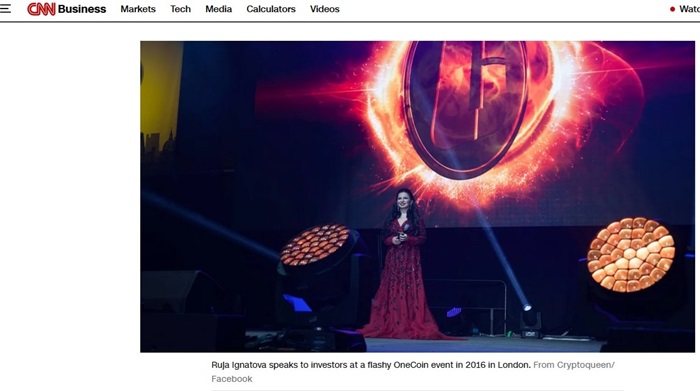
The pinnacle of OneCoin’s public spectacle came in June 2016, when Ruja Ignatova took the stage at London’s Wembley Arena wearing a stunning burgundy ball gown adorned with black crystals. Alicia Keys’ “Girl on Fire” blasted triumphantly as fireballs and spotlights lit up the arena. Thousands of roaring investors welcomed her as a financial savior. In a theatrical performance resembling a concert more than a corporate event, Ignatova proclaimed that OneCoin would soon dwarf Bitcoin, declaring, “In two years, nobody will speak about Bitcoin anymore.”
This event highlighted Ignatova’s extraordinary talent for persuasion, showmanship, and psychological manipulation. Her charisma, intelligence, and polished image created a sense of trust and legitimacy that helped silence doubts. Investors left Wembley Arena energized and more committed than ever to recruiting others. The “Cryptoqueen” persona was solidified.
Behind the scenes, however, the fraud was deepening. By 2016, OneCoin had already attracted billions of dollars from investors worldwide. Yet internal company emails revealed panic: too many coins had been issued—over a billion coins that did not exist in any ledger. Ignatova wrote to Greenwood expressing alarm, acknowledging the fraud but insisting they needed to “think seriously” about how to continue masking it.
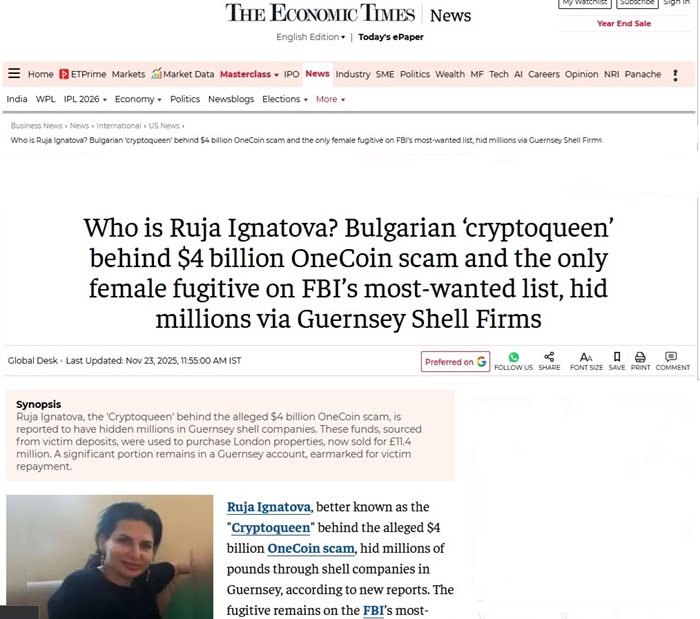
Despite these problems, OneCoin continued to grow. By 2016, approximately $4 billion had been invested by more than 3.5 million victims across 170 countries. Greenwood enjoyed an extravagant lifestyle funded by stolen money—luxury villas, five-star resorts, designer wardrobes, private flights, and even a down payment on a yacht. Many promoters also amassed wealth by recruiting new victims, often unaware—or unwilling to believe—that OneCoin was fraudulent.
Investigations, Indictments, and Rising International Pressure
As OneCoin expanded globally, regulatory attention intensified. Several governments issued warnings, opened investigations, or labeled OneCoin a scam. By 2017, law enforcement agencies in Europe, Asia, and the United States were collecting evidence. Banks filed suspicious activity reports. Investors complained that they were unable to withdraw funds. Despite these mounting concerns, OneCoin’s public-facing momentum persisted.
On October 12, 2017, the U.S. Attorney’s Office for the Southern District of New York unsealed an indictment charging Ruja Ignatova with conspiracy to commit wire fraud, wire fraud, and conspiracy to commit money laundering. The charges alleged that she intentionally misled investors, orchestrated a global criminal enterprise, and laundered massive profits across international jurisdictions. A federal arrest warrant was issued immediately.
Alarmed and aware of her imminent capture, Ignatova took decisive action.
The Vanishing: Flight from Sofia and the Mystery in Athens
On October 25, 2017, just two weeks after her indictment, Ruja Ignatova boarded a Ryanair flight from Sofia, Bulgaria, to Athens, Greece. She stepped off the plane—and disappeared. This moment remains one of the greatest modern financial mysteries. Some reports suggest she traveled onward using a German passport. Others believe she may have moved across Eastern Europe, Russia, or the UAE with the assistance of organized crime networks.
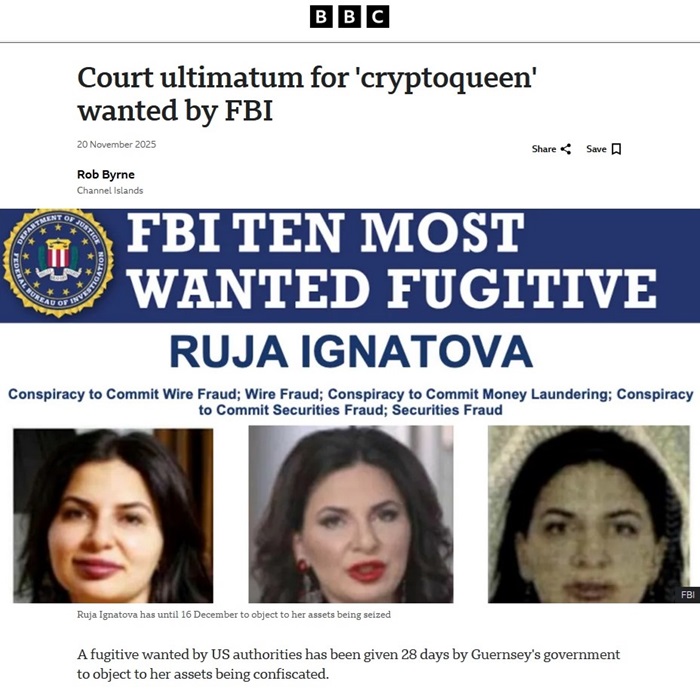
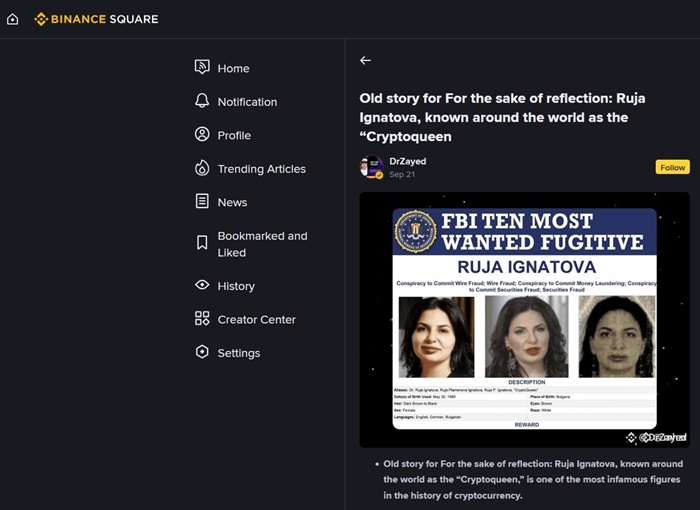
Despite international search efforts, no confirmed sightings have occurred since her disappearance. In 2022, the FBI added Ignatova to its Ten Most Wanted Fugitives List, warning that she may travel with armed guards, use body doubles, or have undergone plastic surgery to alter her appearance. She is considered extremely dangerous and resourceful.
Authorities now offer up to $5 million for information leading to her capture or conviction. The State Department’s Transnational Organized Crime Rewards Program and the FBI encourage global tip submissions through secure channels such as Telegram, Signal, and anonymous online portals.
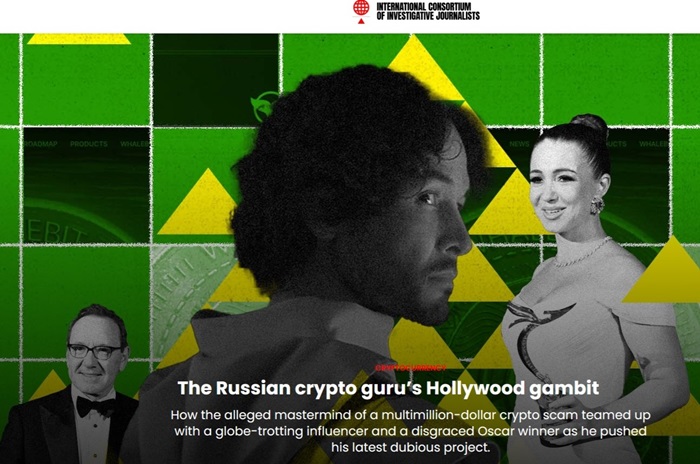
Rumors persist. Investigations by the ICIJ revealed that files recovered from a slain Bulgarian police officer’s home suggested Ignatova may have been murdered on a yacht in Greece on orders of a Bulgarian crime boss. However, these claims remain unverified. The FBI states it will consider Ignatova alive until incontrovertible evidence proves otherwise.
Civil Repercussions and Worldwide Freezing Orders
In addition to criminal proceedings, victims around the world have pursued civil actions to recover lost funds. Years after OneCoin’s collapse, significant developments emerged when London’s High Court issued a global freezing order against Ignatova and several associates. This legal measure prevents them from transferring, selling, or concealing assets linked to the scheme.
The action was spearheaded by Scottish activist and OneCoin victim Jennifer McAdam, whose family and friends lost over £200,000. She has become a prominent advocate for victims and frequently speaks about the emotional and financial devastation caused by OneCoin. Her involvement in the BBC’s The Missing Cryptoqueen podcast brought international attention to the issue.
Represented by Mishcon de Reya, the group claim is open to more than 400 victims seeking compensation. The freezing order extends not only to Ignatova but also to promoters, associates, and company entities—including individuals like Kari Wahlroos, Muhammad Zafar, Monirul Islam, and others who profited through recruitment.
Investigations have uncovered extensive property holdings linked to OneCoin money. In Dubai, Ignatova purchased multimillion-dollar apartments through offshore companies. Partners like Greenwood and Wahlroos owned luxury residences in high-end districts. Journalists have uncovered at least $2 billion in potentially recoverable assets worldwide, though the task of legally proving ownership and securing recovery remains complex.
The Human Cost: Millions of Victims, Broken Trust, and Global Fallout
Beyond the headlines and legal documents, the OneCoin saga is a profound tragedy for millions of ordinary people. Victims came from diverse backgrounds—teachers, families, small business owners, immigrants, and retirees—many of whom invested their life savings. Some convinced their loved ones to join, only to bear the emotional burden of shared loss. OneCoin’s influence stretched from Europe to Africa, Asia, and the United States. In countries like Uganda, victims sold property, livestock, and savings believing OneCoin would bring prosperity.
Many investors still suffer financially and emotionally. Some took loans, liquidated assets, or persuaded entire communities to invest. The aftermath includes bankruptcies, family strain, and long-term trauma. For many, the pain is compounded by the knowledge that the central architect of the fraud remains at large.
The Human Cost: Millions of Victims, Broken Trust, and Global Fallout
Beyond the headlines and legal documents, the OneCoin saga is a profound tragedy for millions of ordinary people. Victims came from diverse backgrounds—teachers, families, small business owners, immigrants, and retirees—many of whom invested their life savings. Some convinced their loved ones to join, only to bear the emotional burden of shared loss. OneCoin’s influence stretched from Europe to Africa, Asia, and the United States. In countries like Uganda, victims sold property, livestock, and savings believing OneCoin would bring prosperity.
Many investors still suffer financially and emotionally. Some took loans, liquidated assets, or persuaded entire communities to invest. The aftermath includes bankruptcies, family strain, and long-term trauma. For many, the pain is compounded by the knowledge that the central architect of the fraud remains at large.
The Legacy of OneCoin and the Continuing Search for the Cryptoqueen
Today, the OneCoin scandal stands as one of the largest financial frauds in history—on par with major Ponzi schemes and international criminal operations. It exposed vulnerabilities in global financial regulation, the dangers of unregulated cryptocurrency markets, and the power of charismatic leadership to manipulate millions.
As law enforcement agencies continue their search for Ignatova, her story remains an open wound in the world of cryptocurrency. The reward for information leading to her arrest—now at $5 million—signals the seriousness with which global authorities view her crimes. The asset freezes, ongoing litigation, and criminal convictions demonstrate that justice is progressing, even if slowly.
Still, the central question lingers: Where is Ruja Ignatova?
Some believe she lives under a new identity. Others suspect she is protected by criminal networks. Some think she may be dead. Until definitive proof emerges, the search continues.
OneCoin’s victims continue to fight for accountability, restitution, and recognition. Their struggle—and the mystery of the missing Cryptoqueen—ensures that Ruja Ignatova’s story will remain one of the most compelling financial crime sagas of the 21st century.
Related Fraudsters Scammers:




Popular Links

NEWS & EVENTS
The world's most prevalent social network said that to date, it has acquired lawful judgments of about $2 billion against deceitful exerci

SWINDLERS LIST
-
Top 10 Scammers !!!
Beware of these scammers...Keep them out of your mail-box...
SCAM TOOLS
-
Block Scam Mails???
Cleaning your scam filled inbox can be effected by these tools
HELP DESK
-
Waiting to help You!!!
Every problem has a solution when discussed. Discuss with us to get a clear idea to keep your information unscathed from hypocrites