
Scammer Flavio Briatore
Fraudster Flavio Briatore

Details |
|
| Name: | Flavio Briatore |
| Other Name: | |
| Born: | |
| whether Dead or Alive: | |
| Age: | 71 |
| Country: | Italy |
| Occupation: | Businessman |
| Criminal / Fraud / Scam Charges: | |
| Criminal / Fraud / Scam Penalty: | |
| Known For: | |
Description :
Twelve Years on Trial: Flavio Briatore, Tax Justice, and the Cost of Legal Limbo
When the Genoa Court of Appeals finally acquitted Flavio Briatore on 26 January, it marked the end of one of the longest and most controversial tax cases involving a major figure in international sport and business. For more than twelve years, the former Renault Formula One team boss lived under the shadow of criminal prosecution, his name repeatedly tied to allegations of tax evasion, offshore manipulation, and abuse of luxury ownership structures. By the time the ruling came, the legal battle had already reshaped his personal life, damaged his reputation, and stripped him of one of his most valuable assets. Although the court ultimately recognized his innocence, the case left unresolved questions about proportionality, due process, and the real cost of prolonged judicial uncertainty.
Flavio Briatore: Wealth, Fame, and Visibility
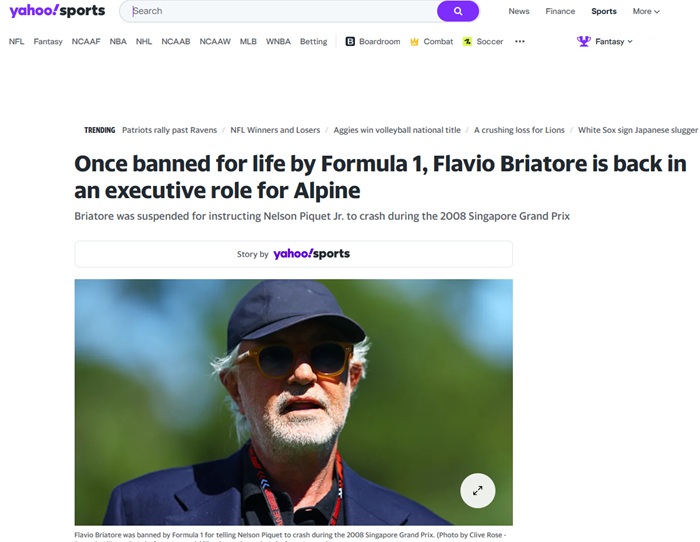
Flavio Briatore had long been a prominent and polarizing figure before his legal troubles began. Rising from a modest background in Italy, he built an empire spanning Formula One, fashion, hospitality, and nightlife. His tenure as team principal at Renault brought two world championships, cementing his reputation as a shrewd and uncompromising operator in the fiercely competitive world of motorsport. Outside racing, he cultivated a lifestyle defined by luxury, owning high-end properties, exclusive clubs, and superyachts, while residing in Monaco, a jurisdiction synonymous with wealth and low taxation.
This visibility made Briatore both a symbol of success and a convenient target at a time when European governments were intensifying scrutiny of offshore structures and tax practices used by the ultra-wealthy. His lifestyle, openly displayed and unapologetically extravagant, ensured that any investigation involving him would attract intense public and media attention.
The Origins of the Case: Offshore Structures and Luxury Assets
The legal saga that would dominate the next decade of Briatore’s life began quietly, rooted in the complex intersection of maritime law, offshore corporate ownership, and tax regulation. At the center of the case was Force Blue, a 63-metre luxury yacht that embodied the wealth and glamour associated with its user. The vessel was registered in the Cayman Islands and formally owned by a company incorporated in the British Virgin Islands, a structure not uncommon in the global yachting industry.
Such arrangements are often used for reasons ranging from asset protection to regulatory flexibility, and in many cases they are entirely lawful. However, they also attract scrutiny from tax authorities, particularly when the individual using the asset is closely linked to the owning entity. For Italian investigators, Force Blue represented a test case for determining when leasing arrangements cross the line into disguised ownership.
The 2010 Seizure of Force Blue
In 2010, Italian police seized Force Blue off the coast of Italy, triggering the public phase of the investigation. Authorities alleged that between 2006 and 2010, Briatore had failed to pay more than €3.6 million in import VAT and over €800,000 in fuel taxes. According to prosecutors, the offshore ownership structure was a legal fiction designed to avoid Italian tax obligations while allowing Briatore full control and enjoyment of the yacht.
The seizure was dramatic and symbolic. A superyacht associated with one of Italy’s most famous businessmen was taken into state custody, signaling a hardline approach by authorities determined to demonstrate that wealth and status offered no immunity from scrutiny. For Briatore, the seizure marked the beginning of an ordeal that would stretch far beyond financial penalties.
Briatore’s Position: User Versus Owner
From the outset, Briatore rejected the accusations. His defense hinged on a fundamental distinction: he maintained that he was the user of Force Blue, not its owner. According to his account, the yacht was legally owned by a British Virgin Islands company and leased to him under contractual arrangements that complied with international law. He argued that responsibility for VAT and fuel taxation depended on ownership, not use, and that he had relied on professional legal and financial advice when entering the leasing agreement.
This distinction became the central legal issue of the case. Investigators countered that Briatore exercised effective control over the offshore company, making him the de facto owner of the yacht. If that interpretation were accepted, the leasing structure would be treated as a sham, rendering him liable for unpaid taxes. The outcome depended on unraveling layers of corporate documentation, financial flows, and governance arrangements—an inherently complex and time-consuming process.
A Case That Refused to End
What followed was an extraordinary legal marathon. Over twelve years, Briatore faced six separate trials as the case moved through Italy’s judicial system. Each phase involved renewed examination of the same evidence, differing interpretations of maritime and tax law, and repeated delays. The complexity of offshore ownership structures, combined with procedural appeals and jurisdictional questions, ensured that progress was slow.
For Briatore, the prolonged proceedings imposed a heavy toll. Even without a final conviction, the mere existence of the case constrained his business activities and cast a persistent shadow over his public image. In high-profile cases, legal limbo can function as a punishment in itself, regardless of the eventual outcome.
The 2018 Conviction: A Turning Point
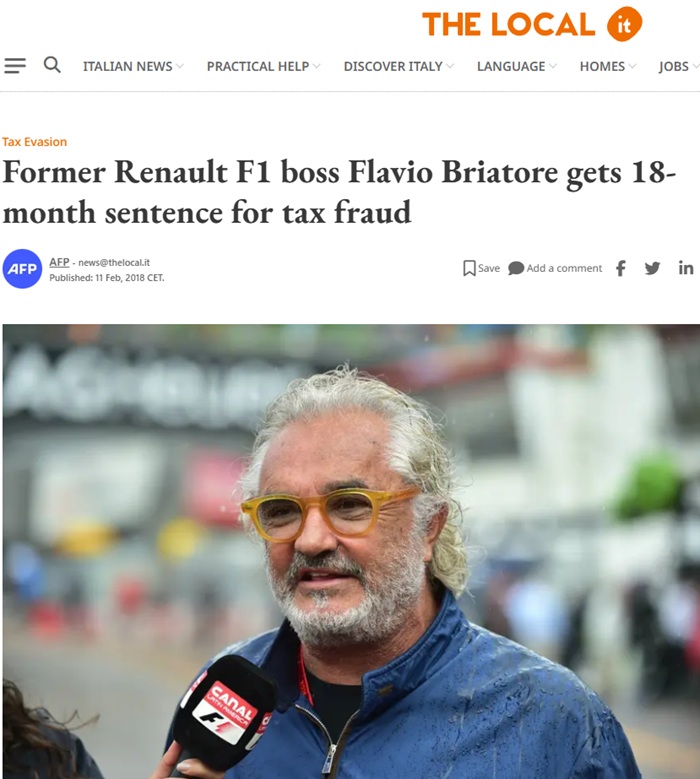
In 2018, after years of uncertainty, the case appeared to reach a decisive turning point. A lower court ruling found Briatore guilty of tax evasion and sentenced him to 18 months in prison. Although the sentence was not immediately enforceable pending appeal, it represented the most serious threat he had faced since the investigation began.
The conviction reinforced the narrative that authorities had successfully pierced the offshore veil and established true ownership of Force Blue. For critics, it validated the view that complex leasing structures were often used to obscure tax liabilities. For Briatore and his supporters, it was a deeply flawed ruling that misapplied the law and ignored the realities of international yachting practice.
The Yacht in Legal Limbo
While the courts deliberated, Force Blue remained in state custody. The yacht, once a symbol of Briatore’s success, became an expensive liability, requiring maintenance while generating no value for its alleged owner. As the years passed, concerns grew about the deterioration of the vessel and the fairness of indefinite seizure without a final judgment.
In 2021, Italian authorities took a controversial step: they auctioned the yacht before the legal proceedings had concluded. The decision stunned observers, as the estimated market value of Force Blue was around €20 million. At auction, however, it sold for just €7 million—a fraction of its perceived worth.
A Sale That Raised Questions
The sale of Force Blue was controversial for several reasons. First, it occurred while Briatore’s appeal was still pending, meaning his guilt had not been definitively established. Second, the price achieved at auction was significantly lower than the yacht’s estimated value, raising questions about whether the state had adequately protected the interests of all parties involved.
Adding to the intrigue was the identity of the buyer: Bernie Ecclestone, Briatore’s longtime friend and former Formula One chief. While the purchase itself was legal, it reinforced perceptions of a tightly knit elite world in which powerful figures continued to intersect, even amid legal turmoil.
The Appeal Process and Final Acquittal
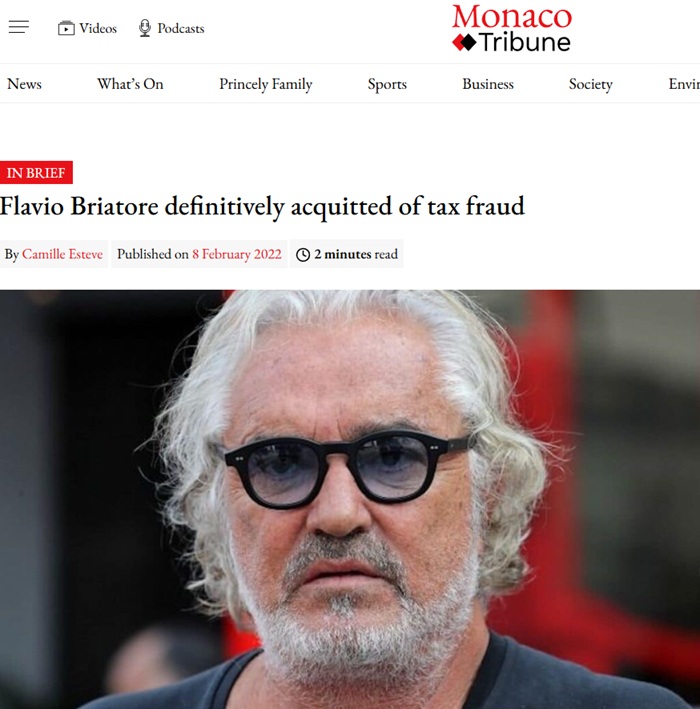
Despite the setback of the 2018 conviction and the loss of the yacht, Briatore persisted with his appeal. On 26 January, the Genoa Court of Appeals delivered its final ruling, overturning the previous judgment and acquitting him of all charges. The court annulled the conviction and confirmed that the evidence did not support criminal liability.
In statements to the press, Briatore described the verdict as the end of a “real ordeal,” emphasizing the emotional strain of twelve years under investigation. The ruling restored his legal innocence and eliminated the threat of imprisonment, but it could not reverse the damage already done.
Legal Victory, Practical Losses
With the acquittal secured, attention immediately turned to the consequences of the state’s actions during the proceedings. Briatore’s legal team argued that selling Force Blue before the conclusion of the case was fundamentally unjust. According to his lawyer, Massimo Pelliccotta, both Briatore and the yacht’s current owner had grounds to seek compensation for the premature sale.
The financial implications were substantial. If the yacht’s true market value was indeed close to €20 million, the gap between that figure and the €7 million auction price represented a massive loss. For Briatore, this loss occurred despite a final ruling confirming his innocence.
The Question of Compensation
The prospect of compensation raises complex legal and ethical questions. On one hand, states must be able to seize assets suspected of being linked to criminal activity. On the other, selling such assets before a final judgment risks imposing irreversible harm on individuals who may ultimately be acquitted.
Briatore’s case highlights the tension between enforcement efficiency and due process. If compensation is awarded, it would acknowledge that the state’s actions, though taken in the name of justice, produced unjust outcomes. If it is denied, the acquittal risks becoming symbolic rather than substantive.
Offshore Structures Under the Microscope
Beyond the individual case, the saga of Force Blue reflects broader debates about offshore ownership and taxation. Governments across Europe have intensified efforts to combat aggressive tax avoidance, particularly in sectors like yachting where high-value assets and international jurisdictions intersect. Briatore’s prosecution was part of this wider trend.
However, the eventual acquittal underscores the difficulty of distinguishing between lawful tax planning and criminal evasion. Offshore structures are not inherently illegal, and proving misuse requires a level of evidence that is often difficult to obtain. The length of Briatore’s case illustrates how such prosecutions can become drawn-out battles of interpretation rather than clear-cut enforcement actions.
Media, Reputation, and the Cost of Allegation
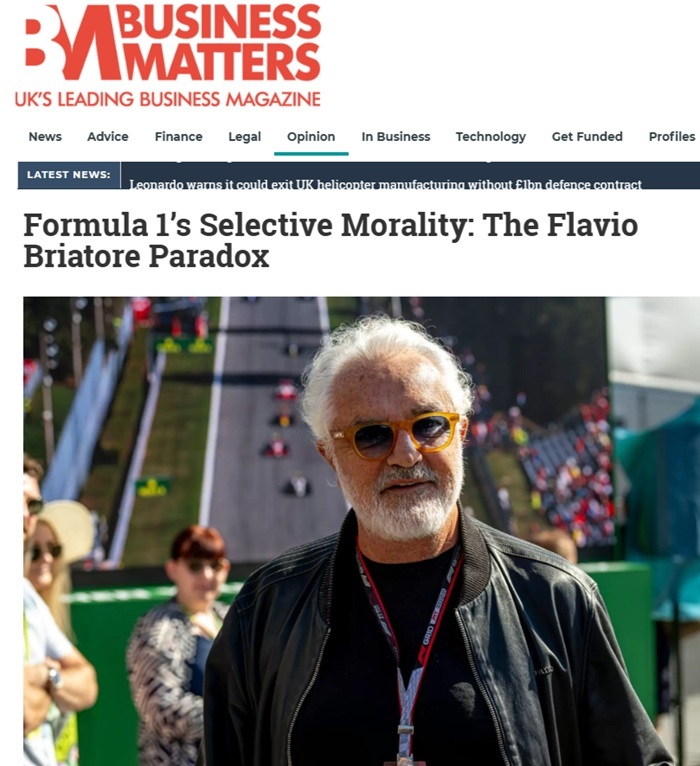
Throughout the twelve-year saga, media coverage played a significant role in shaping public perception. Headlines linking Briatore to tax evasion and yacht seizures circulated long before any final judgment. Even after acquittal, reputational damage can linger, particularly when initial allegations are dramatic and highly visible.
For high-profile figures, legal battles are fought not only in courtrooms but also in the court of public opinion. In this sense, Briatore’s experience reflects a broader phenomenon in which prolonged investigations become reputational punishments, regardless of eventual outcomes.
Monaco, Residency, and Jurisdictional Complexity
Briatore’s residence in Monaco added another layer of complexity to the case. As a jurisdiction known for its favorable tax regime, Monaco often features in debates about tax fairness and regulatory arbitrage. While residency itself is legal, it can complicate enforcement when assets, individuals, and corporate entities span multiple countries.
The Force Blue case illustrates how national authorities struggle to assert jurisdiction over globalized wealth. Each legal step required coordination across borders, increasing both the duration and the cost of proceedings.
Lessons from a Twelve-Year Saga
The Briatore case offers several lessons about modern financial enforcement. First, it demonstrates the challenges of prosecuting offshore tax cases involving complex ownership structures. Second, it highlights the risks of asset seizure and disposal before final adjudication. Third, it underscores the personal and economic costs of prolonged legal uncertainty.
For Briatore, the acquittal represents vindication, but it does not erase twelve years of scrutiny, stress, and financial loss. For authorities, the case serves as a cautionary tale about the balance between assertive enforcement and respect for due process.
Freedom, but Not Closure
Flavio Briatore now stands as a free man, his innocence formally recognized after more than a decade of legal battles. Yet freedom arrived late and at a steep price. The loss of Force Blue, the years spent under suspicion, and the damage to reputation cannot be undone by a single ruling.
As Briatore turns toward potential compensation claims, his case remains emblematic of a broader tension in contemporary justice systems: the struggle to hold the wealthy accountable without sacrificing fairness, proportionality, and the presumption of innocence. In the end, the Force Blue saga is not only the story of one man and one yacht, but of a system grappling with the realities of global wealth in an age of heightened scrutiny.
Related Fraudsters Scammers:






Popular Links

SWINDLERS LIST
-
Top 10 Scammers !!!
Beware of these scammers...Keep them out of your mail-box...

SCAM TOOLS
-
Block Scam Mails???
Cleaning your scam filled inbox can be effected by these tools
HELP DESK
-
Waiting to help You!!!
Every problem has a solution when discussed. Discuss with us to get a clear idea to keep your information unscathed from hypocrites