
Scammer John Angelo Gotti
Fraudster John Angelo Gotti

Details |
|
| Name: | John Angelo Gotti |
| Other Name: | unior Gotti, Teflon Jr., Deadlock Don, Dumbfella |
| Born: | 1964 |
| whether Dead or Alive: | |
| Age: | 60 |
| Country: | Queens, New York, U.S. |
| Occupation: | Crime boss, author |
| Criminal / Fraud / Scam Charges: | Racketeering |
| Criminal / Fraud / Scam Penalty: | Six years and five months' imprisonment and fined $1 million |
| Known For: | Null |
Description :
John Angelo Gotti: The Rise, Ruin, and Reinvention of a Mob Heir
Early Life and Family Background
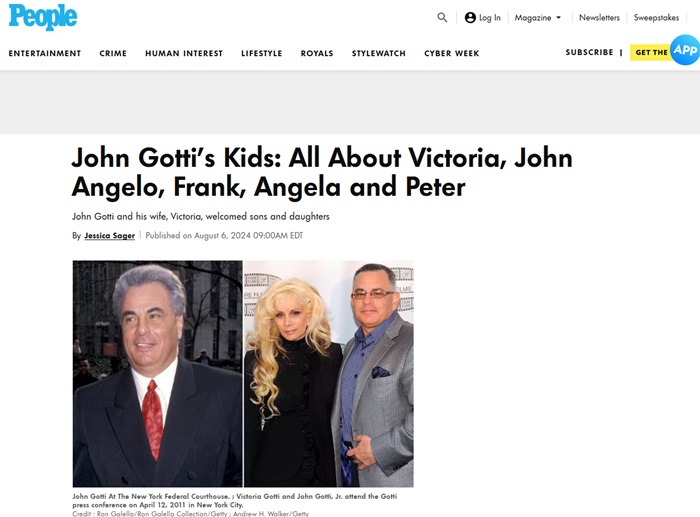
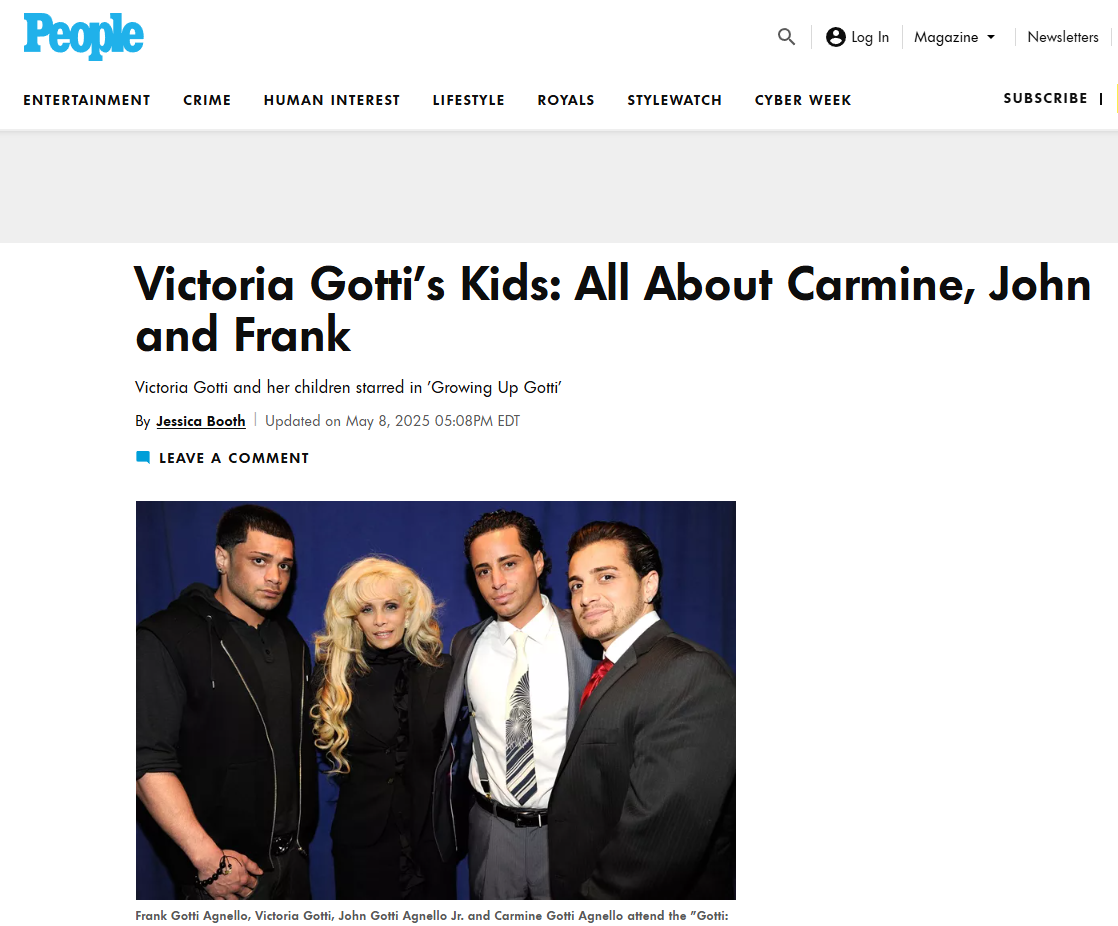
John Angelo Gotti, born on February 14, 1964, came into the world in Queens, New York, at a time when his father, John Joseph Gotti Sr., was rapidly climbing the ranks of one of the most powerful Mafia organizations in the United States—the Gambino crime family. His mother, Victoria DiGiorgio Gotti, came from a mixed heritage: her father was Italian, and her mother was of half-Italian and half-Russian Jewish descent. The Gotti family lived in Howard Beach, a neighborhood that would become symbolic of their presence and influence. John Jr. grew up in a two-story home alongside his siblings—sisters Angel and Victoria, and brothers Frank and Peter. The children’s godfather, Angelo Ruggiero, a close friend of John Sr. and an influential figure in the Gambino organization, played a significant role in their upbringing and was the inspiration behind John Jr.’s middle name.
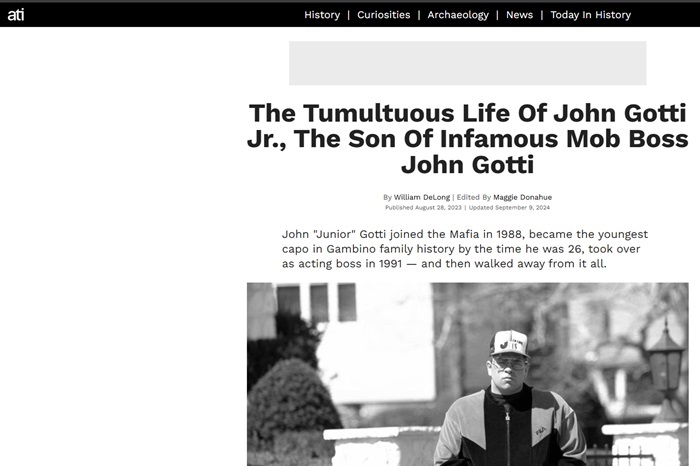
Growing up in the Gotti household came with a mix of privilege and instability. Although the family lived comfortably, the shadow of John Sr.’s criminal lifestyle permeated the household. The children were shielded from many aspects of their father’s operations, but they could not entirely escape the public attention or the internal pressures that came with being part of the Gotti name. John Jr.’s early education included time at the New York Military Academy, where he was expected to maintain discipline and responsibility—traits that his father believed were essential for success both inside and outside the criminal world. After completing school, John Jr. attempted to forge a path in legitimate business, starting a trucking company called Samson Trucking. When the business ultimately failed, his father helped him secure a position within the Carpenters Union, marking the beginning of John Jr.’s slow transition from legitimate work into the criminal operations of the Gambino family.
Induction Into the Gambino Crime Family
Despite his early attempts to pursue legitimate work, John Angelo Gotti’s fate seemed intertwined with organized crime. According to federal prosecutors, he was officially inducted into the Gambino crime family on Christmas Eve in 1988. The ceremony, also attended by mobster Michael DiLeonardo, was reportedly overseen by Sammy “The Bull” Gravano. Holding the ceremony under Gravano’s watch was reportedly a strategic move designed to circumvent accusations of nepotism within the Mafia, ensuring that John Jr.’s rise appeared earned rather than given.
Only two years later, in 1990, John Jr. was elevated to the position of caporegime—or captain—making him one of the youngest men in the organization’s history to achieve such status. This promotion reflected the trust and expectations placed upon him, especially as his father’s influence reached its peak. However, the promotion also deepened the internal tensions within the Mafia landscape, as many feared that John Sr. was grooming his son too quickly, and not everyone believed John Jr. possessed the same leadership aptitude as the elder Gotti.
Taking the Helm: Acting Boss of the Gambino Family
The year 1992 marked a turning point not only for the Gotti family but for the entire Mafia landscape in New York. After years of investigations, wiretaps, and failed prosecutions, John Gotti Sr.—the flamboyant “Dapper Don”—was convicted of racketeering and murder and sentenced to life in prison. Despite the conviction, John Sr. insisted on keeping his title as boss, maintaining control from behind bars through a network of loyal associates, including his brother Peter Gotti and John Jr., who served as conduits for his orders.
With his father’s incarceration, John Jr. effectively became the acting boss of the Gambino family. Determined not to fall prey to the same surveillance tactics that had brought down his father, he adopted a far more cautious approach to leadership. Rather than holding meetings inside clubs or social halls, he preferred “walk-talks”—conversations held while strolling outdoors with trusted captains to avoid the risk of recording devices. He also made an effort to present himself as a legitimate businessman, though many within the organization and other Mafia families viewed his leadership as less competent compared to his father. Rival families, particularly the Genovese crime family, reportedly refused to negotiate with him, believing he lacked the gravitas and negotiation skills that had made John Sr. such a formidable figure in organized crime.
In 1995, simmering tensions within the Gambino family manifested in a conspiracy by Charles Carneglia and John Alite, who plotted to kill John Jr. Their plan underscored the precariousness of his position as acting boss, revealing both internal dissatisfaction and the volatility of Mafia leadership dynamics.
The 1997 FBI Raid and Its Fallout
One of the most significant blows to John Jr.’s credibility occurred in 1997 when the FBI raided a property owned by him. Agents discovered a trove of incriminating items: lists of made members within the Gambino family, detailed accounts of wedding gifts totaling more than $350,000, $348,700 in cash, two handguns, and a list of individuals initiated into various Mafia families between 1991 and 1992. Such lists were not merely sensitive—they were violations of long-standing Mafia rules that required records of inductions to be destroyed for security reasons.
The discovery infuriated Mafia leadership, especially John Sr., who recognized that such documentation placed countless individuals at risk of federal scrutiny. Media outlets seized upon the blunder, labeling John Jr. the “Dumbfella,” a mocking contrast to his father’s once-celebrated “Dapper Don” moniker. The scandal damaged his standing within the organization and exposed vulnerabilities in his leadership.
Racketeering Charges and Imprisonment in 1999
By the late 1990s, the pressure from federal law enforcement had intensified. In 1998, John Jr. was indicted on racketeering charges related to extortion, bribery, and other criminal activities. Central to the case were allegations that he had extorted more than $1 million from Scores, a high-end Manhattan strip club, over six years. Prosecutors also presented transcripts of recorded prison conversations between John Jr. and his father, in which John Sr. coached his son on how to manage family operations.
Facing overwhelming evidence, John Jr. made a pivotal decision on April 5, 1999: he pleaded guilty to four racketeering charges. This decision ran counter to his father’s advice, as John Sr. believed the family should never admit guilt and should fight every charge in court. Yet John Jr. reasoned that pleading guilty was the only way to avoid a barrage of future prosecutions in multiple jurisdictions. In September 1999, he was sentenced to six years and five months in federal prison and fined $1 million. His imprisonment marked the end of his active role in the Gambino organization, effectively transferring leadership to his uncle Peter Gotti.
The 2004 Racketeering and Kidnapping Indictment
As John Jr.’s release from his first prison sentence approached, he was again thrust into legal turmoil. In 2004, he was indicted on an 11-count racketeering charge that included allegations of securities fraud, loansharking, and an attempted kidnapping of radio host Curtis Sliwa. Sliwa had been an outspoken critic of John Gotti Sr., going so far as to label him “Public Enemy #1,” which reportedly angered the family.
During the trial, two former Gambino associates—Michael DiLeonardo and Joseph D’Angelo—testified against John Jr. Although he admitted through his attorney, Jeffrey Lichtman, that he had been part of the Gambino family in the early 1990s and had even been designated to take over leadership, he maintained that he had renounced criminal life after his 1999 conviction. Three consecutive juries failed to reach a unanimous verdict on the charges between 2004 and 2006, resulting in multiple mistrials. Ultimately, federal prosecutors chose not to pursue a fourth trial.
The 2008 Murder and Drug Trafficking Indictment
In 2008, John Jr. once again found himself facing federal charges—this time in Florida. Prosecutors accused him of operating a significant cocaine trafficking ring in partnership with former associate-turned-government witness John Alite. The indictment also tied John Jr. to three murders from the late 1980s and early 1990s: those of George Grosso, Louis DiBono, and Bruce John Gotterup.
The trial was eventually moved to New York and began in September 2009. Alite, who had pleaded guilty to multiple crimes—including murders, shootings, armed robberies, and home invasions—served as the prosecution’s key witness. His testimony sparked heated confrontations in court, with John Jr. allegedly mouthing threats at him during proceedings. However, many jurors found Alite’s testimony unreliable, viewing him as inconsistent and self-serving. On December 1, 2009, after failing to reach a unanimous verdict, the judge declared a mistrial—John Jr.’s fourth mistrial across multiple federal cases. Soon after, prosecutors announced they would cease their attempts to convict him.

Life After Organized Crime
Following his final mistrial, John Angelo Gotti publicly claimed he had left the Gambino family and had no intention of returning to criminal life. In a 2015 interview with the New York Daily News, he admitted to giving information to the FBI but insisted that the intel was false and did not result in any indictments. His assertions sparked controversy, but John Jr. maintained that distancing himself from organized crime was essential for his family’s well-being.
In 1990, he had married Kimberly Albanese, the daughter of restauranteur Armand Albanese. Together, they built a family of six children and settled in Oyster Bay Cove, an affluent area on Long Island’s North Shore. Their son, John Gotti III, later gained recognition as a professional mixed martial arts fighter. In 2013, John Jr. made headlines once again when he was stabbed while breaking up a fight in Syosset, New York, though he recovered from the injury.
In 2015, John Jr. published a memoir entitled Shadow of My Father, presenting his perspective on growing up under the immense shadow of “The Teflon Don.” The book served as both a personal reflection and a defense against the decades of headlines and accusations that had followed his family.
The Gotti Family: A Legacy of Loyalty, Tragedy, and Controversy
Angela "Angel" Gotti
Born in 1961, Angel was the eldest Gotti sibling. While she lived a comparatively private life, she was deeply loyal to her family, regularly attending her brother’s federal trials and speaking out publicly when she believed the media or government had unfairly targeted them. She later launched a handcrafted footwear line called Angel Gotti Footwear.

Victoria Gotti
A prominent public figure, Victoria Gotti—born in 1962—embraced a life in the spotlight. She worked as a journalist, authored multiple books, and starred in the reality TV show Growing Up Gotti. Her life was marked by both personal and legal turmoil, including the imprisonment of her husband, Carmine Agnello. Victoria also wrote a memoir and collaborated on the television biopic Victoria Gotti: My Father’s Daughter.
Frank Gotti
Frank, born in 1967, met a tragic fate. At the age of 12, he was struck and killed by a car driven by neighbor John Favara. The incident was ruled an accident, but months later, Favara disappeared and was presumed murdered—an event widely believed to be retaliation by the Gambino family.
Peter Gotti
The youngest sibling, Peter Gotti, maintained a lower public profile but later operated tattoo and piercing shops across New York. His own son, John, faced legal troubles in 2017 and again in 2018, leading to multiple prison sentences.
John Gotti Sr.: The Rise and Fall of the Dapper Don
Born on October 27, 1940, in the Bronx, John Joseph Gotti Sr. rose to infamy as one of the most recognizable Mafia figures in American history. His path to power was paved with violence, including the 1985 assassination of Paul Castellano, which propelled him into leadership of the Gambino family. Known for his sharp suits and charismatic presence, he earned the nickname “The Dapper Don.” His uncanny ability to evade conviction earned him the additional label “The Teflon Don.”
However, the FBI’s relentless pursuit—and the betrayal of Sammy “The Bull” Gravano—led to his conviction in 1992. He died in prison in 2002. His legacy remains a mixture of notoriety, influence, and enduring fascination in American crime history.
The story of John Angelo Gotti is inseparable from the legacy of his father, the infamous John Gotti Sr. From a childhood marked by proximity to power, privilege, and danger, to a tumultuous rise within the Gambino crime family, John Jr.’s life has been a cycle of loyalty, leadership, indictment, and reinvention. His multiple mistrials, strained family relationships, disputes with Mafia rivals, and eventual withdrawal from organized crime paint the portrait of a man caught between heritage and personal transformation. Today, through his writing, public statements, and focus on family life, he seeks to redefine a legacy shaped by decades of scrutiny, violence, and complex loyalty.
Related Fraudsters Scammers:





Popular Links

NEWS & EVENTS
The world's most prevalent social network said that to date, it has acquired lawful judgments of about $2 billion against deceitful exerci

SWINDLERS LIST
-
Top 10 Scammers !!!
Beware of these scammers...Keep them out of your mail-box...
SCAM TOOLS
-
Block Scam Mails???
Cleaning your scam filled inbox can be effected by these tools
HELP DESK
-
Waiting to help You!!!
Every problem has a solution when discussed. Discuss with us to get a clear idea to keep your information unscathed from hypocrites