
Scammer Rosemary Ndlovu
Fraudster Rosemary Ndlovu

Details |
|
| Name: | Rosemary Ndlovu |
| Other Name: | |
| Born: | 1978 |
| whether Dead or Alive: | |
| Age: | 44 |
| Country: | ?South African |
| Occupation: | |
| Criminal / Fraud / Scam Charges: | |
| Criminal / Fraud / Scam Penalty: | Life imprisonment |
| Known For: | |
Description :
Blood for Profit: The Rosemary Ndlovu Murders and the Price of Greed
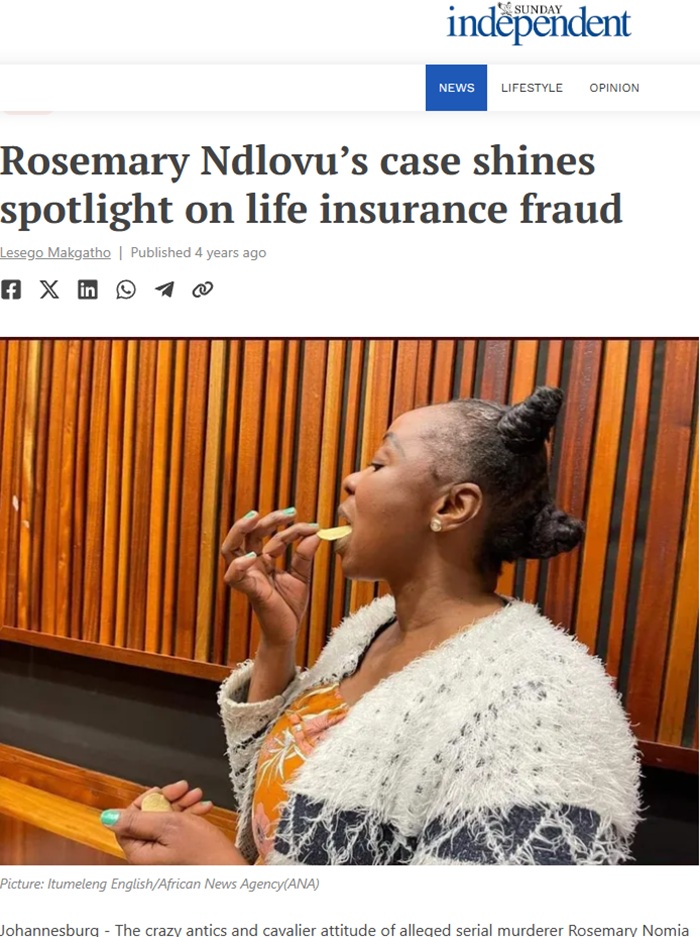
The Rosemary Ndlovu case is one of the most shocking true-crime stories in South Africa’s recent history. It exposed a chilling pattern of calculated murders committed not out of passion or desperation, but for financial gain. At the center of the case was Nomia Rosemary Ndlovu, a former police officer who betrayed both her profession and her family by orchestrating the murders of six close relatives and a romantic partner. Over several years, she systematically took out life and funeral insurance policies on her victims and arranged their deaths in order to collect the payouts. When the full scope of her actions was revealed, the case stunned the nation and forced a reckoning with the darker side of insurance fraud and abuse of trust.
Rosemary Ndlovu: From Law Enforcer to Serial Killer
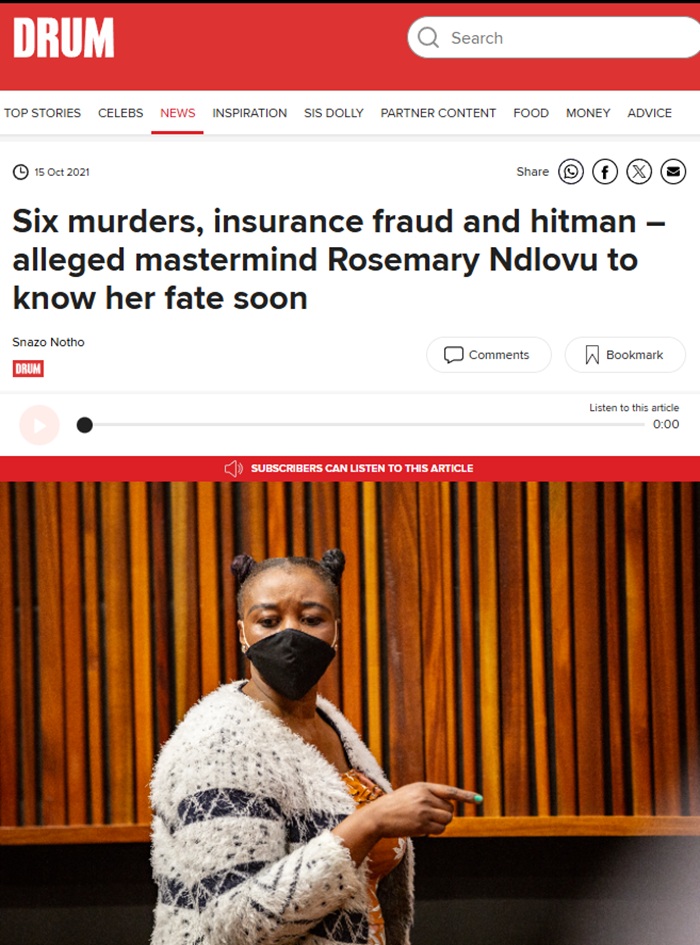
Rosemary Ndlovu served as a constable in the South African Police Service, a role that placed her in a position of authority and public trust. As a police officer, she was expected to uphold the law, protect the vulnerable, and prevent crime. Instead, she used her knowledge of systems, procedures, and human behavior to evade suspicion while committing some of the most calculated crimes imaginable. To those around her, she appeared to be an ordinary woman—a sister, cousin, mother, and partner. Behind that façade, however, she was quietly turning the lives of her loved ones into financial assets.
The First Murder: A Pattern Begins in 2012
The first known victim of Ndlovu’s scheme was her cousin, Witness Madala Homu, who was murdered in March 2012. At the time, his death did not attract significant attention from authorities. What investigators later uncovered was that Ndlovu had taken out life and funeral insurance policies in his name before his death, listing herself as the beneficiary. This marked the beginning of a deadly pattern that would repeat itself over the next six years. Each death was preceded by insurance arrangements and followed by a payout claimed by Ndlovu.
Expanding the Targets: Turning on Her Own Family
After successfully benefiting from her cousin’s death, Ndlovu escalated her crimes by targeting members of her immediate family. Her victims included her sister, her niece, and two nephews. These were people who trusted her completely and had no reason to suspect that she posed any danger. The murders were not impulsive acts but carefully planned events tied directly to insurance policies. By insuring those closest to her, Ndlovu ensured both access and opportunity, exploiting emotional bonds to facilitate her crimes.
The Murder of Her Sister: Crossing a Personal Line
One of the most disturbing murders was that of Ndlovu’s sister, Audrey Somisa Ndlovu, in 2013. Unlike most of the other killings, which were carried out by hired hitmen, this murder was committed directly by Ndlovu herself. Evidence presented at trial showed that she poisoned and strangled her sister. This act demonstrated that she was not merely a planner but also willing to personally carry out violence when necessary. It marked a profound moral collapse and highlighted the depth of her determination to profit from death.
Hiring Hitmen to Kill for Cash
In most of the other cases, Ndlovu hired hitmen to murder her victims. This approach allowed her to distance herself physically from the killings while maintaining control over the outcome. She allegedly recruited individuals willing to carry out the murders in exchange for payment, which she later recouped through insurance claims. The use of hitmen enabled her to continue her crimes for years without being directly implicated, reinforcing her belief that she could operate without consequences.
The Killing of Children: A Nation Outraged
Among the victims were Ndlovu’s niece and two nephews, whose deaths sparked intense public outrage once the truth emerged. The murder of children for financial gain crossed a moral boundary that deeply shocked South Africans. These were not accidental deaths or acts of neglect; they were deliberate killings tied to insurance policies. The prosecution emphasized that Ndlovu viewed even the lives of children as commodities, insurable assets whose deaths would result in profit.
The Death of Her Boyfriend
Ndlovu’s final confirmed victim was her boyfriend, Brilliant Mashego, who died in January 2018. As with the other victims, she had taken out insurance policies in his name and nominated herself as the beneficiary. Mashego’s murder demonstrated how Ndlovu exploited intimate relationships for financial gain. The prosecution showed that she was often the last person seen with her victims or the first to raise the alarm after their deaths, a recurring pattern that later became critical evidence.
Insurance Fraud as the Motive for Murder
At the heart of the case was a sophisticated pattern of insurance fraud. Ndlovu took out multiple life and funeral policies on her victims, often without their full understanding. She ensured that she was listed as the beneficiary so that payouts would go directly to her. Over the years, she fraudulently obtained approximately R1.4 million through these schemes. While the monetary amount was not enormous, the cost in human lives made the crime one of the most disturbing examples of financial-motivated murder in the country’s history.
The Plot That Ended the Killing Spree
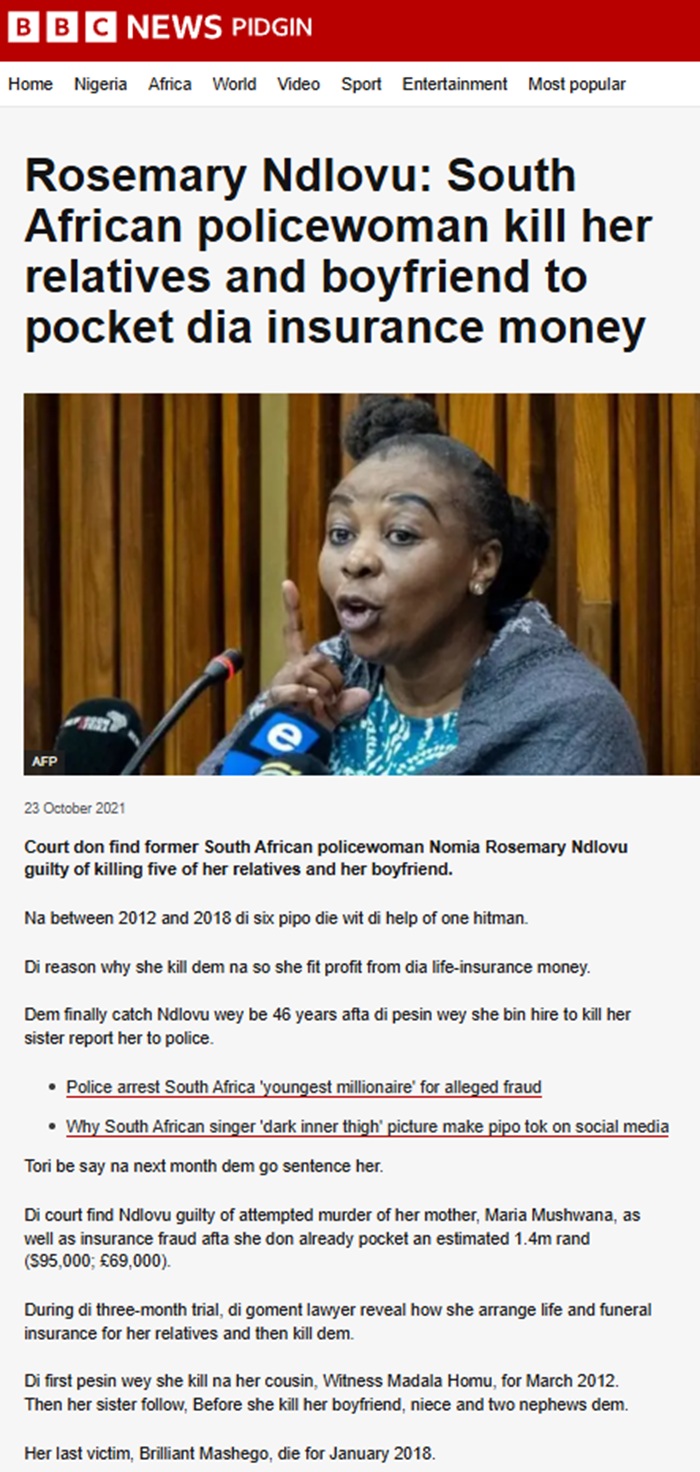
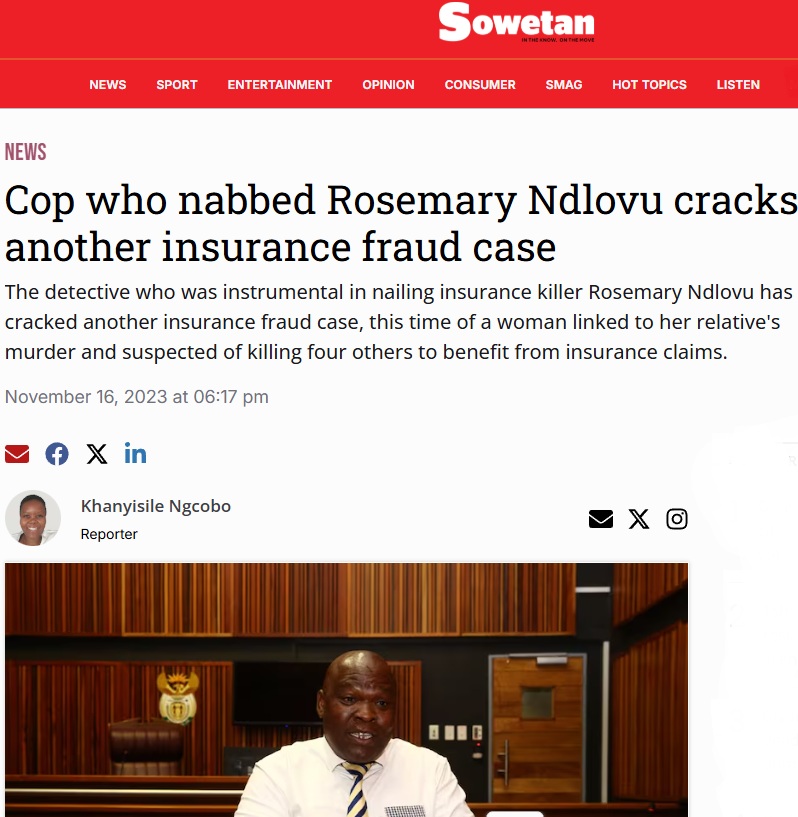
Ndlovu’s reign of terror came to an end in March 2018 when she attempted to expand her list of victims yet again. She approached a man to kill another sister and that sister’s five children. This time, however, her plan unraveled. The man she hired reported her to the police instead of carrying out the murders. His decision to come forward proved to be the turning point in the case.
Undercover Operation and Recorded Evidence
After receiving the tip, police launched an undercover operation. Officers recorded conversations in which Ndlovu discussed her plans in chilling detail. According to media reports, she spoke about wanting her intended victims burned alive in their home and openly stated that she needed the money. These recordings provided powerful evidence of her intent and planning, leaving little doubt about her motives.
Arrest and Criminal Charges
Following the undercover sting, Ndlovu was arrested and charged with multiple counts of murder, attempted murder, fraud, and defeating the ends of justice. Her arrest sent shockwaves through the country, particularly within law enforcement, where questions were raised about how a serving police officer could commit such crimes undetected for so long.
The Trial: Evidence and Testimony
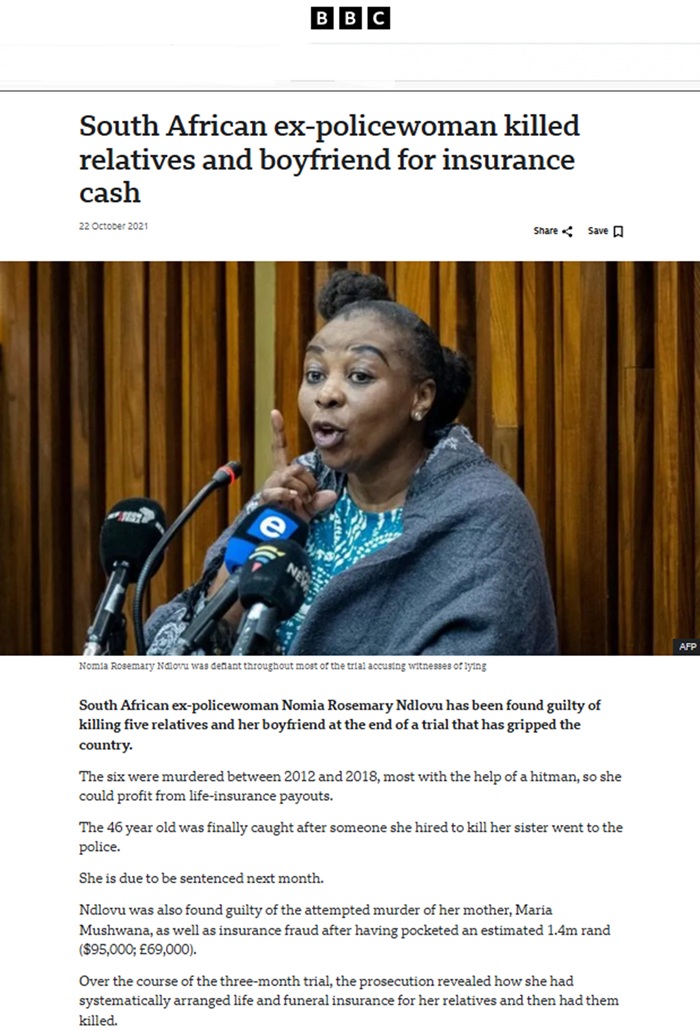
The trial lasted three months and gripped the nation. More than 50 witnesses testified, including family members, insurance officials, investigators, and forensic experts. The prosecution carefully reconstructed each murder, demonstrating how insurance policies were taken out shortly before the deaths and how Ndlovu benefited financially afterward. Throughout the trial, Ndlovu maintained her innocence, accusing witnesses of lying and denying responsibility for the killings.
Conviction on Multiple Counts
In October 2021, the Johannesburg High Court found Rosemary Ndlovu guilty on six counts of murder, four counts of fraud, two counts of defeating the ends of justice, and the attempted murder of her mother, Maria Mushwana. The verdict confirmed what prosecutors had argued all along: that the deaths were not coincidental, but part of a calculated scheme driven by greed.
Sentencing: Life Imprisonment
On 5 November 2021, Judge Ramarumo Monama sentenced Ndlovu to life imprisonment for each of the six murder convictions. She was also sentenced to ten years in prison for each count of incitement to commit murder and an additional ten years for the attempted murder of her mother. In his judgment, the judge noted her lack of remorse and stated that she had “monetised the lives of her relatives,” viewing them as a source of income rather than as human beings.
The Attempted Murder of Her Mother
One of the most disturbing revelations was that Ndlovu had also attempted to murder her own mother after taking out insurance policies in her name. The attempt failed, but it reinforced the prosecution’s argument that no relationship was sacred to Ndlovu if money could be gained from death.
Public Reaction and National Impact
The case provoked widespread outrage and grief across South Africa. Many people struggled to comprehend how someone entrusted with enforcing the law could commit such crimes. The murders raised serious questions about insurance oversight, internal police accountability, and the psychological screening of law enforcement officers.
Lessons from the Case
The Rosemary Ndlovu case exposed the darker side of insurance fraud, showing how financial crimes can escalate into extreme violence when greed goes unchecked. It highlighted the need for stronger safeguards in insurance systems, better monitoring of policy beneficiaries, and improved collaboration between insurers and law enforcement.
A Legacy of Betrayal
The Rosemary Ndlovu case will remain a grim reminder of how trust, authority, and family bonds can be exploited for personal gain. While her conviction and life sentences brought justice for the victims, the emotional and social scars left behind are permanent. The case stands as a warning about the dangers of unchecked greed and the devastating consequences when human life is reduced to a financial transaction.
Related Fraudsters Scammers:




Popular Links

SWINDLERS LIST
-
Top 10 Scammers !!!
Beware of these scammers...Keep them out of your mail-box...

SCAM TOOLS
-
Block Scam Mails???
Cleaning your scam filled inbox can be effected by these tools
HELP DESK
-
Waiting to help You!!!
Every problem has a solution when discussed. Discuss with us to get a clear idea to keep your information unscathed from hypocrites