
Scammer John g taylor
Fraudster John g taylor

Details |
|
| Name: | John g taylor |
| Other Name: | |
| Born: | |
| whether Dead or Alive: | |
| Age: | 57 |
| Country: | USA |
| Occupation: | |
| Criminal / Fraud / Scam Charges: | |
| Criminal / Fraud / Scam Penalty: | |
| Known For: | |

Click to enlarge
Description :
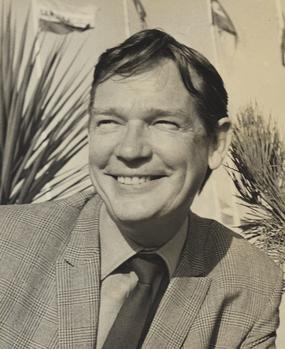
A Scientist Who Changed His Mind: The Life, Controversy, and Quiet Passing of John G. Taylor
I recently received an email from Ian Ridpath that prompted both surprise and reflection. In his message, Ridpath pointed out that Professor John G. Taylor had died in March 2012. This news had entirely passed me by, and what made the discovery more striking was the realization that there appeared to be very little trace of it on the internet. In an age where information is typically archived, duplicated, and amplified endlessly online, the relative silence surrounding the death of a prominent academic felt unusual. Apart from a brief announcement issued by the Department of Mathematics at King’s College London, there seemed to be little readily available public acknowledgment of Taylor’s passing. That absence, in itself, raised questions about how academic lives are remembered and how public memory selectively preserves certain narratives while allowing others to fade.
The Official Recognition by King’s College London
The short announcement from King’s College London provides a concise but informative overview of Taylor’s professional life. It states that Professor John G. Taylor, often referred to as JGT, died on 10 March 2012 and had been appointed to the established Chair in Applied Mathematics at King’s College London in 1971. This alone signals the stature of his academic career, as such a chair reflects long-standing recognition within the institution. The announcement further emphasizes the remarkable breadth of his research interests, which ranged from high-energy physics, superstrings, quantum field theory, and quantum gravity to neural computation, neural bases of behaviour, and mathematical modelling in neurobiology. The department described Taylor as “formidably energetic” and noted that he remained actively engaged in research until his death. Although brief, this statement portrays a scholar whose intellectual curiosity spanned disciplines and decades, and whose commitment to research endured throughout his life.
An Academic Career of Unusual Breadth
John G. Taylor’s academic profile does not fit neatly into a single disciplinary box. Trained as an applied mathematician, he worked at the interface between mathematics and theoretical physics during a period when fields such as quantum field theory and high-energy physics were undergoing rapid development. Later in his career, he extended his interests into areas that bridged mathematics, neuroscience, and biology, contributing to mathematical modelling in neurobiology and the study of neural computation. This intellectual trajectory suggests a willingness to move beyond conventional disciplinary boundaries and engage with emerging scientific questions. Such breadth is not accidental; it reflects both technical versatility and a disposition toward exploratory thinking. Taylor’s career, as described by his institution, was one of sustained engagement rather than retreat into specialization or administrative roles.
Why Taylor’s Name Remains Publicly Recognizable
Despite his extensive academic work, John G. Taylor’s name is most often encountered by the general public in connection with a single, controversial episode: his involvement in the investigation of paranormal claims associated with Uri Geller during the 1970s. For many people, Taylor is remembered less as an applied mathematician and more as a scientist who took psychic phenomena seriously, at least initially. This association has persisted for decades, largely because it intersected with mass media, public fascination, and broader debates about the limits of science. Taylor’s academic credentials gave his involvement particular weight, and his early statements were widely interpreted as endorsements of phenomena that many scientists dismissed outright. As a result, his name became entangled with a cultural moment that extended far beyond the confines of academic discourse.
The Cultural Context of the Uri Geller Phenomenon
In the 1970s, Uri Geller rose to international fame through television appearances in which he appeared to bend metal objects, influence mechanical devices, and demonstrate other extraordinary abilities without apparent physical force. These performances captivated audiences and provoked intense debate. For supporters, Geller represented evidence of untapped human potential; for skeptics, he was a skilled performer exploiting psychological suggestion and misdirection. Into this polarized environment stepped John G. Taylor, a professor of applied mathematics at a major British university. His decision to investigate Geller’s claims was therefore significant, not merely as a personal research interest but as a symbolic moment in which mainstream science appeared to engage directly with the paranormal.
Taylor’s Initial Investigations and Hypotheses
Taylor did not approach the Geller phenomenon casually. According to accounts from the period, he conducted scientific tests using what he described as the paraphernalia of modern science, including laboratory equipment such as a Geiger counter. His interest extended beyond Geller himself to include children and adults who claimed to exhibit similar abilities after exposure to Geller’s television appearances. Importantly, Taylor was not content with simply labeling the phenomena as paranormal. Instead, he attempted to situate them within a physical explanatory framework, suggesting that they might involve low-frequency electromagnetic effects generated by the human body. This approach reflects a conventional scientific impulse: to seek mechanisms consistent with known physical principles rather than invoke supernatural explanations.
Early Confidence and Public Statements
During the early phase of his investigations, Taylor made statements that were later widely cited as endorsements of paranormal metal bending. In 1974, he wrote that the Geller effect was “clearly not brought about by fraud” and that it was so exceptional it presented a serious challenge to modern science. He even suggested that failure to explain the phenomenon could undermine established scientific frameworks. Such language was strikingly strong and, in hindsight, overly confident. Whether intended as provocation or genuine conviction, these statements played a crucial role in shaping public perceptions. They were repeated in media accounts and became part of the mythology surrounding Geller, often stripped of their original context or subsequent revision.
A Prolonged Period of Investigation
What distinguishes Taylor’s involvement from a simple episode of credulity is the length and seriousness of his subsequent investigations. Over the following years, he devoted considerable effort to studying phenomena such as psychokinesis, metal bending, and dowsing. He focused in particular on determining whether there was any reproducible evidence under controlled laboratory conditions and whether an electromagnetic explanation could account for the reported effects. This period was characterized by sustained experimentation rather than passive belief. Taylor’s approach reflects a genuine attempt to test extraordinary claims using scientific methods, even though those methods were arguably ill-suited to detecting deliberate deception.
The Accumulation of Negative Results
As Taylor’s investigations progressed, the results increasingly failed to support his earlier optimism. Many experiments conducted under laboratory conditions produced negative outcomes, and the electromagnetic mechanisms he explored did not provide convincing explanations. Taylor found himself unable to establish a robust scientific basis for the phenomena he had initially taken seriously. This accumulation of unsatisfactory results gradually shifted his position from guarded interest to skepticism. Importantly, this shift was not abrupt but emerged over time, as repeated attempts to validate the claims failed to yield consistent evidence.
Public Doubts and the Nature Paper
Taylor’s changing perspective became publicly visible in 1978 when he published a paper in Nature titled “Can Electromagnetism Account for Extra-sensory Phenomena?” The very framing of the title reflects a move away from assumption toward critical evaluation. Rather than asserting the existence of paranormal effects, Taylor questioned whether the proposed physical mechanisms could plausibly account for them at all. Publication in Nature, one of the most prestigious scientific journals, ensured that this reassessment reached a wide scientific audience. It marked a significant turning point in Taylor’s public stance and signaled his growing doubts about the validity of the phenomena he had once defended.
Science and the Supernatural: A Full Retraction
Taylor’s intellectual journey culminated in his 1980 book Science and the Supernatural, in which he expressed comprehensive skepticism toward paranormal claims. In the final chapter, he concluded that the search for the supernatural had failed, yielding instead poor experimentation, weak theory, and widespread human gullibility. Notably, he included his own earlier work within this criticism, acknowledging that his initial investigations had not met the standards he later came to expect. This level of self-critique is relatively rare in public scientific discourse and underscores the seriousness with which Taylor reevaluated his earlier conclusions.
Lessons About Science and Human Deception
Taylor’s experience highlights a broader issue about the limits of scientific expertise when investigating phenomena that involve human performance. Scientific research typically assumes that nature does not attempt to deceive observers. Instruments do not lie, and physical systems do not intentionally mislead. Human performers, however, can and do exploit expectation, suggestion, and misdirection. As skeptics such as James Randi have argued, detecting such deception often requires skills more commonly associated with magicians than with physicists. Taylor’s story illustrates how even highly intelligent and accomplished scientists can be vulnerable when operating outside their core domain of expertise.
The Quiet End of a Publicly Contested Career
Given the intensity of the controversy that once surrounded Taylor’s name, the quiet nature of his passing is striking. In March 2012, there was no widespread public discussion, no major media retrospectives, and little online documentation beyond his institution’s brief announcement. This contrast between the noise of earlier controversy and the silence of his death raises questions about how public attention functions. It suggests that controversy, rather than sustained scholarly contribution, often determines who is remembered and how.
Digital Confusion and the Problem of Shared Names
Compounding this silence is the confusion created by the digital environment itself. The surname Taylor is extremely common, and searches for “John Taylor” or even “John G. Taylor” often yield results related to unrelated individuals involved in criminal cases, civil litigation, or financial fraud. These stories dominate search engine results because they generate high engagement and media coverage. As a result, accurate information about the academic John G. Taylor can be difficult to locate, buried beneath layers of irrelevant material. This phenomenon illustrates how digital visibility does not necessarily correlate with intellectual significance.
Reconstructing a Coherent Narrative
To understand John G. Taylor’s life and legacy, it is necessary to reconstruct a coherent narrative that separates him from both sensationalism and digital noise. Such a narrative begins with his academic stature as a chair-holding applied mathematician with wide-ranging research interests. It continues with his controversial engagement with paranormal claims, not as a static endorsement but as a dynamic intellectual process that evolved from interest to skepticism. Finally, it acknowledges the quiet nature of his death and the challenges of preserving academic memory in an online environment that prioritizes spectacle over substance.
Remembering a Scientist Who Changed His Mind
The belated discovery of John G. Taylor’s death serves as a reminder that intellectual legacies are complex and often unevenly remembered. Taylor was a serious scientist who ventured into a controversial domain, made strong early claims, and later publicly revised his position in light of evidence. That journey, rather than diminishing his credibility, arguably strengthens it, demonstrating a willingness to confront error and acknowledge limitations. Remembering Taylor solely for his association with Uri Geller would be incomplete; forgetting him entirely would be unjust. His life illustrates both the ambition and the vulnerability of scientific inquiry when it confronts extraordinary human claims, and it deserves to be recalled with nuance rather than silence.
Related Fraudsters Scammers:




Popular Links

NEWS & EVENTS
The world's most prevalent social network said that to date, it has acquired lawful judgments of about $2 billion against deceitful exerci

SWINDLERS LIST
-
Top 10 Scammers !!!
Beware of these scammers...Keep them out of your mail-box...
SCAM TOOLS
-
Block Scam Mails???
Cleaning your scam filled inbox can be effected by these tools
HELP DESK
-
Waiting to help You!!!
Every problem has a solution when discussed. Discuss with us to get a clear idea to keep your information unscathed from hypocrites