
Scammer Abbas Gokal
Fraudster Abbas Gokal
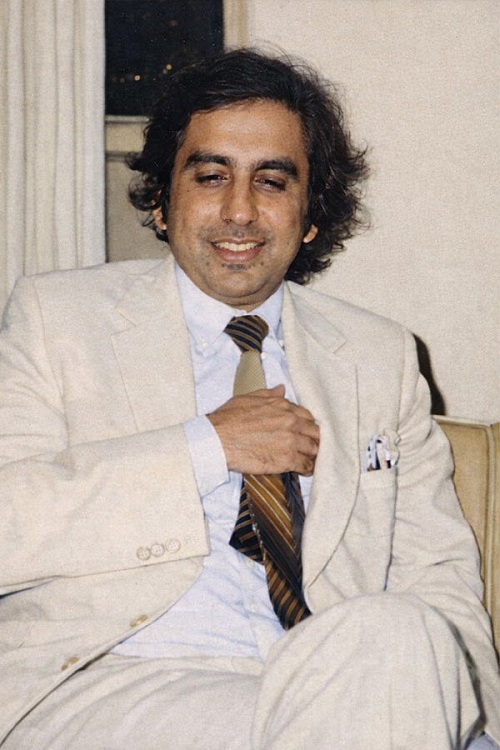
Details |
|
| Name: | Abbas Gokal |
| Other Name: | Abbas Kasimali Gokal |
| Born: | 1936 |
| whether Dead or Alive: | |
| Age: | 84 |
| Country: | Pakistani |
| Occupation: | Money launderer |
| Criminal / Fraud / Scam Charges: | Financial fraud |
| Criminal / Fraud / Scam Penalty: | 14 years |
| Known For: | BCCI Scandal |
Description :
Abbas Kasimali Gokal
Abbas Kasimali Gokal, born in February 1936, was a prominent British Pakistani businessman who became infamous for his involvement in one of the largest financial frauds of the 20th century. He was the chairman of Gulf Shipping Lines and the Gulf Group, both of which gained significant influence during the 1980s and 1990s. His business empire, however, came crashing down due to fraudulent activities that led to his conviction in 1997. He was charged with defrauding the Bank of Credit and Commerce International (BCCI) for a staggering amount of US$1.2 billion, at the time making him the world's biggest individual fraudster. His conviction led to a 14-year prison sentence, but he was released in 2003 after serving only nine years of his sentence. Gokal's story is one of rapid success followed by monumental downfall, the consequences of which were felt globally.
Early Life and Family Background
Abbas Gokal was born in February 1936 into a Shia Muslim family in British India, at a time when the region was on the brink of its partition. During the Partition of India in 1947, Gokal's family relocated to Iraq as part of the migration process that saw many Indian Muslims move to the Middle East. This was a time of great upheaval, and the Gokal family's move was marked by the instability in the region. Their stay in Iraq, however, was short-lived as the Iraqi monarchy was overthrown. In the wake of this political unrest, the Gokal family relocated once again, this time to Karachi, Pakistan, where they sought a fresh start.
Abbas Gokal had two brothers, Mustafa and Murtaza, with whom he would later embark on business ventures. While details about Gokal's early education are sparse, it is evident that he had an entrepreneurial spirit from a young age. The Gokal family was well-rooted in the Shia Khoja Muslim community, a sect known for its strong cultural and religious values. This sense of community and familial bond played a central role in Gokal's personal and professional life.
The Rise of Gulf Group
In the late 1960s, Abbas Gokal, along with his two brothers, founded the Gulf Group (officially Gulf International Holdings) in Karachi. The brothers' entrepreneurial vision was focused on building an international business empire. In 1969, they launched Gulf Shipping Lines, which would become the flagship company of their growing business group. The company was registered in Geneva, Switzerland, which positioned it as an international player in the shipping industry. Gulf Shipping Lines started out by transporting cargo across the Arabian Sea from Karachi, but it quickly expanded its operations, becoming a major shipping company in the Middle East and beyond.
The success of Gulf Shipping Lines can be attributed to its strategic decision to serve ports that were considered too risky by other shipping companies. One of the most notable examples of this was the company's decision to operate in Iran during the Iran-Iraq War, a conflict that lasted for nearly a decade. While many international shipping companies hesitated to engage with Iran due to the war, Gulf Shipping Lines saw an opportunity and became one of the primary carriers of goods to and from the country. This bold move helped the company establish itself as a key player in the global shipping industry.
By the early 1980s, Gulf Shipping Lines had expanded its operations worldwide, shipping goods to and from various third-world countries. The Gokal brothers had a clear vision for the company, and they worked tirelessly to grow it into a vast international shipping empire. The company's fleet of ships grew rapidly, and by the 1980s, Gulf Shipping Lines controlled over 240 vessels.
The Gulf Group's Expansion into Other Sectors
In addition to shipping, the Gulf Group diversified into other industries, including commodities trading, retailing, mining, real estate, and hospitality. This diversification helped stabilize the group's finances and provided Gokal with a significant personal fortune. By the early 1980s, Gokal's net worth was estimated to be over £20 million, while the Gulf Group itself was valued in the billions. The business conglomerate was one of the largest and most powerful in the region at the time.
Gokal's lifestyle reflected his immense wealth. He was known for his extravagant spending, with personal expenses that included multiple luxury homes in London, New York, and Connecticut, private jets, and Rolls-Royce cars. Despite this lavish lifestyle, Gokal was also known for being a family-oriented man. His commitment to his family was well recognized, with the judge who sentenced him later noting that Gokal always put his family above all else. His personal wealth allowed him to indulge in the finer things in life, while his business empire grew in size and influence.
The BCCI Scandal and Gokal's Downfall
In the early 1990s, the Bank of Credit and Commerce International (BCCI), a major international bank headquartered in Luxembourg, was at the center of a massive financial scandal that ultimately led to its collapse. BCCI had been operating in secrecy for years, using deceptive accounting practices, issuing phony loans, and concealing massive financial losses. The bank had been involved in money laundering for dictators, drug lords, and even terrorists, making it a major target for global regulators.
One of the key figures in the collapse of BCCI was Abbas Gokal. The Gulf Group, led by Gokal, was the bank's single largest borrower, with a loan of US$1.2 billion. This loan was not used for business expansion or operational needs but was instead funneled into Gokal's personal lifestyle, a fact that was concealed by a network of over 700 offshore companies. These loans were channeled through the Gulf Group in a manner that made them almost impossible to trace, operating like a "giant washing machine" that disguised the illicit flow of money. As the scandal unfolded, it was discovered that the Gulf Group was heavily indebted, with much of its wealth built on fraudulent financial practices.
When BCCI collapsed in 1991, it sent shockwaves through the global financial system. Gokal's Gulf Group, which had relied so heavily on BCCI for funding, also crumbled. The impact of the collapse was felt worldwide, with investors and creditors losing billions of dollars. One of the most notable victims of this scandal was the Sheikh of Abu Dhabi, a major investor in BCCI, who lost £312 million as a result of the Gulf Group's collapse.
In the wake of the scandal, Swiss authorities raided the Gulf Group's headquarters in Geneva, and Abbas Gokal and his two brothers fled to Pakistan. Although the British authorities and the Serious Fraud Office wanted to bring Gokal to trial, Pakistan did not have an extradition treaty with the United Kingdom at the time, making it impossible for the British authorities to pursue Gokal through legal means.

Arrest, Trial, and Imprisonment
In 1994, Abbas Gokal agreed to travel to the United States for an interview with an attorney, allegedly offering information on corrupt American officials involved in the BCCI scandal. However, his trip took a dramatic turn when German police arrested him during a refueling stop in Frankfurt, Germany. Gokal was subsequently extradited to the United Kingdom, where he was put on trial for his role in the BCCI scandal.
In May 1997, after a lengthy legal process, Gokal was found guilty of conspiring to funnel money out of BCCI, which had contributed to the bank's eventual collapse. He was sentenced to 14 years in prison and ordered to forfeit all of his assets. At the time, his sentence was the longest ever handed down by a British court for fraud. His brothers, Mustafa and Murtaza, managed to evade prosecution and remained in Pakistan, where they were out of reach of British authorities.
Gokal served his sentence at Whitemoor Prison, a high-security facility in Cambridgeshire, England. During his time in prison, he became the subject of significant media attention, with his lavish lifestyle and subsequent fall from grace capturing the public's imagination. Despite his immense wealth and status, Gokal was now a convicted criminal, facing the consequences of his actions.
Release and Life After Prison
In 2003, after serving nine years of his 14-year sentence, Abbas Gokal was released from prison. Reports indicated that he was living in West London, specifically in the Ealing area, at the time of his release. Gokal's life after prison remains relatively private, and there are few details available about his activities post-release. However, it is believed that he maintained a low profile and continued to live in the United Kingdom.
Personal Life and Legacy
Abbas Gokal's personal life was marked by his strong family values. He was married to Rukaiya Gokal, and the couple had one daughter, Sukaiyna. Sukaiyna, following in her father's footsteps, entered the shipping industry and works in ship management at Univan Ship Management, a notable company in the maritime sector.
Though his business empire collapsed in the wake of the BCCI scandal, Gokal's early life and success story serve as a reminder of the complex interplay between wealth, corruption, and personal choices. The Gokal family's roots in the Shia Khoja Muslim community and their commitment to supporting the religious and cultural values of their heritage have remained a central part of their identity. Abbas Gokal's uncle, Shaheed Abdul Hussein Gokal, was a respected philanthropist and religious activist, and his untimely death during the Iraq conflict left a lasting impact on the family. The Gokal family's strong sense of community and their support for Ayatollah Khomeini during the Islamic Revolution in Iran further shaped their legacy.
Abbas Gokal's story, which began with great promise and ambition, ended in scandal and disgrace. It serves as a cautionary tale about the dangers of unchecked power and wealth, and the consequences of unethical behavior in the business world.
Related Fraudsters Scammers:




Popular Links

NEWS & EVENTS
The world's most prevalent social network said that to date, it has acquired lawful judgments of about $2 billion against deceitful exerci

SWINDLERS LIST
-
Top 10 Scammers !!!
Beware of these scammers...Keep them out of your mail-box...
SCAM TOOLS
-
Block Scam Mails???
Cleaning your scam filled inbox can be effected by these tools
HELP DESK
-
Waiting to help You!!!
Every problem has a solution when discussed. Discuss with us to get a clear idea to keep your information unscathed from hypocrites