

Scammers continue to target property owners, computer users and people dealing with local government departments.
Today’s reports include church land sold without the owner’s knowledge, fake party invitations designed to install malware, fraudulent payment requests sent to Lane County land-use applicants and fake Nevada County Planning invoices.
Although the methods differ, the warning signs are familiar: urgent payment demands, forged documents, impersonation and requests to send money through unusual channels.
Church Land Sold Without the Owner’s Knowledge
A North Carolina family discovered that property connected to their church had reportedly been sold without their knowledge, highlighting the growing danger of real-estate identity theft and deed fraud.
The property, located in Orange County, was associated with the Peppers family and was intended to become the future home of West Saint Mark Church of Christ. According to the report, the family had owned the land for decades and had plans for its future development.
The alleged fraud came to light after Timothy Peppers received an unexpected letter from a law firm concerning the property. That communication raised questions because the family had not authorised a sale.
When the transaction was investigated, records reportedly showed that the property had been sold for approximately $110,000 and that a new deed had been filed.
One of the most disturbing details involved the documentation used in the transaction. Peppers reportedly discovered a signature presented as belonging to his mother, despite the fact that she had died in 2021.
The case did not involve only the legitimate property owners. The person who purchased the land was also reportedly deceived, suggesting that the fraudster had created a convincing false identity to pose as someone authorised to sell the property.
The fraudulent transaction was eventually addressed and ownership was restored to the family.
The case demonstrates how deed fraud and vacant-land scams can affect both property owners and unsuspecting buyers. Criminals may search public property records, identify land without a mortgage or properties whose owners do not live nearby, and then use forged identification and signatures to attempt a sale.
Property owners can reduce their risk by regularly checking county property records and investigating unexpected notices involving deeds, liens, sales or ownership changes.

Fake Party Invitation Can Hijack a Computer
A seemingly harmless digital party invitation can become the doorway to a much more serious cyberattack. Security experts are warning about fraudulent invitations designed to persuade recipients to download malicious software onto their computers.
The scam begins with an email that appears to contain an invitation to a party, wedding, birthday or another social event. Because digital invitations are common, recipients may not immediately consider the message suspicious.
Instead of simply displaying the event information, however, the email may instruct the recipient to download a file or install software before viewing the invitation.
That extra step is a major warning sign.
According to the report, the downloaded program can potentially provide criminals with remote access to the victim’s computer. Once access is established, attackers may attempt to search files, obtain passwords, access email accounts or collect other sensitive information stored on the device.
Compromised accounts can create another layer of danger. If scammers gain control of an email account, they may send similar invitations to the victim’s contacts. Messages coming from a familiar address can make the scam considerably more convincing.
Consumers should therefore be cautious even when an unexpected invitation appears to come from someone they know. If the message seems unusual, contact the supposed sender separately before opening attachments or installing anything.
A legitimate invitation generally should not require the recipient to install unfamiliar software just to see basic event details.

Lane County Land-Use Applicants Receive Fake Payment Requests
Residents with pending land-use applications in Lane County, Oregon, are being warned about fraudulent emails designed to look like legitimate government correspondence.
This scam is particularly convincing because the messages may contain information connected with an actual application. According to the warning, scammers have used details such as real permit numbers and the Lane County Public Works address when contacting potential victims.
Including genuine information can make recipients believe the message came from someone involved with their application.
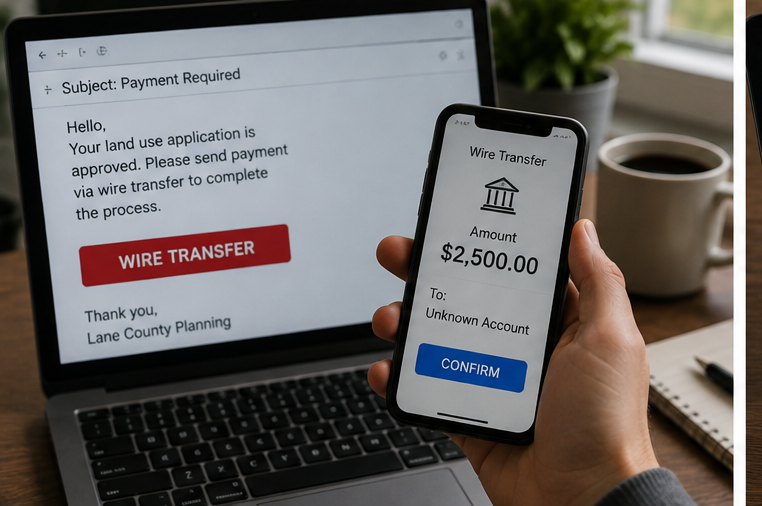
The fraudulent email then introduces the financial trap. Applicants may be told that a payment is required and instructed to send money through a wire transfer.
Lane County has warned residents that it does not request payments for these applications through wire transfers, cryptocurrency or gift cards.
The sender’s email address can provide another clue. Even when the message contains official-looking information, recipients should carefully inspect the actual domain from which it was sent. A private or unrelated domain should immediately raise suspicion.
This type of fraud demonstrates why knowing some genuine information does not necessarily make an email legitimate. Details involving permits, properties and government applications can sometimes be obtained from publicly available records or other sources.
Anyone receiving an unexpected payment demand involving an existing land-use application should contact Lane County directly using independently obtained contact information rather than replying to the email.
Applicants should also avoid clicking unexpected links or downloading attachments until the communication has been verified.
Nevada County Warns About Fake Planning Invoices
Officials in Nevada County, California, are warning customers about fraudulent invoices being sent by scammers pretending to represent the county’s Planning Department.
The emails are designed to resemble legitimate government communications and may include information intended to make recipients believe they are dealing with county employees.
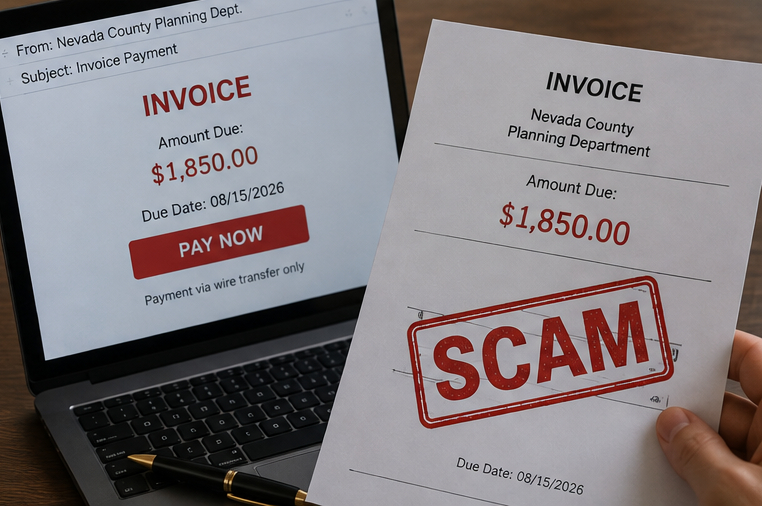
According to the county’s scam alert, the fraudulent messages have reportedly used county employee names and government-related information. Victims are then instructed to make a payment connected with what appears to be an official Planning Department invoice.
The crucial warning sign is the requested payment method. The scammers reportedly ask recipients to wire money, while Nevada County has made clear that its Planning Department does not request payments through wire transfers.
An email address can also reveal the deception. A fraudulent sender may use wording that resembles an official government account while still coming from a domain that is not actually controlled by the county.
Residents should therefore avoid judging an email only by its display name, signature, logo or the government terminology included in the message.
Anyone who receives an unexpected Planning Department invoice should verify it through Nevada County’s official channels before making a payment. Recipients should not reply to the suspicious sender, follow payment instructions or click unfamiliar links.
Government impersonation scams work because official invoices naturally create a sense of obligation. Adding deadlines or payment demands can increase that pressure. Taking a few minutes to independently verify the invoice can prevent a convincing-looking email from becoming a financial loss.
Stay Safe
Property filings, permit applications and official invoices may contain details that help scammers create convincing messages.
Always verify unexpected payment requests through the organisation’s official website or published phone number. Avoid using contact information found only inside the suspicious email.