
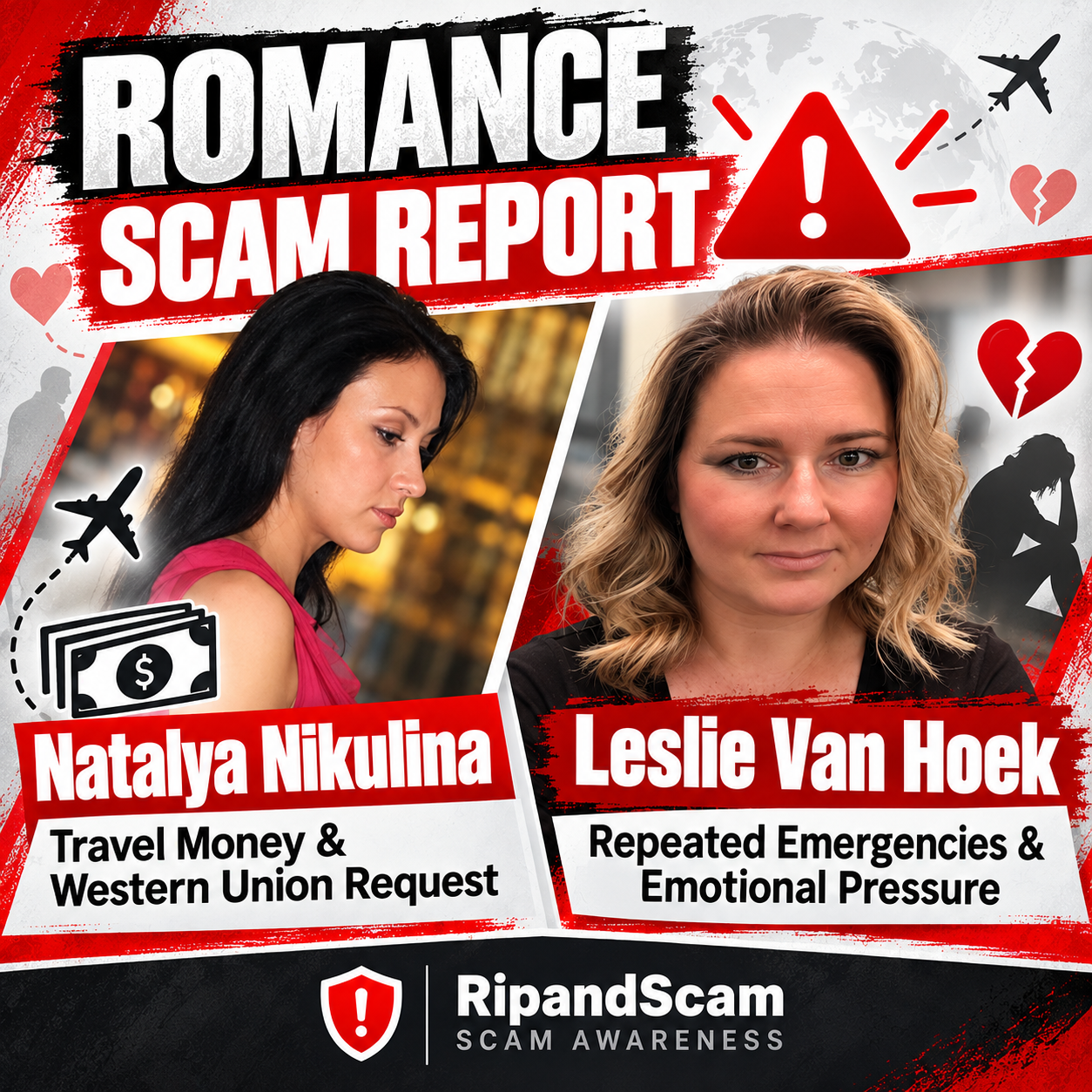
Online romance scams often begin with friendly conversations, affectionate messages, and promises of a future relationship. In many reported cases, the conversation gradually shifts toward travel plans, visa expenses, passport costs, emergencies, or other financial problems that supposedly prevent the person from meeting their online partner.
The following profile was reported to RipandScam after concerns were raised about messages attributed to a woman using the name Natalya Nikulina. The information below is based on the submitted profile and correspondence and should be treated as an allegation concerning the online profile, not as proof against the person shown in the photograph.
Scammer 1: Natalya Nikulina

Full profile:
https://www.ripandscam.com/scammer-natalya-viktorovna_-13.php
Report:
This report concerns an online profile using the name Natalya Nikulina, also presented as Natalya in correspondence with a person identified in the messages as Kevin. According to the submitted material, the relationship developed through affectionate and romantic communication before the conversation shifted toward travel arrangements and requests for financial assistance.
In one of the reported messages, Natalya claimed that she had contacted a travel agency to obtain information about preparing documents for an international trip. She stated that the agency would not allow another person to pay directly for her documents because the contract was supposedly made in her name. The message further claimed that accepting payment from another person could cause problems with tax authorities.
According to the correspondence, the sender also claimed that the travel agency would not accept payment by credit card. She explained that the agency had allegedly experienced a previous incident involving an unauthorized credit-card payment and had therefore changed its payment policy. This explanation was used to support the claim that money would need to be sent directly to her instead.
The message then became more personal and emotional. Natalya wrote about wanting to meet Kevin, spend time together, talk about their future, and finally be able to embrace him. This combination of romantic language and financial discussion is an important warning sign because emotional attachment can sometimes be used to make a money request appear more reasonable or urgent.
Natalya reportedly stated that she had already gone to the agency and ordered the documents required for her trip. She claimed that the documents would be ready within approximately 7 to 10 days and said that the visa would supposedly remain valid for three months. The message presented the planned trip as something that was already moving forward and suggested that only the financial issue remained unresolved.
The correspondence then introduced a direct request for financial help. Natalya reportedly told Kevin that she had consulted the agency about the safest way to receive money in Russia and had been advised to use Western Union. She asked him to send money through the service to assist with the cost of her travel documents, passport, and visa.
The message reportedly included a recipient name, city, country, and mailing information for collecting the transfer. It also explained that Kevin would receive a 10-digit transfer code after sending the money and that Natalya would need that code in order to collect the funds. Requests for money-transfer control numbers or collection codes should always be treated cautiously, especially when the recipient has only been known through online communication.
Another concern is the way the request was tied directly to the possibility of meeting in person. The correspondence suggested that the requested payment would help make the planned visit possible. In reported romance scams, promises of travel are sometimes used to persuade a victim to send money for visas, passports, tickets, customs charges, medical bills, or other supposed obstacles.
The sender also requested personal information from Kevin, including his full name and home address. Sharing private identifying information with an unverified online contact can create additional risks. Such information may potentially be used in further social-engineering attempts, identity-related fraud, or future financial requests.
The profile shown in the submitted material displayed a Scam Danger level of 60% and showed 4 ratings at the time the profile image was captured. This percentage represents the information displayed on the RipandScam profile and should not be treated as independent proof of criminal activity.
Several warning signs are present in the submitted correspondence. These include the rapid development of romantic language, discussion of an international visit, claims involving a travel agency, requests for assistance with visa and passport expenses, insistence on receiving money directly, use of Western Union, and the request for a transfer code after payment.
People communicating with unfamiliar romantic contacts online should independently verify any claims involving travel documents or visa costs. Information about visas, passports, and immigration requirements should be checked through official government sources rather than relying exclusively on information provided by an online contact.
It is also important to be cautious when someone says that a legitimate business or travel agency cannot accept direct payment. A person considering financial assistance should independently contact the company using contact information found through official sources. Do not rely on telephone numbers, email addresses, or payment instructions supplied solely by the person requesting the money.
Another important point is that the person shown in the photograph may be completely unrelated to the reported activity. Photographs are frequently copied from social media accounts, dating profiles, or other websites and used to create false identities. The presence of someone’s photograph on a suspicious profile does not establish that the person pictured created the account or participated in the reported conduct.
Anyone who receives a similar message should avoid sending money until the identity of the person and the reason for the payment have been independently verified. Be particularly cautious when an online relationship quickly becomes serious and is followed by requests for money for travel, medical treatment, family emergencies, documents, transportation, or other unexpected expenses.
If money has already been sent through a money-transfer service, the sender should contact the provider as quickly as possible to determine whether the transaction can still be stopped or reviewed. Copies of emails, chat messages, payment receipts, profile screenshots, and other relevant records should also be preserved.
The report concerning Natalya Nikulina serves as another example of why online romantic relationships involving financial requests should be approached carefully. Affectionate messages, promises of travel, and detailed explanations about visas or documents can make a story appear convincing, but independent verification remains essential before sending money or providing sensitive personal information.
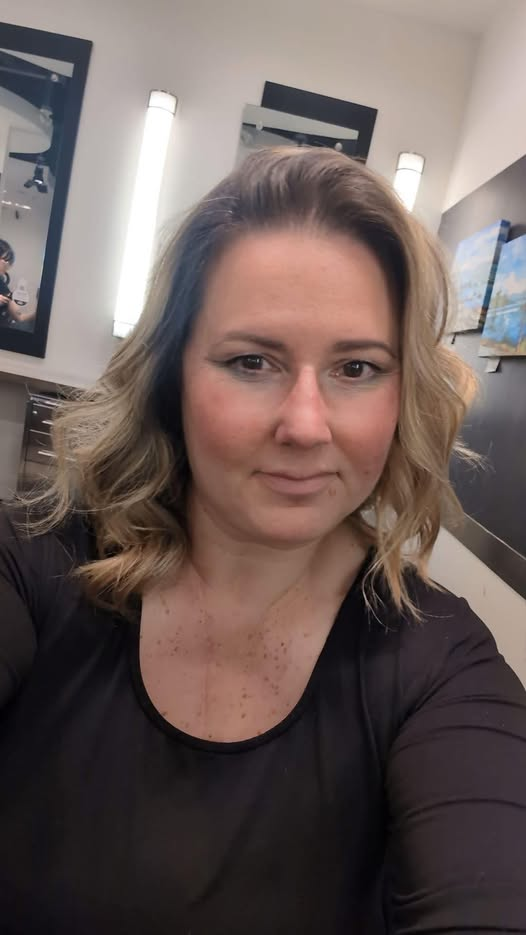
Scammer 2: Leslie Van Hoek
Full profile:
https://www.ripandscam.com/scammer-leslie-van_Hoek-12334.php
Report:
This report concerns an online relationship involving a profile using the name Leslie Van Hoek. According to the complainant, the contact began through a social media, dating, or messaging platform and initially appeared friendly, caring, and genuine.
As communication continued, the relationship reportedly became more emotional. Leslie allegedly spoke about love, loyalty, commitment, and a possible future together, which helped build trust and made the connection appear serious.
After that trust developed, the complainant said that personal problems and urgent situations began to appear. These reportedly included financial difficulties, travel problems, family emergencies, account issues, and business troubles. The complainant felt increasing pressure to provide support.
According to the report, questions or hesitation sometimes resulted in emotional responses such as disappointment, sadness, anxiety, or frustration. This reportedly made the complainant feel guilty for doubting the situation or refusing assistance.
The complainant also noticed inconsistencies in some explanations. Plans to meet were reportedly postponed, and attempts to verify Leslie’s identity or circumstances were often met with excuses or reassurance rather than clear evidence.
Over time, the relationship became stressful. The complainant began to believe that the repeated emergencies, changing explanations, emotional pressure, and difficulty verifying information could indicate a pattern associated with romance scams.
The RipandScam profile showed a Scam Danger level of 96% and 8 ratings at the time the submitted screenshot was captured. These figures reflect information displayed on the profile and do not independently prove criminal activity.
It is also important to note that the woman shown in the photograph may be unrelated to the reported activity. Images are often copied from social media or other online profiles and reused by people creating false identities.
Anyone experiencing a similar situation should avoid sending money until the person’s identity and circumstances have been independently verified. Screenshots, messages, payment records, phone numbers, email addresses, and other evidence should also be preserved.
The report involving Leslie Van Hoek highlights common warning signs such as repeated emergencies, postponed meetings, inconsistent stories, requests for support, and emotional pressure. Recognizing these patterns early can help people avoid emotional and financial harm.