

Scammers continue to find new ways to exploit trust, urgency, financial ambition and fear. This week’s reports show how fraudsters are using romance scams, fake investment opportunities, fraudulent job offers, AI impersonation and government identity scams to target victims in different countries.
Although these scams use different stories, many follow the same pattern. The fraudster first builds trust or creates panic, then pressures the victim to send money, share sensitive information or act quickly before checking whether the situation is genuine.
The following reports highlight this week’s major scam cases and the warning signs consumers should watch for when dealing with unexpected messages, online offers, financial requests and supposed government officials.
Romance Scam Network Targets 150 Victims in the United States

A Nigerian national pleaded guilty in the United States in a case involving romance scams, sextortion, and money laundering. Authorities said the criminal schemes affected around 150 victims across the country.
According to U.S. prosecutors, scammers used fake online identities to build trust with victims through romantic communication. Once an emotional connection was established, victims were allegedly manipulated into sending money or providing other forms of financial support.
The scheme also involved sextortion, where victims could be pressured or threatened using intimate images or personal information. This added another layer of emotional and financial pressure to the fraud.
Authorities said the criminal activity generated more than $2.5 million in fraudulent proceeds. The money was allegedly moved through different financial channels as part of a laundering operation.
Romance scams can be especially damaging because they combine emotional manipulation with financial fraud. Victims may believe they are helping someone they love, making it harder to recognize warning signs early.
Online users should be cautious when someone they have never met in person quickly becomes romantic, asks for money, or creates repeated emergencies. Independent verification is essential before sending funds or sharing sensitive information.
WhatsApp Investment Scam Allegedly Takes More Than $15 Million

The U.S. Securities and Exchange Commission charged several entities over alleged investment confidence scams promoted through WhatsApp, Facebook, websites, and other online platforms.
According to the SEC, scammers allegedly built trust by posing as investment professionals and promising unusually high returns through fake trading opportunities and supposed AI-powered investment systems.
Victims were reportedly directed to fraudulent trading platforms that displayed fake profits, making the investments appear successful and encouraging people to deposit more money.
The SEC alleges that Cryptoaiml-related entities misappropriated more than $12.5 million, while TSAI-related entities allegedly took another $2.8 million, bringing the total to more than $15 million.
Some investors who tried to withdraw their funds were allegedly told that their accounts were frozen and that they needed to pay additional fees before receiving their money.
Authorities warned investors to be cautious of online groups promising guaranteed profits, fake regulatory claims, and investment platforms that pressure users to transfer cryptocurrency or pay extra withdrawal fees.
Fake Job Scams Target U.S. Job Seekers With Convincing Offers

Recent warnings in the United States have highlighted a rise in increasingly sophisticated fake job scams targeting people searching for employment online.
Fraudsters may create realistic job listings and contact applicants through text messages, email, or messaging apps while pretending to represent legitimate companies.
In some cases, victims are sent fake checks and told to use the money to purchase equipment, software, or other work-related items before starting the supposed job.
Other scams direct job seekers to fraudulent websites designed to collect personal information such as Social Security numbers, banking details, identification documents, or account credentials.
Victims may also be asked to return part of a fake payment or send money to a supposed supplier, leaving them responsible when the original check is later rejected.
Job seekers should verify employers through official company websites, avoid paying upfront fees, and never provide sensitive financial information before confirming that a job offer is genuine.
AI Impersonation Scam Tricks Italian Bank Into €95 Million Transfers
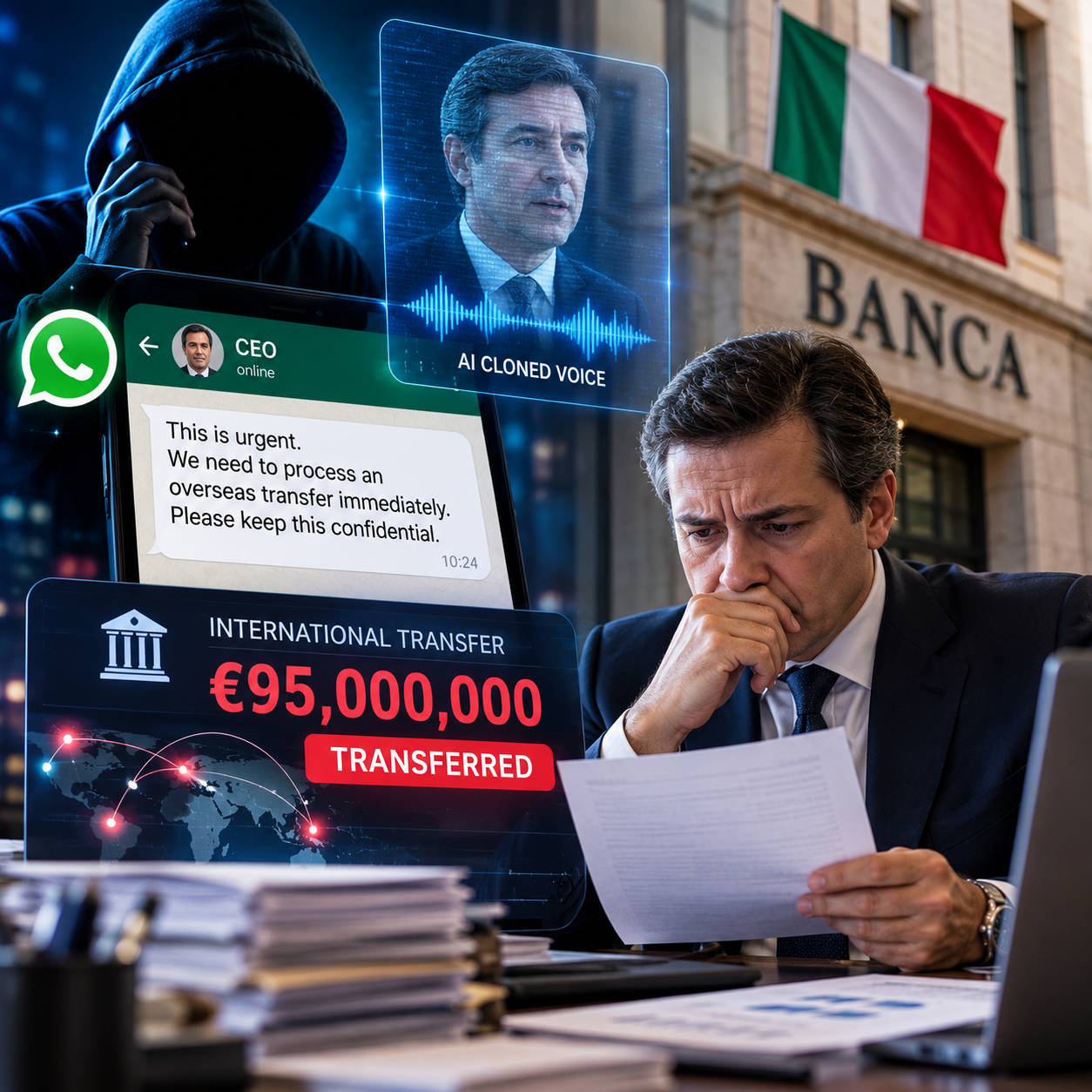
A major Italian bank was targeted in a sophisticated AI impersonation scam involving fake WhatsApp messages and cloned voices. Fraudsters reportedly posed as senior executives and trusted professional contacts.
The scheme targeted Fideuram, the private banking arm of Intesa Sanpaolo. The bank’s former chairman received what appeared to be an urgent message from Intesa Sanpaolo CEO Carlo Messina requesting help with an overseas transaction.
Scammers then reportedly followed up with a phone call using an AI-cloned voice of a senior law firm partner, making the instructions appear genuine and convincing.
The fraud led to overseas transfers totaling about €95 million, or roughly $108 million. Authorities later recovered more than half of the money, but around €36 million was still missing.
Investigators said similar AI-enabled bank fraud cases are also being examined in Italy, including schemes involving voice cloning, fake emails, and international money transfers.
The case highlights the growing danger of AI-powered business and banking scams, where criminals use convincing voices and messages to impersonate trusted executives and pressure employees into approving large payments.
Fake Government Officials Pressure Singapore Victims Into Sending Money

Singapore authorities have warned about scams involving criminals impersonating government and immigration officials to frighten victims and gain their trust.
Victims may receive calls or messages claiming that their identity, phone number, or personal information has been linked to criminal activity or an official investigation.
The scammers then allegedly pose as officers and pressure victims to cooperate immediately, sometimes asking them to transfer money, hand over valuables, or provide sensitive personal information.
In some cases, victims are told that the payment is needed for verification, bail, investigation purposes, or to prove that their money is legitimate.
These scams rely heavily on fear, urgency, and authority, making victims feel they must follow instructions quickly without checking whether the caller is genuine.
People should avoid transferring money or sharing personal information with unexpected callers claiming to represent government agencies and should independently verify the situation through official contact channels.