

Scammers continue to find new ways to exploit trust, fear, loneliness and the need to make money. This week’s scam reports show how fraudsters are using dating apps, work-from-home offers, fake law-enforcement threats, family emergencies and even legitimate banking access to reach victims.
Although these scams look very different on the surface, many follow the same pattern. The fraudster first creates credibility, then introduces urgency or an attractive opportunity, and finally pressures the victim to send money, reveal information or surrender control of an account.
The following reports highlight this week’s important scam warnings and the practical steps consumers can take to protect themselves.
Fake 49ers Player Allegedly Used Dating Apps to Defraud Women

A US fraud investigation expanded after more women came forward with allegations against a man accused of pretending to be connected to the San Francisco 49ers while presenting himself as a wealthy investor.
Federal authorities have accused Daejon Love, 35, of using dating apps and fabricated identities to build relationships with women. The FBI said more than 35 additional women came forward after the case became public.
Authorities allege that Love portrayed himself as a professional football player and successful investor. Investigators say this image of wealth and status helped him gain victims’ trust before introducing supposed investment opportunities.
The alleged scheme reportedly used fabricated investment accounts, with identified victims losing approximately $1.3 million.
Love and alleged accomplice Taylor Chan, 18, were arrested in August and charged with wire fraud. Authorities allege Chan posed as Love’s financial adviser during parts of the scheme. The charges remain allegations until proven in court.
The case highlights how romance scams can quickly turn into investment fraud. Consumers should be cautious when someone they meet online introduces cryptocurrency, stocks or exclusive investment opportunities, and should always verify the person and the investment independently before sending money.
Woman Loses ₹9.3 Lakh in Work-From-Home Data Entry Scam
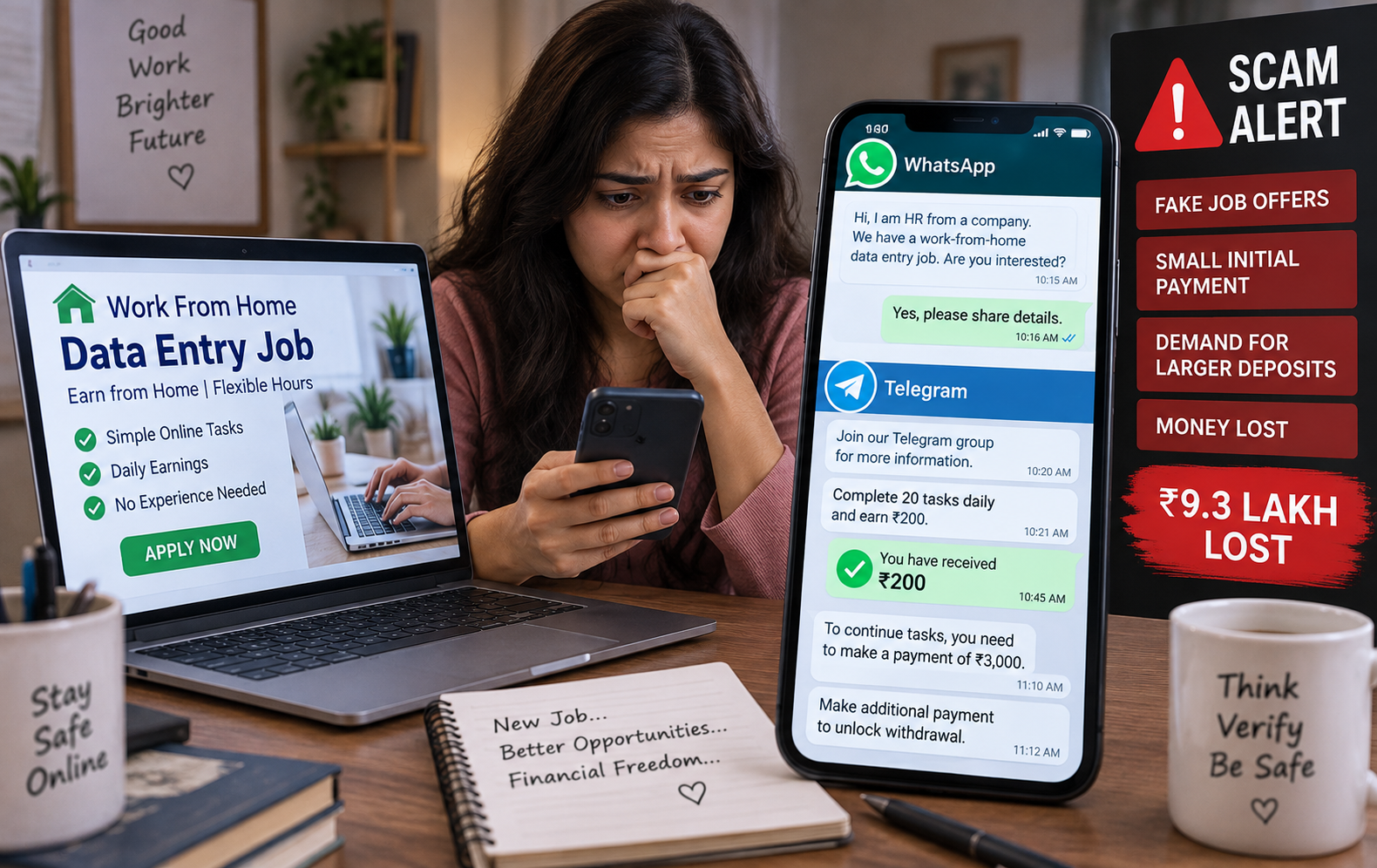
A 25-year-old woman in Mangaluru reportedly lost more than ₹9.3 lakh after responding to a work-from-home data-entry job offer sent through WhatsApp.
The sender claimed to be an HR representative and later directed her to a Telegram group, where she was told she could earn ₹200 a day by completing simple online tasks. She even received a small payment at first, which helped make the offer appear genuine.
Soon after, she was asked to transfer money in order to continue the tasks and unlock higher earnings. She initially sent ₹3,000, but when she tried to withdraw her money, additional payments were demanded.
Between September 12 and September 17, she reportedly transferred money several times to accounts provided by the scammers. Her total loss eventually reached ₹9,33,866.
The case follows a common task scam pattern, where victims are first given a small payment to build trust before being pressured to deposit larger amounts.
Job seekers should be cautious of employers who ask for upfront payments, deposits or fees to release earnings. Legitimate companies do not require workers to repeatedly send money in order to continue working or withdraw wages.
Former Bank Employee Sentenced for Targeting Customers Aged 90 to 103

One of this week’s most striking fraud cases involved a person who had legitimate access to sensitive banking information.
A federal court in Ohio sentenced Yue Cao, 36, to 10 years in prison after a jury convicted him of bank fraud, aggravated identity theft and money laundering. Cao had worked as a quantitative analytics manager at an Ohio-based bank.
According to the US Department of Justice, Cao’s position was intended to help protect customers from fraud. Instead, prosecutors said he used his access to confidential customer information to target elderly clients who had not enrolled in online banking.
Authorities said the victims ranged from 90 to 103 years old and lived in several US states, including Ohio, New York, Pennsylvania, Connecticut and Washington.
Prosecutors said Cao created email addresses in the names of more than 100 victims. He then allegedly used those addresses to enroll customers in online banking without their knowledge and redirected statements and notifications to email accounts he controlled.
Once he controlled the accounts, authorities said he transferred victims’ money into accounts and credit cards belonging to him. He also opened financial accounts using victims’ identities and used some of their money for options trading.
The Department of Justice said the scheme resulted in approximately $2 million in unauthorized transfers. Cao was sentenced to 120 months in prison and five years of supervised release.
This case highlights an important form of elder financial exploitation: fraud does not always begin with a suspicious email or unknown caller. Sometimes the offender already has access to personal or financial information.
Older consumers and their families should regularly review account activity, activate transaction alerts where practical, monitor unexpected changes to contact information and immediately question bank statements or notifications that suddenly stop arriving.
Grandparent Scam Used Rideshare Drivers to Collect Cash From Elderly Victims

A federal case this week revealed how grandparent scams can move beyond phone calls and involve real-world cash collection.
The US Department of Justice said Elvys Nicanor Nunez Valerio, 33, pleaded guilty to money-laundering conspiracy in connection with a large fraud scheme targeting elderly people in the United States.
Prosecutors said scammers pretended to be a grandchild or close relative facing an emergency and pressured victims to provide money immediately.
Authorities said the scheme went a step further by arranging for rideshare drivers to collect cash directly from elderly victims and deliver it to members of the criminal operation.
The scam relied heavily on fear and urgency. Victims may believe a loved one is in danger and feel pressured to act before checking whether the story is true.
Anyone receiving an emergency money request from a relative should end the call and contact that person using a known number. Families can also use a private verification question or password for emergencies.
68-Year-Old Loses ₹1.12 Crore in Fake “Digital Arrest” Scam
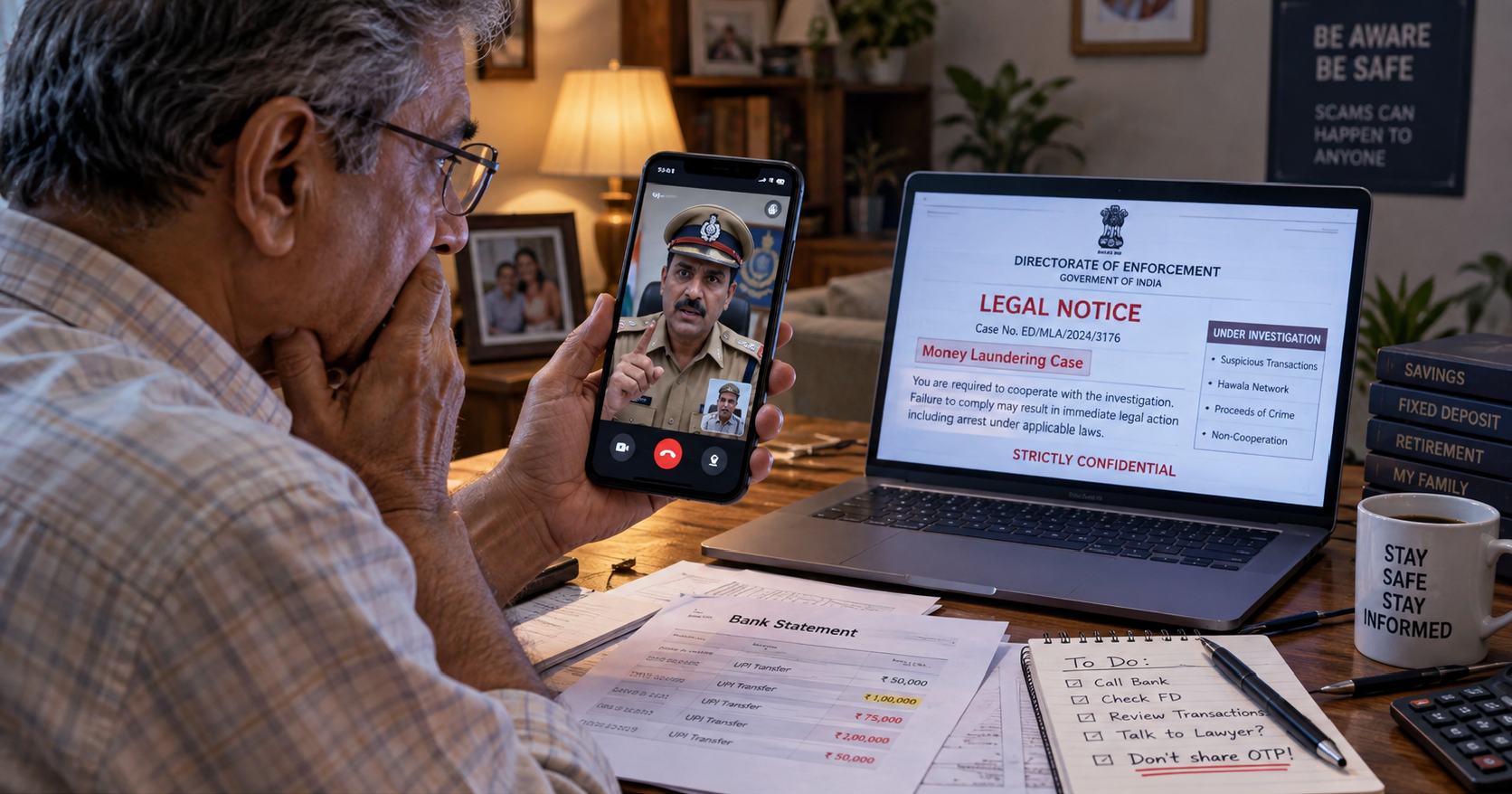
A 68-year-old man from Dahisar, Mumbai, was allegedly cheated out of ₹1.12 crore after scammers convinced him that he was linked to a major money-laundering case.
Mumbai Cyber Police said six people were arrested in connection with the case, including a web developer and a private bank operations manager.
According to investigators, the victim was contacted by fraudsters posing as officials from the Telecom Department, police and other government agencies.
The scammers allegedly told him he was connected to a ₹238-crore money-laundering case and threatened him with arrest. They also showed what appeared to be an official legal notice to make the story look real.
Police said the victim was kept under so-called “digital arrest” through WhatsApp video calls and pressured into transferring money. Authorities later traced the first bank account used in the scam and uncovered a network involving multiple bank accounts, SIM cards and devices.
The case shows how scammers use fear and fake authority to manipulate victims. Police do not place people under “digital arrest” through video calls or ask them to transfer money to prove innocence, so anyone receiving such calls should disconnect immediately and verify the matter through official channels.