

Online scams are becoming increasingly shocking as fraudsters exploit dreams of finding a home, romantic relationships, overseas job opportunities, and everyday digital payments to deceive unsuspecting victims. From a fake New York landlord allegedly using 11 identities to steal $61,625 from apartment hunters to a Delhi blind date turning into a ₹26,000 cafe extortion trap, these cases reveal how criminals transform ordinary situations into devastating financial nightmares.
This international scam roundup examines five alarming cases reported between October 29 and November 5, 2026, involving the United States, India, and Cambodia. The stories uncover a ₹72 crore cybercrime network linked to 255 complaints, fake Paytm employees stealing ₹95,000 from a vegetable vendor, and a Ghanaian man trapped for nearly a year after accepting a fraudulent overseas job offer. Together, these incidents expose how impersonation, romance traps, fake employment opportunities, and organized cybercrime operations continue to threaten financial security and personal safety worldwide.
USA: Fake Landlord’s 11 Identities Fool Apartment Hunters in $61,625 Rental Scam!

A shocking rental fraud case has emerged in New York, where a 35-year-old Long Island man allegedly used 11 fake identities to deceive apartment seekers and collect $61,625 in fraudulent rental payments. The suspect, identified as Rajat Verma of Franklin Square, reportedly posed as a legitimate real estate agent and advertised apartments that did not belong to him. According to the Queens District Attorney’s Office, the alleged scheme targeted at least 15 victims across Queens and Brooklyn between September 2022 and November 2023. The case attracted renewed attention after prosecutors announced a 40-count indictment on October 30, 2026, with further media coverage appearing on November 3.
Investigators revealed that Verma allegedly approached small landlords while pretending to be a prospective tenant, providing forged checks to secure apartment keys. Before the landlords discovered that the checks were invalid, he reportedly advertised their properties online and presented himself as an authorized rental agent. To conceal his identity, he allegedly operated under 11 different names, including Rajib Sharma, Sammy Miah, Barry Padmanabhan, Bobby Gupta, and Dave Mair, while using multiple phone numbers and email addresses. Unsuspecting renters who believed they had found genuine apartments handed over thousands of dollars in security deposits and advance rental payments, only to receive fraudulent lease agreements.
The deception reportedly left several victims facing devastating surprises. Some prospective tenants received apartment keys that failed to unlock the properties they had paid for, while others discovered that their rental agreements were completely worthless. In one particularly disturbing incident, a renter arrived at an apartment expecting to move in, only to discover another family already occupying the property. Prosecutors alleged that the same apartment had effectively been offered to multiple unsuspecting renters. The operation reportedly involved eight properties, including seven in Queens and one in Brooklyn, leaving victims without their promised homes and a combined $61,625 in rental payments.
Verma was arraigned on October 29, 2026, on a 40-count indictment involving allegations of grand larceny, identity theft, possession of forged instruments, and schemes to defraud. He could face up to seven years in prison if convicted, with his next court appearance scheduled for November 23. The allegations have not been proven in court, and he is presumed innocent unless convicted. This case highlights the dangers of online rental scams, where convincing property advertisements, fake agents, and forged documents can trick even careful apartment hunters. Renters should verify property ownership, confirm the identity and credentials of agents, inspect apartments, and avoid transferring deposits before establishing that the rental arrangement is legitimate.
India: Fake Paytm Staff Visit Vegetable Seller, Steal ₹95,000 During QR Code Update!
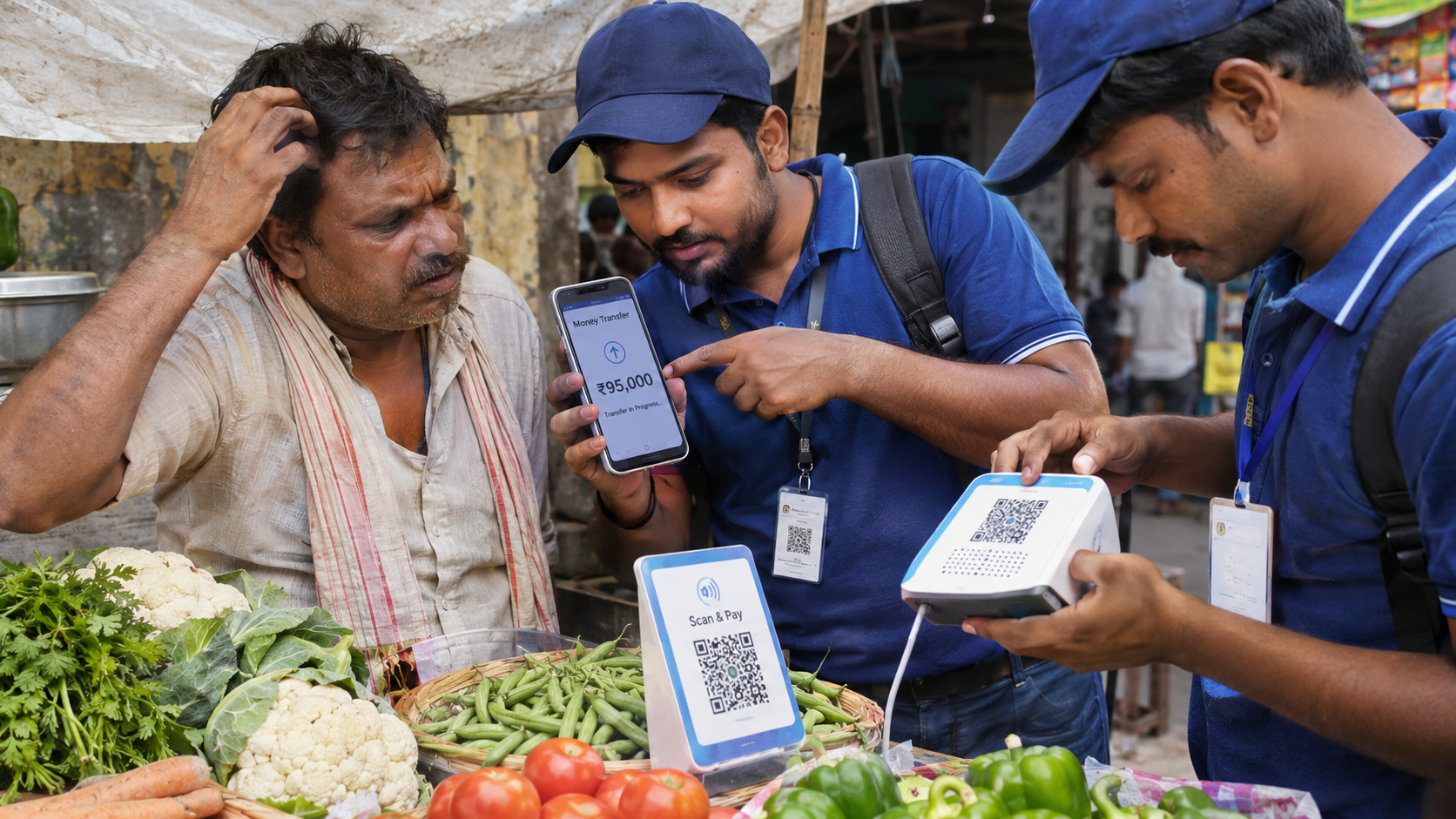
A shocking digital payment scam has emerged in Delhi, where a vegetable vendor lost ₹95,000 after two fraudsters allegedly impersonated Paytm employees and offered to update his QR code soundbox. The incident occurred on October 20, 2026, in the Shahdara district and was reported by police on October 31. The victim, identified as Ramavtar, was approached by two men claiming to represent Paytm, one of India’s popular digital payment platforms. The suspects reportedly told him that his payment system required a routine Know Your Customer (KYC) update and soundbox maintenance. Believing they were genuine company representatives, the unsuspecting vendor handed over his mobile phone, unaware that the seemingly harmless service visit would result in a devastating financial loss.
According to investigators, the accused used the opportunity to gain access to the vendor’s phone and carry out two unauthorized financial transactions of ₹50,000 and ₹45,000, stealing a total of ₹95,000. The fraudsters allegedly exploited the vendor’s trust in the Paytm brand, presenting their actions as part of a routine QR code update. The victim later discovered that money had disappeared from his bank account and filed a complaint with the Shahdara Cyber Police Station. Police registered FIR No. 55/26 on October 26 and launched an investigation into the suspicious transactions. What initially appeared to be an isolated incident soon revealed signs of a much larger fraud operation targeting small business owners and street vendors.
During the investigation, cybercrime officers examined bank transactions, CCTV footage, and financial records, eventually identifying five suspects allegedly involved in the operation. The arrested individuals were identified as Juned (23), Anas (19), Mohit (24), Rohit (19), and Sumit Kumar (19). Investigators alleged that two members impersonated Paytm representatives while the remaining three helped provide bank accounts to receive and withdraw stolen funds. Police also discovered that Juned had previously been associated with Paytm, and an employee identification card was found on his mobile phone, potentially strengthening the gang’s appearance of legitimacy. Authorities recovered six mobile phones, seven SIM cards, four ATM cards, and three cash withdrawal slips. More alarmingly, investigators suspect the accused may have targeted 50 to 60 people using similar tactics, while associated bank accounts were reportedly linked to approximately 20 cybercrime complaints across India. These suspected connections remain under investigation.
The case highlights an emerging threat to small merchants who depend on digital payment systems for their daily income. Criminals can exploit familiar services such as Paytm QR codes, soundboxes, and KYC verification to convince business owners that they are receiving legitimate technical assistance. Instead, handing over an unlocked smartphone may expose payment applications, banking information, and sensitive financial data. Although five suspects have been arrested, the wider investigation continues, and the allegations have not been established in court. Shopkeepers and customers should never hand over their smartphones, disclose OTPs, or share banking PINs with unverified representatives claiming to perform payment-system updates. Any genuine service request should be confirmed through Paytm’s official support channels. Victims of suspected financial cybercrime in India should immediately report the incident through the national cybercrime helpline 1930 or the official portal cybercrime.gov.in.
India: Dating App Blind Date Turns Into ₹26,000 Cafe Trap, Two Arrested!

A romantic blind date turned into a frightening financial nightmare for a 23-year-old man in Delhi, who was allegedly forced to pay ₹26,000 after meeting a woman through the Tinder dating app. The incident occurred on November 1, 2026, in the popular Hudson Lane cafe area of Mukherjee Nagar, northwest Delhi, and was reported by police on November 4. The victim, identified as Zaid Ahmad from West Champaran, Bihar, had connected with a woman calling herself Sanya through the dating application. She invited him to meet near GTB Nagar Metro Station around 6:30–7:00 PM before taking him to a nearby cafe. What initially appeared to be an ordinary first date soon became an alleged extortion scheme involving an inflated restaurant bill, intimidation, and threats.
According to investigators, the woman took Ahmad to Black Panther Cafe on Hudson Lane, where she began ordering several food items and expensive alcoholic beverages, including whisky. After some time, the victim was presented with a handwritten bill totaling approximately ₹26,000, leaving him shocked by the unexpectedly high charges. When he questioned the amount, the cafe owner and staff allegedly pressured him to settle the payment immediately. The situation reportedly escalated when three to four individuals threatened him and prevented him from leaving the establishment. Fearing for his safety, Ahmad contacted his father and explained the situation. His father arranged an online transfer to cover the demanded amount. The initial QR-code payment attempts failed, after which the cafe staff supplied another QR code displaying the name Naveen Rajput. Once the payment was completed, the victim was finally allowed to leave.
The situation became even more suspicious when the woman who had arranged the date allegedly switched off her mobile phone and disappeared, leaving Ahmad unable to contact her. After learning what had happened, his father contacted the police control room, prompting an investigation by Mukherjee Nagar police. Officers subsequently arrested 38-year-old cafe owner Javed and 24-year-old Anuj Kumar, both residents of Ghaziabad, Uttar Pradesh. Deputy Commissioner of Police Akanksha Yadav confirmed that a case had been registered under Sections 308(2) and 3(5) of the Bharatiya Nyaya Sanhita, relating to extortion and common intention. Police are continuing efforts to trace the woman, identified as Sanya alias Nikita, and determine whether other individuals were involved. Investigators are also examining whether multiple women used dating-app profiles to lure customers into establishments where they were pressured into paying inflated bills. The allegations remain under investigation.
The case highlights a troubling form of dating app cafe scam, in which criminals allegedly exploit online romantic connections to lure unsuspecting individuals into overpriced restaurants and pressure them into making excessive payments. Unlike traditional romance scams that develop over weeks or months, this method can cause financial losses during a single face-to-face meeting. Fraudsters may use attractive dating profiles, friendly conversations, and seemingly genuine invitations to gain a victim’s trust before leading them into a controlled environment. Online dating users should choose meeting places independently, check restaurant menus and prices before ordering, and remain cautious when a new acquaintance insists on visiting a particular cafe. Anyone facing threats, confinement, or demands for unreasonable payments should prioritize personal safety and contact local police or emergency services. The Delhi incident serves as a reminder that even a promising first date can conceal a carefully planned financial trap.
Cambodia: Dream Job Becomes Nightmare as Ghanaian Man Lured Into Scam Compound, Beaten and Told to Pay $6,000 for Freedom!

A promising overseas job opportunity turned into a terrifying ordeal for a 33-year-old Ghanaian man who was allegedly trafficked into a cyber scam compound in Cambodia, where he endured physical abuse, threats, and months of uncertainty. According to an Associated Press investigation published on November 5, 2026, the man traveled from Ghana to Cambodia in November 2025 after being offered what appeared to be a legitimate receptionist position with a Chinese company. The job promised a monthly salary of $1,000, free accommodation, and meals, an attractive opportunity for the university graduate who had struggled to find employment in his field. After completing an online interview, he received a job offer, visa, and airline ticket paid for by the employer. However, shortly after arriving in Cambodia, he was transported several hours to an unfamiliar location, where his passport and mobile phone were allegedly confiscated. What he believed would be the beginning of a better life quickly became a nightmare inside a criminal operation.
Instead of working as a receptionist, the man discovered that he was expected to become an online scam operator known as a “chatter,” whose responsibility was to contact strangers through messages and lure them into fraudulent work-from-home opportunities. According to the investigation, these operations frequently use scripted conversations to attract victims before more experienced scammers take over and manipulate them into transferring money. The Ghanaian man was reportedly presented with a two-year employment contract instead of the one-year agreement he had originally accepted. When he questioned the arrangement, men allegedly threatened him until he signed. After realizing that the operation involved financial fraud, he refused to participate and demanded to leave. His refusal reportedly triggered brutal retaliation. He told Associated Press journalists that he was confined to a dark room and repeatedly beaten with fists and a bat, as well as shocked with electric stun devices. The abuse continued for approximately one month, leaving him with a broken wrist and lasting difficulty gripping objects. His captors allegedly demanded $6,000 as repayment for bringing him to Cambodia before they would allow him to leave.
The man’s immediate captivity ended when Cambodian police raided the compound in January 2026 as part of a nationwide crackdown on criminal scam operations. However, escaping the compound did not mean he could immediately return home. Without his passport, money, or reliable assistance, he became one of thousands of former scam-compound workers stranded in Cambodia. He eventually reached Phnom Penh, where he reportedly slept on the streets and sometimes went without food for several days. Humanitarian organizations warned that many people released from these compounds had originally been recruited through deceptive employment offers and should be assessed as potential human trafficking victims rather than automatically treated as criminals. Cambodia’s crackdown exposed the enormous scale of the problem, with investigators identifying at least 182 confirmed scam locations across the country. The Ghanaian man was later detained in an immigration facility known as Mango 2 for approximately two weeks before being deported on October 14, 2026, with travel assistance from the nonprofit Eos Collective. Nearly a year had passed since he first arrived in Cambodia. Although he finally returned to Ghana, he remained separated from his family because he could not afford transportation from the capital to his hometown.
The disturbing case highlights the connection between fake overseas recruitment, human trafficking, forced labor, and international online fraud networks. Criminal organizations often advertise attractive positions such as receptionists, customer-service representatives, data-entry operators, and IT assistants, promising high salaries, accommodation, and paid travel expenses. Once recruits arrive, their travel documents may be confiscated, their movements restricted, and they may be coerced into participating in romance scams, fake investment schemes, or fraudulent employment operations. Victims who refuse may face violence, extortion, or threats against their families. The Ghanaian man’s experience demonstrates that some individuals working inside scam compounds are themselves victims of exploitation. Cambodian authorities say they have dismantled major scam compounds and provide assistance to trafficking victims, although human rights organizations have questioned the adequacy of those protections. Job seekers should independently verify overseas employers, confirm employment contracts, investigate recruitment agencies, and be extremely cautious of unusually generous offers that include free international travel with little screening. Most importantly, workers should never surrender their passports to unverified recruiters or employers. This case is a powerful reminder that a seemingly life-changing job opportunity can conceal a dangerous trafficking network, leaving victims struggling not only to escape but also to rebuild their lives.
India: ₹72 Crore Cybercrime Empire Exposed: 255 Complaints, Cryptocurrency Transfers and Six Arrests!
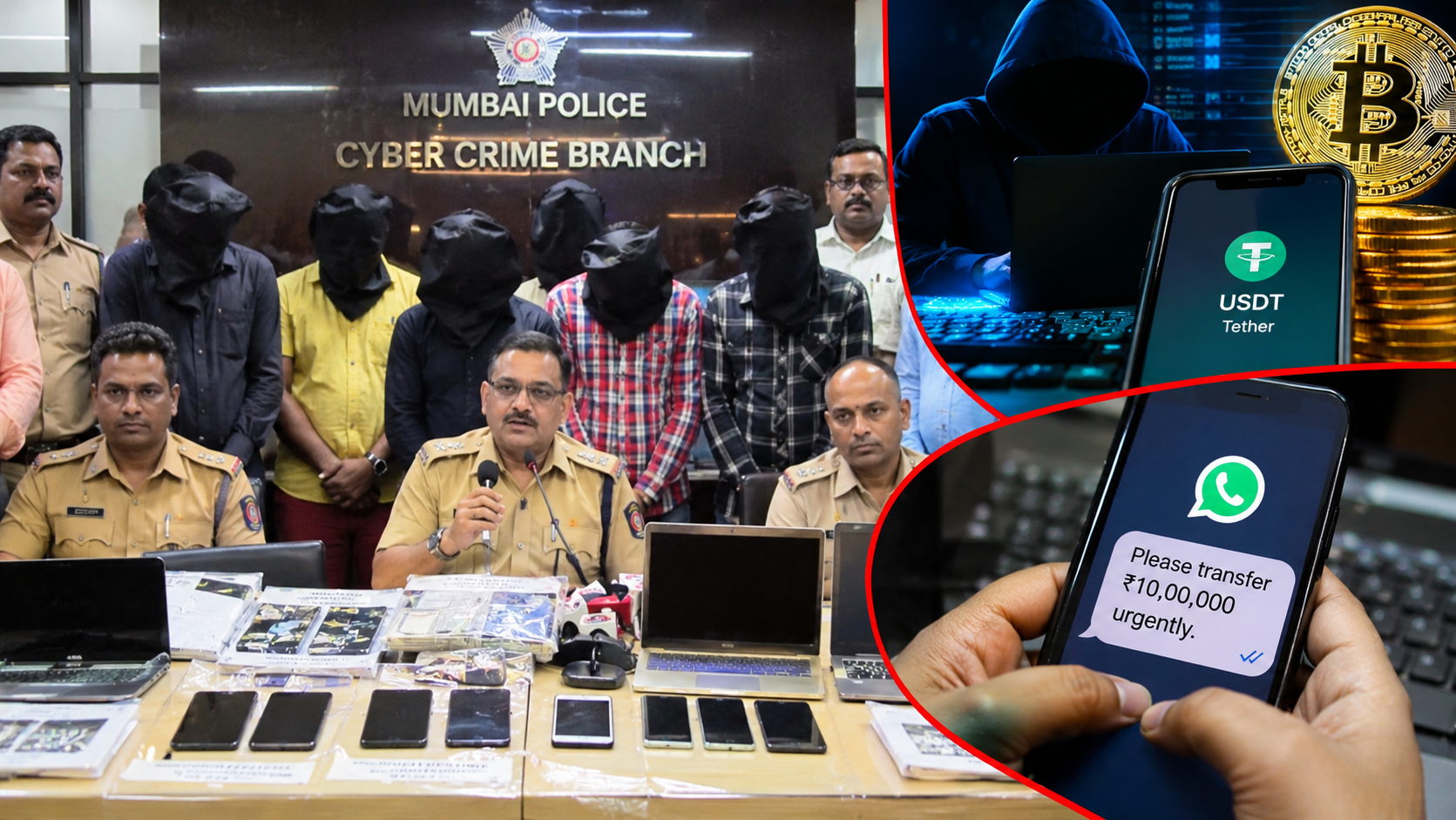
A massive international cybercrime network involving an estimated ₹72 crore in fraudulent transactions and 255 cybercrime complaints across India has been uncovered by Mumbai Police, exposing an alleged operation that used fake WhatsApp identities, compromised bank accounts, and cryptocurrency to move stolen money. The case, reported on October 29–30, 2026, came to light after officers from Mulund Police Station investigated what initially appeared to be a ₹10 lakh business impersonation scam. The investigation eventually expanded into a nationwide operation spanning 21 Indian states, resulting in the arrest of six suspects from Uttar Pradesh, Gujarat, and Mumbai. Police believe the network may have international connections, with suspected links to operators in China who allegedly coordinated the movement of fraudulent proceeds through digital payment systems and cryptocurrency channels. The extraordinary scale of the suspected operation highlights how a single deceptive WhatsApp message can reveal a much larger financial crime network.
According to investigators, the case began on July 30, 2026, when an accountant working for a private company in Mumbai received a WhatsApp message from an unfamiliar number displaying his employer’s photograph as its profile picture. Believing he was communicating with the company owner, the accountant followed instructions to transfer ₹10 lakh from the company’s bank account. After realizing the request was fraudulent, he approached Mulund Police Station and registered a complaint. Investigators examined the transaction records and discovered that ₹5.50 lakh had been transferred to an account in Meerut, Uttar Pradesh, before being withdrawn through a cheque. Police subsequently arrested three suspects in Meerut, followed by three additional arrests in Ghaziabad, Vadodara, and Kandivali. During the operation, officers recovered ₹5.50 lakh in cash and five mobile phones believed to have been used in the alleged crimes. What began as a straightforward case of WhatsApp impersonation quickly developed into a complex investigation involving multiple bank accounts, suspicious financial transfers, and possible international cybercrime connections.
Further examination of the suspects’ mobile phones revealed the suspected network’s extraordinary reach. Police discovered details of 11 bank accounts linked to 182 cybercrime complaints across 21 states, while another 49 accounts were reportedly connected to 73 additional complaints, bringing the total to 255 cases involving an estimated ₹72 crore. Investigators alleged that members of the network used Telegram groups to purchase and exchange bank account details, SIM cards, and other financial resources needed to facilitate fraudulent transactions. The suspects reportedly persuaded account holders to install malicious Android Package Kit (APK) files, allowing criminals to gain control of banking-related activities and receive money obtained through scams. Stolen funds were allegedly moved through multiple accounts to obscure their origins before being withdrawn in cash or converted into Tether (USDT), a cryptocurrency designed to maintain a value close to the US dollar. Police suspect that some cryptocurrency proceeds were transferred abroad through a China-linked network, although the precise international connections remain under investigation.
The case exposes the growing danger of organized cybercrime networks combining WhatsApp impersonation, bank-account trafficking, malicious applications, and cryptocurrency transfers to facilitate financial fraud. Unlike isolated online scams, these operations can involve multiple participants responsible for recruiting account holders, collecting stolen money, transferring funds, and concealing financial trails. Authorities have warned the public against selling or renting bank accounts, ATM cards, cheque books, or SIM cards to strangers in exchange for commissions, as these resources can be exploited in criminal operations. Individuals should also avoid installing APK files from unknown sources and independently verify unexpected financial requests, even when the sender’s WhatsApp profile displays a familiar person’s photograph. Businesses should confirm unusual payment instructions through a separate, trusted communication channel before authorizing transfers. Although six suspects have been arrested, the alleged ₹72 crore network remains under investigation, and the accusations have not been proven in court. Anyone who suspects financial cybercrime in India should immediately contact the national cybercrime helpline at 1930 or report the incident through cybercrime.gov.in.