
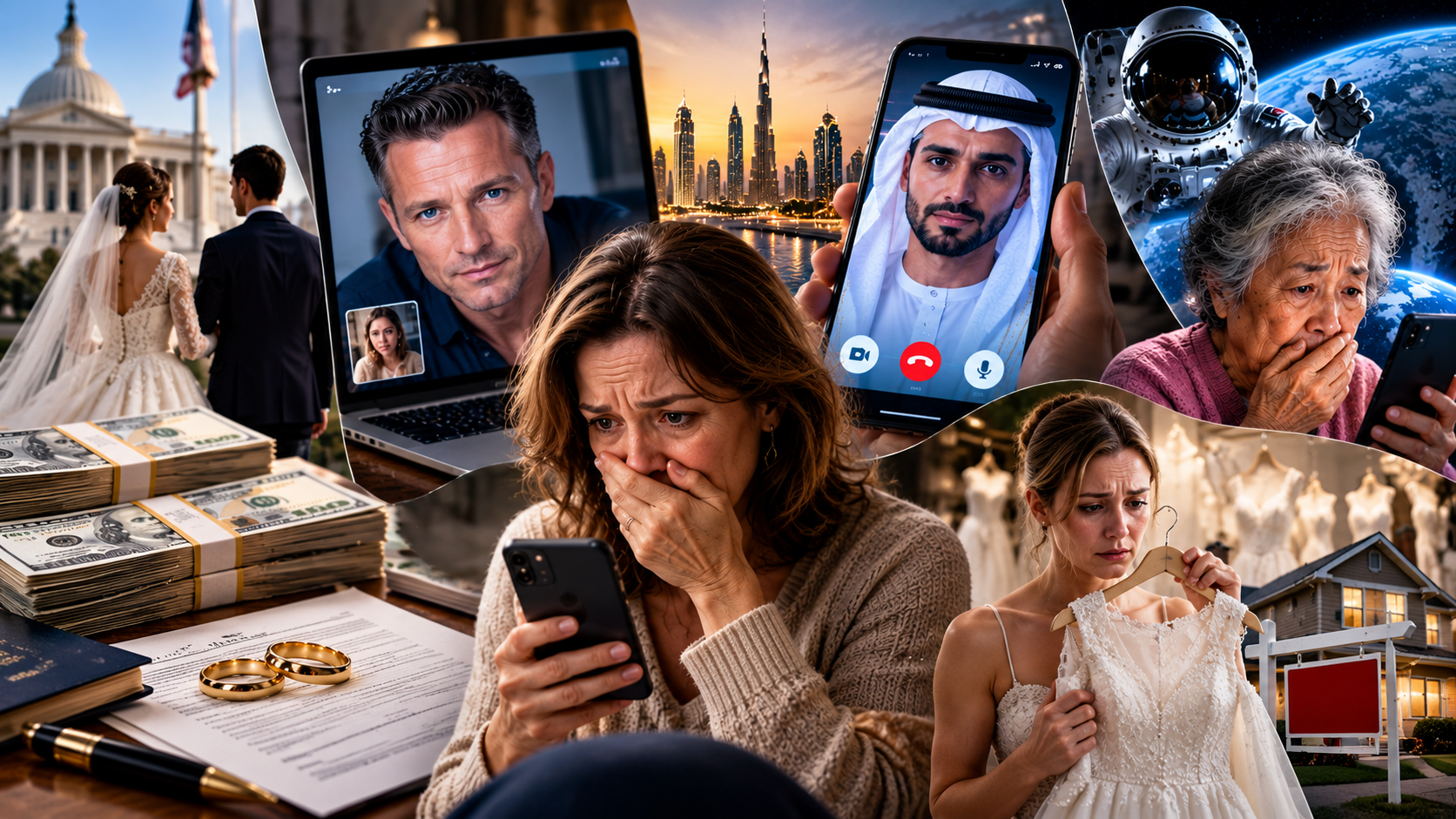
Online scams are becoming increasingly bizarre as fraudsters exploit romantic feelings, celebrity identities, artificial intelligence, and even dreams of marriage to manipulate unsuspecting victims. From a woman losing her paid-off home after believing she was dating a television star to another being deceived by an AI-generated Dubai prince, these cases show how far criminals will go to gain trust and money.
This international scam roundup examines five extraordinary cases reported between 2025 and October 2026, involving the United States, the United Kingdom, Japan, and a cross-border royal impersonation operation. The stories reveal how fake romantic relationships, elaborate wedding plans, fabricated emergencies, and fraudulent marriage arrangements can lead to significant financial and emotional harm.
USA: Six Charged in $40,000-Per-Wedding Fake Marriage Business
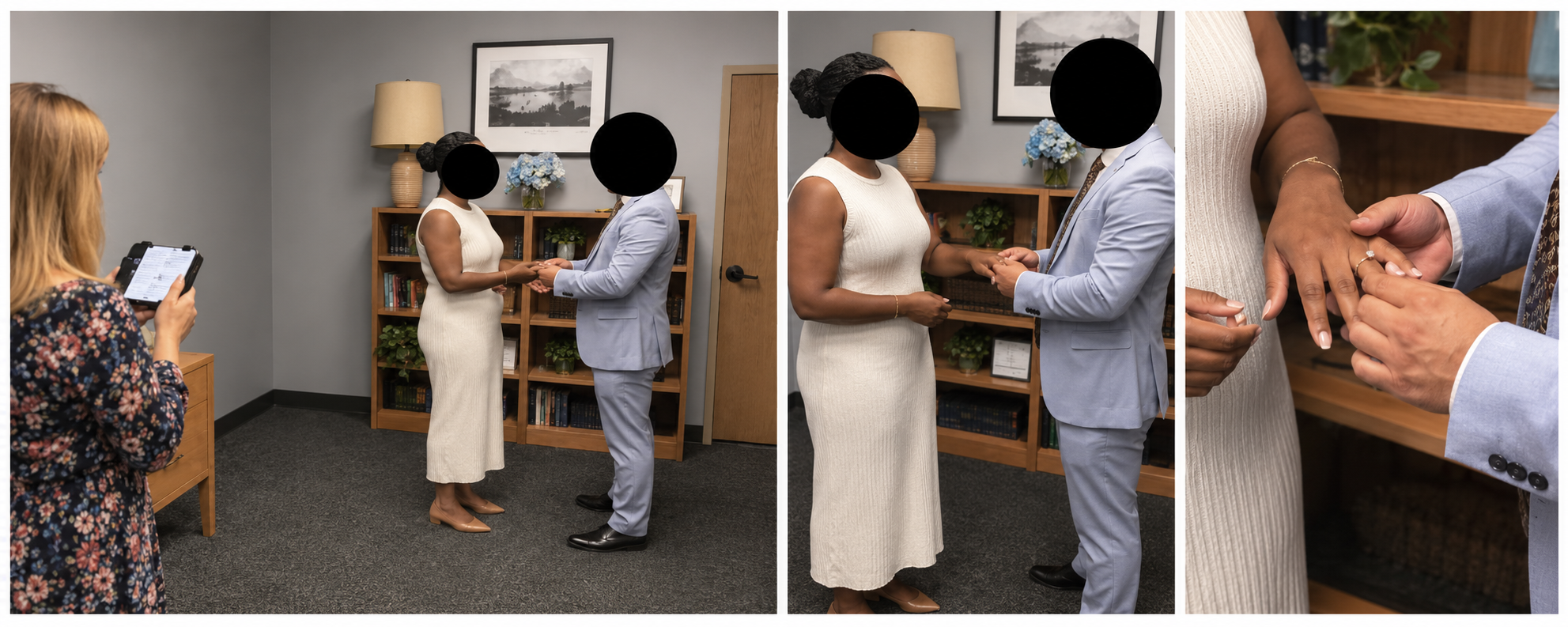
A wedding normally represents love and commitment, but federal investigators in Massachusetts say an alleged criminal operation transformed marriages into a business generating millions of dollars. On October 21, 2026, the U.S. Department of Justice announced charges against six individuals accused of arranging fraudulent marriages to obtain immigration benefits.
According to prosecutors, Jennifer Gonzalez, 43, allegedly operated a business connecting foreign nationals with American citizens willing to enter sham marriages. Customers reportedly paid between $38,000 and $40,000 for each arrangement. Authorities believe the operation continued for more than ten years, averaging approximately 18 to 20 fraudulent marriages annually.
The remarkable part of this alleged operation was the preparation involved. Prosecutors say participants were instructed to create the appearance of genuine married life through joint bank accounts, insurance policies, wedding photographs, and other relationship evidence. Rather than relying on a single forged document, the organization allegedly attempted to construct an entire fictional marital history.
Investigators also described contracts designed to conceal the actual nature of the transactions. In one recorded encounter, Gonzalez allegedly accepted a $3,000 down payment toward arranging a marriage. Some participants reportedly made continuing monthly payments to the individuals serving as their spouses.
Authorities further alleged that proceeds from the scheme were invested in businesses and property in the Dominican Republic. The case demonstrates how fraudulent relationships may be used not only to deceive individuals but also to undermine official immigration processes.
The six defendants face federal charges, and the investigation remains ongoing. These are allegations, and the defendants are presumed innocent unless proven guilty.
The warning for readers is that paying someone to enter a fraudulent marriage can carry serious legal consequences. A marriage arranged solely to deceive immigration authorities is not made legitimate by photographs, shared accounts, or official-looking paperwork.
USA: Woman Loses Paid-Off Home After Falling in Love With Fake Television Star
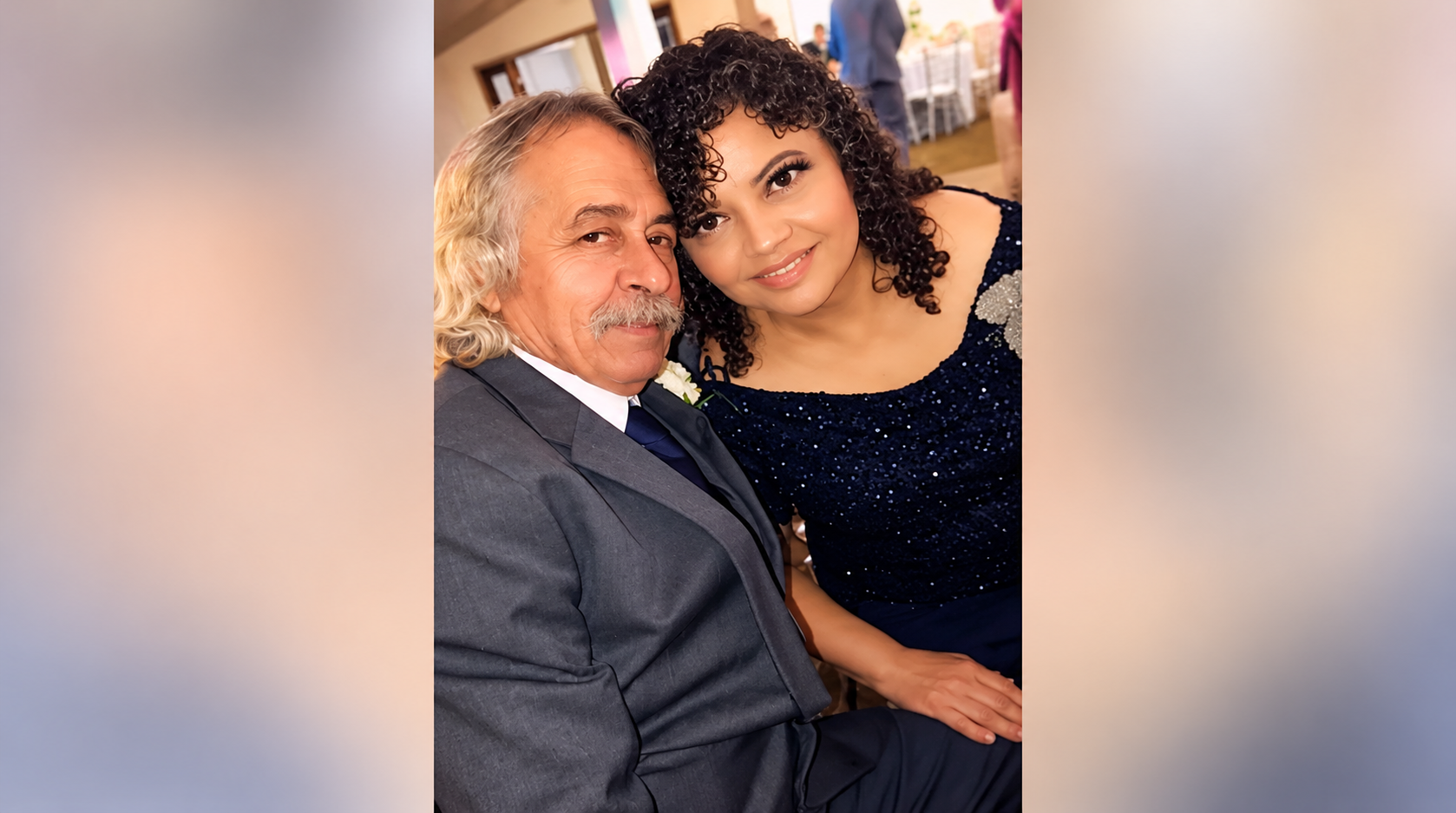
One of the most troubling examples of AI-assisted romance fraud involved a Southern California woman who believed she was developing a relationship with Steve Burton, an actor known for his role in General Hospital. What began as private social media messages eventually resulted in a reported financial loss exceeding $81,000 and the sale of her paid-off condominium.
According to reporting published in February 2026, Abigail Ruvalcaba was contacted through Facebook by an individual claiming to be the television actor. The conversations moved to WhatsApp, where the supposed celebrity offered affection and promises about a future together. Abigail was already familiar with Burton’s appearance and voice, which helped make the deception convincing.
The fraud became particularly persuasive when the impersonator used AI-generated video content. Her daughter, Vivian, later described seeing a manipulated recording in which a person resembling the actor appeared to address her mother personally. To Abigail, the realistic appearance and voice helped reinforce her belief that the relationship was genuine.
The requests for money reportedly began with gift cards before expanding to money orders, electronic transfers, cash, and cryptocurrency. Vivian said investigators calculated approximately $81,000 in losses.
But the deception went far beyond draining savings. The impersonator allegedly pressured Abigail to sell her condominium, promising they could purchase a beach house together. She eventually sold the property for approximately $350,000, considerably below the roughly $550,000 value estimated in the family’s account.
The transaction created a serious family crisis and a complicated legal dispute. Abigail’s daughter attempted to intervene, while the family sought legal help concerning the sale. The real actor had no involvement in the fraud.
This case is especially disturbing because the scammer did not simply ask for money. The impersonator used emotional attachment to influence decisions involving a home, retirement security, and family relationships.
It also exposes an important weakness in how people verify online identities. A familiar face and a convincing voice are no longer reliable proof that someone is genuine. Artificial intelligence can be used to create realistic-looking recordings that support completely fabricated relationships.
Readers should be suspicious whenever a supposed celebrity unexpectedly contacts them privately, professes romantic feelings, or requests financial assistance. A relationship that demands secrecy, gift cards, cryptocurrency, or the sale of property should be treated as a serious warning sign.
International: AI Dubai Prince Romance Scam Uses Fake Video Calls to Deceive Women
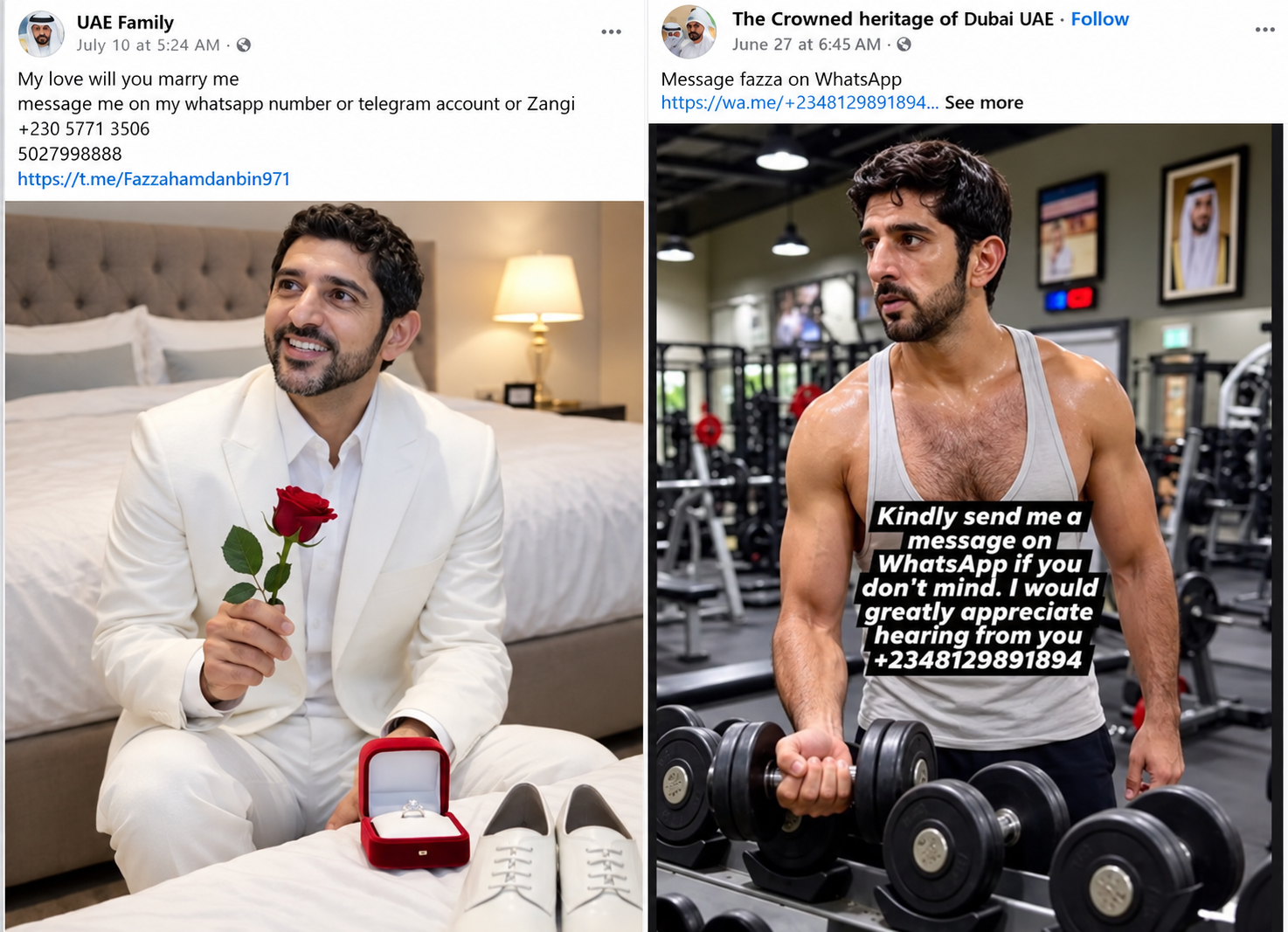
Receiving affectionate messages from a wealthy prince might sound like a fairy tale, but an investigation published by Agence France-Presse on July 13, 2026, revealed how scammers were using artificial intelligence to impersonate Dubai Crown Prince Sheikh Hamdan bin Mohammed bin Rashid Al Maktoum.
One woman, identified as Maria, believed she was developing a romantic relationship with the prince, also known as Fazza. She reportedly encountered the impersonator through a dating website before the conversations moved to a messaging application.
What made this case extraordinary was the use of apparently live video conversations. The man on the screen resembled the prince, appeared to communicate naturally, and delivered romantic messages. For someone unfamiliar with modern deepfake capabilities, such visual evidence could make the relationship seem genuine.
AFP investigators, however, identified the supposed royal suitor as an AI impersonation. The interaction was not proof of contact with Dubai’s crown prince.
The fraud reflects a broader pattern in which criminals pose as wealthy or influential public figures, establish emotional relationships, and eventually seek money from the people they deceive. Related fake-prince schemes have involved requests connected to marriage arrangements, supposed official documents, and other fabricated financial obligations.
Researchers cited by AFP linked some of these operations to suspected criminal networks in Nigeria. The investigation illustrated how celebrity impersonation and romance fraud are becoming more sophisticated through the use of artificial intelligence.
The psychological manipulation is particularly important. A person who believes they have attracted the attention of a powerful royal figure may feel special, chosen, or reluctant to question the relationship. Scammers can exploit those emotions while using videos to reduce suspicion.
Unlike traditional romance scams that depend mainly on stolen photographs, deepfake technology can provide apparent face-to-face interactions. A victim may believe that seeing someone speak directly to them eliminates the possibility of impersonation.
This assumption can be dangerous. Realistic AI-generated faces, voices, and manipulated video interactions are increasingly accessible, and their presence should never be treated as definitive identity verification.
The practical lesson is straightforward: an unexpected online relationship with a celebrity, royal figure, or wealthy public personality should be independently verified. Never send money for supposed royal permissions, marriage documents, charitable payments, or emergencies simply because someone appears convincing during a video call.
UK: Woman Buys Wedding Dress and Plans to Sell House to Marry Fake Hollywood Actor
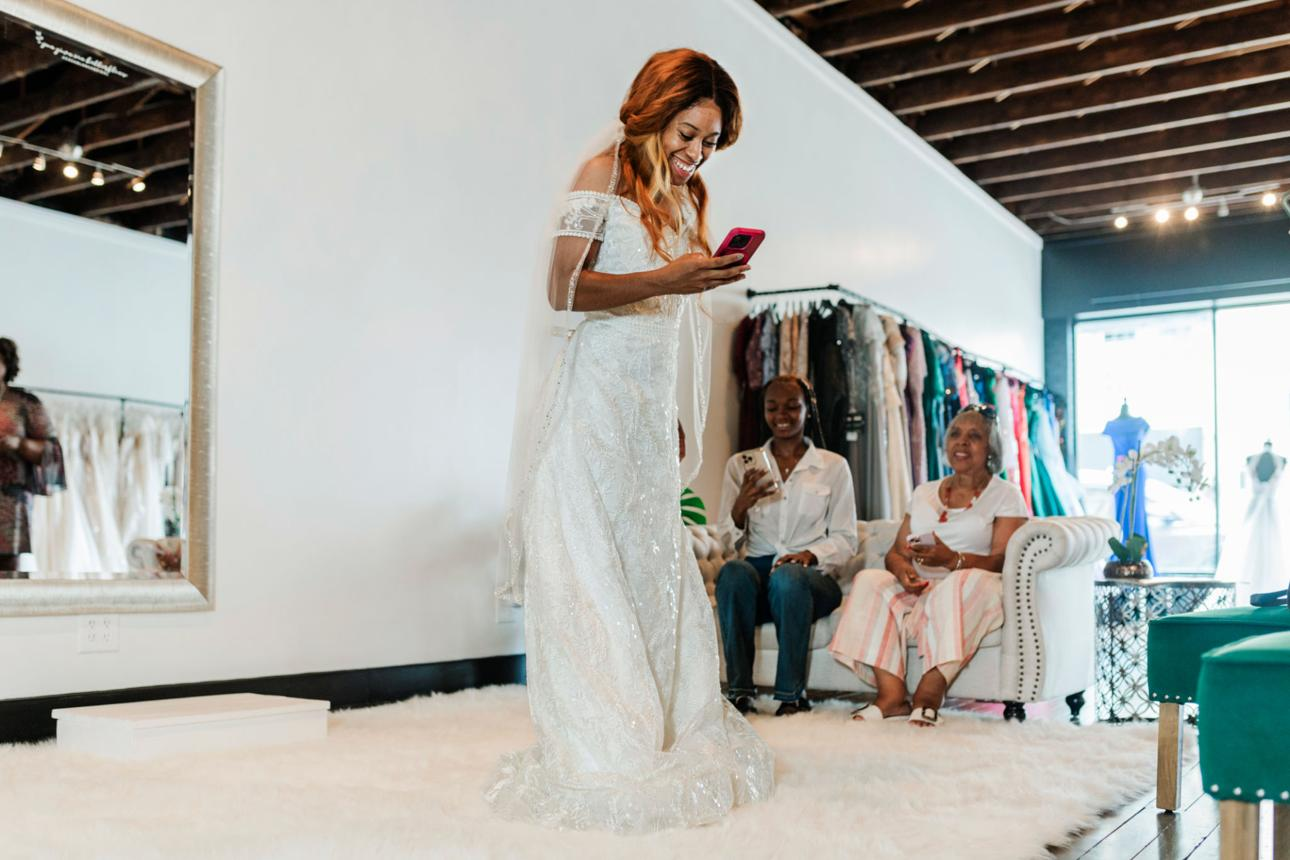
A woman from Cambridge, England, reportedly became so convinced that she was preparing to marry American television actor Jay Harrington that she purchased a wedding dress and began making arrangements to sell her home.
The extraordinary case was reported on April 7, 2026, following an intervention involving local estate agents and Cambridgeshire Police.
The woman believed she was in a romantic relationship with the actor, known for his appearance in the television series S.W.A.T. She intended to relocate to the United States, where she expected the marriage to take place.
Rather than remaining an online fantasy, the supposed relationship began influencing major decisions in her real life. She bought a wedding dress, prepared for an international move, and approached estate agents about selling her property.
The estate agents became concerned after learning why she intended to sell the home. They suspected that someone might be impersonating the actor and feared that the woman could lose her property and savings if the transaction went ahead.
They contacted police, who investigated the circumstances surrounding the relationship. Officers discovered that she had already sent hundreds of pounds to different addresses in the United Kingdom and United States.
The intervention prevented the woman from completing the potentially devastating property-related transaction. Authorities introduced safeguarding measures to reduce the likelihood of further financial harm.
What makes this case unusual is the degree to which the victim had prepared for a marriage that was not genuine. Buying a wedding dress, planning a move overseas, and considering the sale of a home demonstrated that the deception had moved far beyond casual online communication.
Celebrity romance scams often rely on the belief that a famous person has chosen to communicate privately with an ordinary fan. Impersonators may construct elaborate explanations for secrecy, limited availability, or unusual financial demands.
Once a victim becomes emotionally invested, marriage promises can create a powerful incentive to comply with additional requests. A seemingly romantic future may become the justification for transferring money or selling valuable assets.
This case also demonstrates how important intervention can be. The estate agents recognized suspicious circumstances and contacted authorities before the woman suffered the larger loss they feared.
Readers should be cautious about anyone claiming to be a celebrity who proposes marriage without a verifiable real-world relationship. Decisions involving property, international relocation, or substantial financial transfers should never depend entirely on an online romantic partner’s claims.
Japan: Fake Astronaut Tricks 80-Year-Old Woman Into Sending Money for Oxygen in Space

Few romance scam stories sound as unbelievable as the case of an elderly Japanese woman who transferred approximately one million yen to someone claiming to be an astronaut facing a life-threatening emergency in space.
The incident, reported in September 2025, involved a woman in her 80s from Hokkaido who met the supposed astronaut through social media. Over several weeks, the pair exchanged messages and developed what the woman believed was a romantic connection.
According to Japanese reporting, the individual claimed to be travelling aboard a spacecraft. The unusual occupation also offered a convenient explanation for why the person was unable to meet the woman in person.
After establishing emotional trust, the scammer introduced an extraordinary emergency. He claimed that his spacecraft was under attack, oxygen supplies were running low, and he urgently needed money to survive.
The woman believed the account and purchased electronic money worth approximately ¥1 million, equivalent to roughly $6,700 at the time. Reports indicated that she bought payment products at convenience stores before the suspected scam came to the attention of authorities.
The story is unusual because the invented emergency took place in outer space rather than in a hospital, military camp, or foreign airport. Yet the method closely resembles conventional romance fraud: build trust, create emotional dependence, invent an urgent crisis, and demand money.
The imaginary oxygen shortage was designed to create fear and urgency. A victim who believes someone they care about is in immediate danger may act quickly without independently checking whether the emergency is possible or genuine.
Scammers often exploit this instinct to help another person. Their stories may involve serious illness, travel problems, imprisonment, military assignments, or other situations where the supposed victim cannot obtain assistance through normal channels.
In this case, the claim that an astronaut needed money from an online romantic partner to purchase oxygen was itself a major warning sign. Real space missions involve extensive professional support and established emergency procedures.
The incident shows that even extremely unusual explanations can become convincing when they are introduced gradually within a trusted online relationship.
Anyone receiving an urgent financial request from a person they have never met should independently verify the circumstances before sending payment. Claims involving inaccessible locations, secret assignments, or dramatic emergencies deserve especially careful scrutiny.
The central lesson is that emotional attachment should never replace identity verification. Whether someone claims to be a soldier, doctor, celebrity, prince, or astronaut, an online profile and romantic conversation do not establish that the person is genuine.