
When Valentine’s Day comes around, people talk about love, flowers, and romance. For scammers, it’s hunting season. And I was their target.
My name is Susan — not my real name, but the one I use to protect myself. I’m a 69-year-old retiree from Mesa, Arizona, and I lost everything. My home. My savings. My sense of safety. All because I trusted the wrong person.
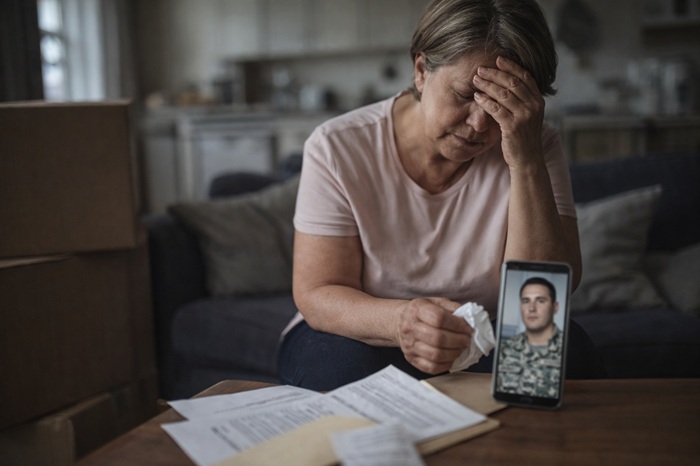
It started in the summer of 2025 with a random Facebook message from a man calling himself Stephen. He said he was a U.S. Naval officer stationed in Iraq. From the beginning, he knew exactly what to say. He flooded my inbox with attention, affection, and promises of a future together.
He called me “babe,” “honey,” “sweetheart.” Every day. Constantly. I didn’t think I was foolish — I still don’t. But looking back, I feel sick knowing how carefully he played me.
He told me he wanted to help me financially. He said he cared about me. Then he claimed he had sent me a package filled with gold, jewelry, and cash — something he said would secure our future together. Shortly after, I was contacted by someone claiming to be a U.S. diplomat. I was told I had to pay fees to release the package through customs.
That’s when the money started flowing — and it never stopped.
First, I sent $1,200.
Then $8,000.
Then $55,000.
Then another $6,100.
Each time, there was a new excuse. A new emergency. A new promise. I was manipulated into believing that if I just sent a little more, everything would be okay.
Eventually, I sold my four-bedroom home — the home I had worked my entire life for — just to access more money. That’s how deep this scam went. That’s how convincing Stephen was.
I didn’t realize the truth until my financial advisor raised red flags while helping me apply for a car loan. That was the moment everything collapsed.
Today, I live in a small apartment. I struggle to pay my bills. The home equity and retirement savings I depended on are gone. Completely gone.
And I’m not alone.
A Phoenix real estate agent told AZ Family that he’s seen at least six similar cases in the past year — older Americans pressured by romance scammers to sell their homes and wire money to someone they’ve never met.
This isn’t bad luck. It’s a growing epidemic.
According to the Federal Trade Commission, fraud losses among Americans aged 60 and older exploded from about $600 million in 2020 to $2.4 billion in 2024. Romance scams, investment fraud, and impersonation schemes are driving these losses — often exceeding $100,000 per victim. Homes are increasingly part of the damage.
Scammers ramp up their attacks around Valentine’s Day because they know loneliness makes people vulnerable. Emotional manipulation is their weapon, and it works — even on people who are careful, educated, and experienced.
Technology has made this worse. Artificial intelligence now allows scammers to create convincing photos, videos, and documents. Pretending to be military personnel is a favorite trick — it explains why they can’t meet, why communication is limited, and why everything feels “classified” or urgent.
Legally, there’s very little protection once the damage starts. As attorney Dwane Cates explained, adults are legally free to sell property, even when loved ones suspect fraud. A realtor can walk away — but the seller can always find another.
That’s why vulnerable older adults must involve trusted family members before making major financial decisions. Once the money is gone, it’s usually gone forever.
Romance scams rely on urgency. Pressure. Fear. That’s how they trap you.
If someone refuses to meet in person, claims to be overseas, rushes emotional intimacy, or pushes you to move conversations off platforms — those are red flags. If they ask for wire transfers, gift cards, cryptocurrency, or cash — that is almost always a scam.
Ask for help. Speak up. Don’t let embarrassment keep you silent.
There is no shame in being a victim. These scams are sophisticated, ruthless, and designed to destroy lives. As Valentine’s Day approaches, awareness and hesitation may be the only defenses we have against losing everything — the way I did.