
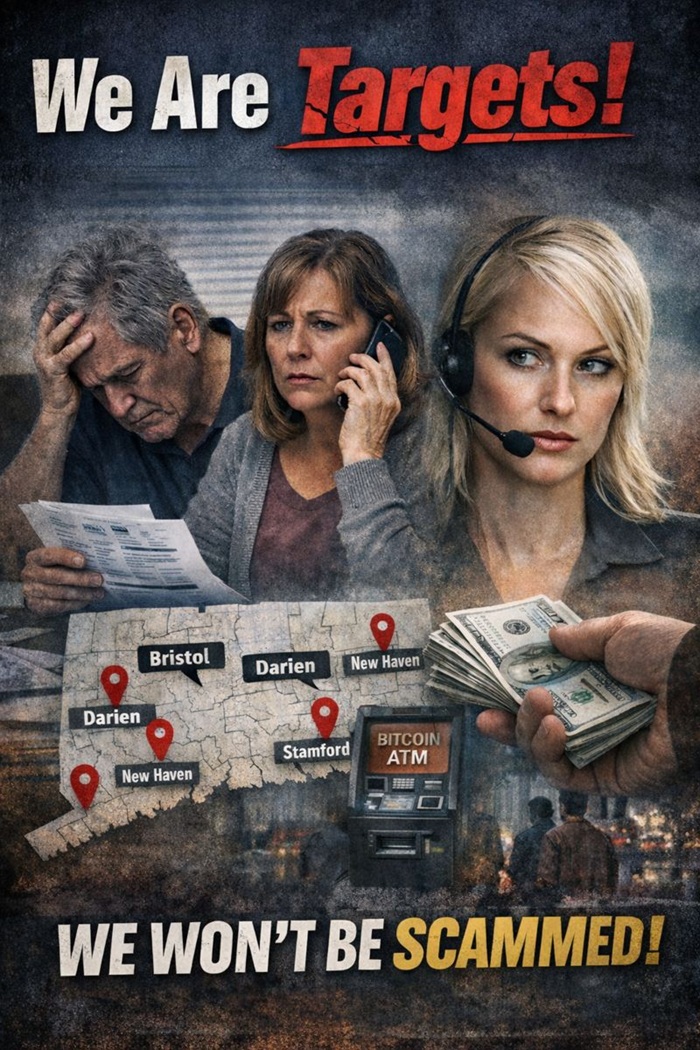
We are being relentlessly targeted in our own homes.
Since late December, our residential phone lines across Connecticut have been under nonstop attack by scammers pushing a so-called “too-good-to-be-true” loan offer. Day after day, our phones ring and buzz with calls and texts from a fake financial outfit calling itself “J Morgan.” This is not a real lender. It is a trap.
Many of us—from Bristol to Darien and beyond—have received repeated calls from a woman identifying herself as Erica Hayes, claiming to be from “underwriting.” She confidently tells us we are “nearly approved” for personal loans as high as $60,000—loans we never applied for and never requested.
The calls are aggressive, persistent, and calculated. Some of us receive up to ten calls and text messages a day, each time from a different phone number and area code, making it harder to block them and easier for the scammers to keep harassing us.
When Erica Hayes calls, she sounds polished and convincing. She claims our loan application was once denied but has suddenly been reopened because “rates have come down” and “underwriting has opened up,” especially for people with lower credit. She pressures us to respond quickly, warning that she needs to finalize the loan before the end of the year.
But this is all a lie.
The real goal of Erica Hayes and J Morgan is not to help us—it is to steal from us. The scam is designed to trick us into paying upfront “loan fees” or handing over sensitive personal and banking information. Once that information is shared, the scammers use it to drain bank accounts or commit identity theft. If money is sent, the so-called lender simply disappears.
Reports of these calls have come in from residents in Bristol, Middlebury, Old Lyme, Simsbury, Plymouth, New Haven, Sharon, Darien, Southport, Stamford, Newtown, Norwich, and Granby. Many of us were smart enough to recognize the red flags and refused to send money or share private information. So far, no confirmed financial losses have been reported—but that does not mean the danger has passed.
Some victims may not even realize yet that they have been scammed. If personal information was given and the caller later claimed the loan was no longer approved, the damage may already be done behind the scenes.
This scheme is a classic advance-fee loan phishing scam—illegal, deceptive, and predatory. Legitimate lenders do not guarantee loans over the phone, do not approve loans without checking credit, and do not demand upfront fees before providing funds. Anyone who does is scamming you.
We are not customers.
We are not applicants.
We are targets.
And Erica Hayes and J Morgan are counting on confusion, urgency, and trust to steal from us.