
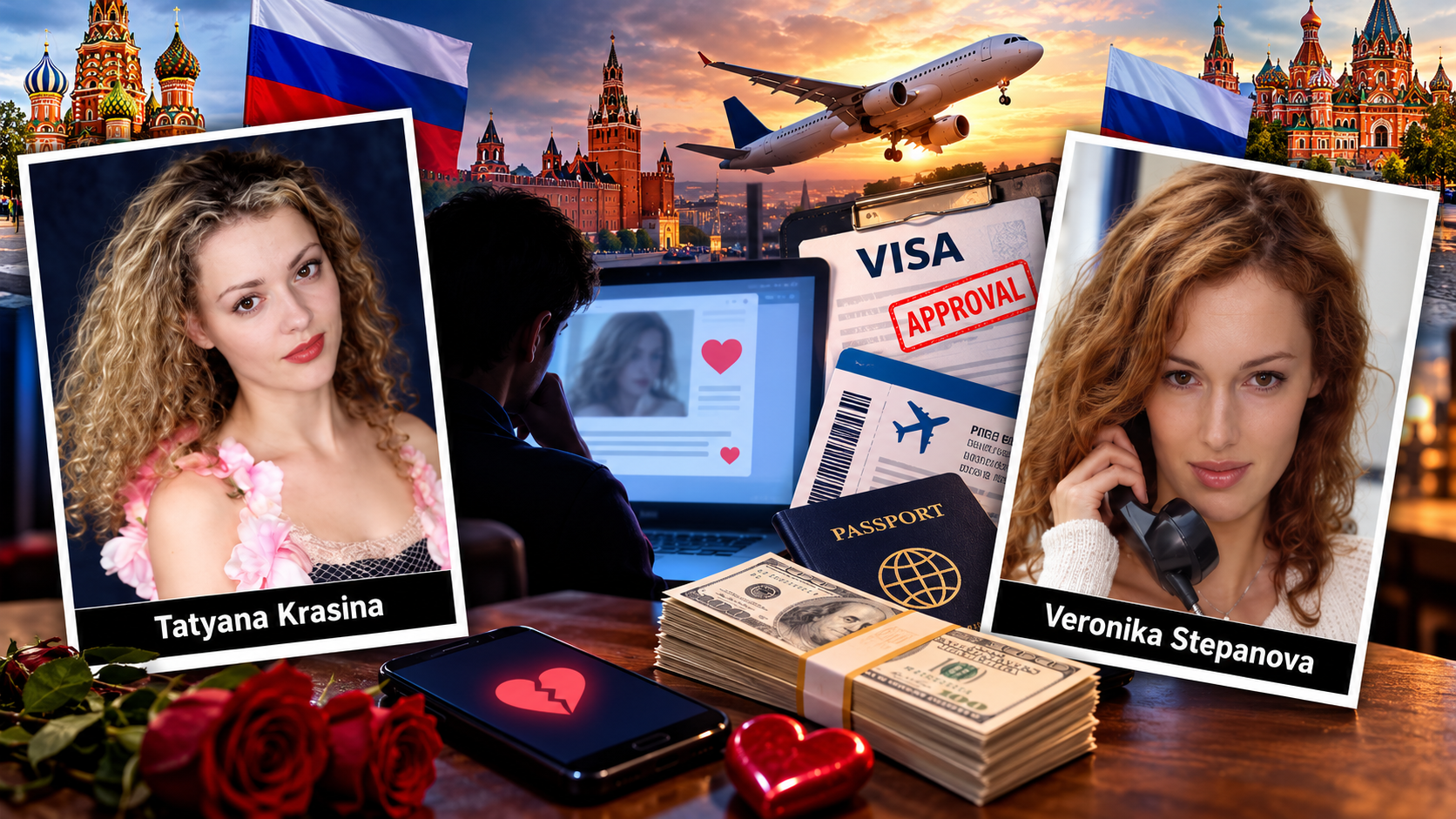
Online dating fraud continues to raise concerns worldwide, with reported incidents involving misleading identities, suspicious romantic correspondence, and requests for financial assistance. Some complaints describe individuals who establish personal relationships before introducing visa or travel-related expenses, while others involve inconsistent dating profiles and potentially reused photographs. This week’s Female Scammers of the Week report highlights two historical complaints involving the names Tatyana Krasina and Veronika Stepanova, reportedly associated with Russia. These cases illustrate the importance of verifying online identities, examining inconsistencies in personal information, and remaining cautious when communicating with unfamiliar people through dating websites. The allegations remain unverified, and the available information does not establish that the named individuals or people shown in the photographs committed fraud.
Scammer 1 : Tatyana Krasina

Full Profile :
https://www.ripandscam.com/scammer-tatyana-krasina-12375.php
Report :
A person using the name Tatyana Krasina was mentioned in an online complaint submitted by an individual identified as David concerning a suspected romance scam involving international travel arrangements and requests for financial assistance. According to the complainant, the person using this identity established contact through online personal and dating websites, reportedly presenting an interest in developing a personal or romantic relationship. As communication progressed, the sender allegedly discussed the possibility of traveling internationally to meet the recipient in person. The correspondence eventually introduced requests for money to cover visa expenses and airline tickets, which were reportedly presented as necessary steps toward arranging the proposed visit. The complainant became suspicious because the financial requests were connected to a relationship established entirely through online communication. The report also raised concerns about the photographs associated with the dating profile, suggesting that different sets of images may have been used in connection with the same reported identity. This created uncertainty about whether the person shown in the photographs was actually operating the account or whether the images belonged to someone else. However, the supplied information does not establish that the photographs were used without permission or that multiple individuals were involved. Another inconsistency appeared in the reported location details, which associated Norilsk with Krasnodar Territory despite these being geographically distinct regions of Russia. This discrepancy further complicated efforts to verify the sender’s claimed residential information. The complaint does not specify how much money was requested, whether the complainant transferred any funds, how long the correspondence continued, or what happened after the financial requests were made. Although the complainant considered the interaction suspicious, the available evidence does not independently confirm the identity of the person operating the profile or establish that the person named or photographed committed fraud.
The reported incident involving Tatyana Krasina highlights several warning signs that individuals should recognize when communicating with potential romantic partners through online dating platforms. Requests for visa payments, airline tickets, and other international travel expenses can create opportunities for financial exploitation when the person requesting assistance has not been independently verified. Individuals operating misleading dating profiles may attempt to gain trust through friendly conversations, romantic promises, and descriptions of plans to meet in person before introducing unexpected financial needs. In this complaint, the alleged travel-related payment requests, uncertainty surrounding the photographs, and inconsistent geographical information were particularly important reasons for caution. People encountering similar situations should verify profile photographs where possible, compare personal details across communications, and confirm travel or visa requirements through official sources instead of relying exclusively on information provided by an online contact. It is also important to avoid transferring money to unfamiliar individuals, particularly when the requests are linked to urgent travel arrangements or promises of a future meeting. Preserving emails, profile information, photographs, and payment requests can help document suspicious activity if a complaint becomes necessary. The available report does not confirm whether a financial loss occurred, and the identity of the person responsible for the correspondence remains uncertain. Nevertheless, the case demonstrates how careful examination of online dating profiles and financial requests can help reduce the risk of suspected romance fraud.
Scammer 2 : Veronika Stepanova

Full Profile :
https://www.ripandscam.com/scammer-veronika-stepanova-12377.php
Report :
A person using the name Veronika Stepanova, reportedly associated with Volgograd, Russia, was identified in an online complaint concerning suspected dating profile misrepresentation and possible use of multiple identities in online correspondence. According to the complainant, the individual appeared to be connected to other names, including Ludmila Domasheva and Julia Mirnaya, which were mentioned as possible alternative identities associated with the same communication. The complainant stated that responses received from the profile using the name Veronika Stepanova closely resembled correspondence previously associated with someone using the name Julia Mirnaya. This similarity raised concerns that multiple dating profiles might have been operated by the same person or that personal information, photographs, or written messages were being reused across different accounts. The complainant reportedly became suspicious after noticing these connections and questioning whether the profile represented a genuine individual seeking a relationship. However, the report provides limited information about how the correspondence began, which dating websites were involved, or whether the individual made specific romantic promises. It also does not establish whether the different names belonged to one person, several unrelated individuals, or accounts created using information obtained from other sources. The complaint contains no documented financial transaction or confirmed financial loss, and it does not specify that money was requested. The central concern involves the possible misrepresentation of identity rather than a verified payment scam. Although the complainant believed the repeated correspondence patterns suggested suspicious activity, the available information does not independently establish the identity of the person managing the profiles or confirm that Veronika Stepanova, Ludmila Domasheva, and Julia Mirnaya referred to the same individual.
The reported complaint involving Veronika Stepanova illustrates the importance of identifying inconsistencies between dating profiles and confirming whether online correspondence genuinely comes from the person represented in an account. Misleading dating profiles can involve reused photographs, copied messages, false personal details, or multiple accounts presenting different names and locations. However, similarities between online messages do not automatically prove fraudulent activity, and individuals may sometimes be impersonated without their knowledge or consent. In the case involving the name Veronika Stepanova, the complainant’s concerns centered on the apparent similarities between correspondence associated with different identities and the possibility that the same person was communicating through more than one profile. People experiencing comparable situations should review profile details carefully, look for inconsistencies in photographs or biographical information, and avoid sharing sensitive personal or financial details until the other person’s identity has been reasonably verified. Reverse-image searches, independent communication checks, and verification through the dating platform may help identify reused photographs or suspicious account behavior, although these methods cannot conclusively establish identity on their own. Users should also preserve relevant emails, profile screenshots, and messages when reporting suspected impersonation or misleading accounts to website administrators. The supplied report does not document any payment request, financial transfer, or confirmed monetary loss, making it important not to characterize this incident as a proven financial or romance scam. The allegations remain unverified, but the complaint highlights how checking inconsistencies between online identities can help people recognize potentially deceptive dating interactions.